
REVIEW · TORQUAY VICTORIA
Torquay: 2 Hour Surf Experience on the Great Ocean Road
Book on GetYourGuide →Operated by Go Ride A Wave · Bookable on GetYourGuide
Torquay makes first waves feel possible. This beginner-focused lesson brings you to famous Torquay Beach with clear safety teaching and lots of chances to stand up, and instructors like Tim and Izzy are praised for being patient in cold water. The main thing to consider is that the water can feel chilly and the shoreline can get busy.
I like that you’re not just watching from the beach. You get fitted with a full-length wetsuit and a softboard matched to your height and skill level, then you work from sand instruction to waist-deep waves with a Level-1 qualified surf coach. If you go expecting guaranteed smooth surfing, you’ll be happier—this is about building confidence and board control step by step.
In This Review
- Key Takeaways Before You Go
- Torquay Beach Surf Lesson: Why This Start Works
- Check-In, Wetsuit Fitting, and Choosing the Right Softboard
- Sand Safety Briefing: The Part That Prevents Bad Surprises
- Waist-Deep Water and First Small Waves
- Regroup on the Beach: How the Pop-Up Gets Unlocked
- In-Water Coaching: Individual Tips That Make Waves Click
- When Conditions Are Not Perfect: Crowds, Cold Water, and Rocks
- Value for $59: What You’re Really Paying For
- Who This Is Best For (and Who Might Want a Different Option)
- After the Waves: Rinse Off and Keep the Stoke Going
- Should You Book This Torquay Surf Experience?
- FAQ
- What’s included in the Torquay 2-hour surf experience?
- Do I need to bring a towel or swimwear?
- When should I arrive for the lesson?
- What should I expect during the session?
- Is this lesson suitable for children?
- Is private group instruction available?
Key Takeaways Before You Go
- Torquay Beach is the real deal: iconic surf scenery, so your first waves feel tied to the place.
- Warm wetsuits and softboards help you start smart: gear is included so you can focus on learning.
- You practice the pop-up right away: you regroup on shore, then try again with coaching in the water.
- Coaches bring calm, specific feedback: names like Tim, Matt, Joel, Sara, and Stephan show up again and again for encouragement and clarity.
- Safety isn’t an afterthought: you get a sand briefing and guidance on positioning and control.
- Plan for crowds and rocks: a quieter patch of water isn’t always possible on a popular beach.
Torquay Beach Surf Lesson: Why This Start Works
Torquay is Victoria’s surf entry point for a reason. You’re surfing at the beach most people picture when they think of the Great Ocean Road coast: strong surf culture, wide sand, and that unmistakable feeling that this water matters.
What makes this experience practical is the way it’s built for first-timers. You don’t get thrown straight into the deep end. Instead, the lesson moves in stages: safety first on the sand, then short sessions in manageable water depth, then more time catching waves once you’re getting comfortable. That flow matters because surfing isn’t only about standing up—it’s about learning how to move your body on a moving surface without panic.
I also like that the coaching is flexible across ability levels. The format is designed for complete beginners, but it can work for experienced intermediates too. You’ll see that reflected in how instructors are described: people get encouraged, corrected, and supported without feeling rushed.
One caution: if your idea of an ideal lesson is a calm, empty stretch of shoreline, Torquay Beach might not deliver that. The beach can be busy, and you might have to work with the conditions that day.
You can also read our reviews of more tours and experiences in Torquay Victoria.
Check-In, Wetsuit Fitting, and Choosing the Right Softboard
Your lesson starts with a simple rule: arrive 15 minutes early. That’s not just “nice to have.” It gives you time to check in at the surf shop, get sorted quickly, and avoid that end-of-day scramble that makes everyone tense.
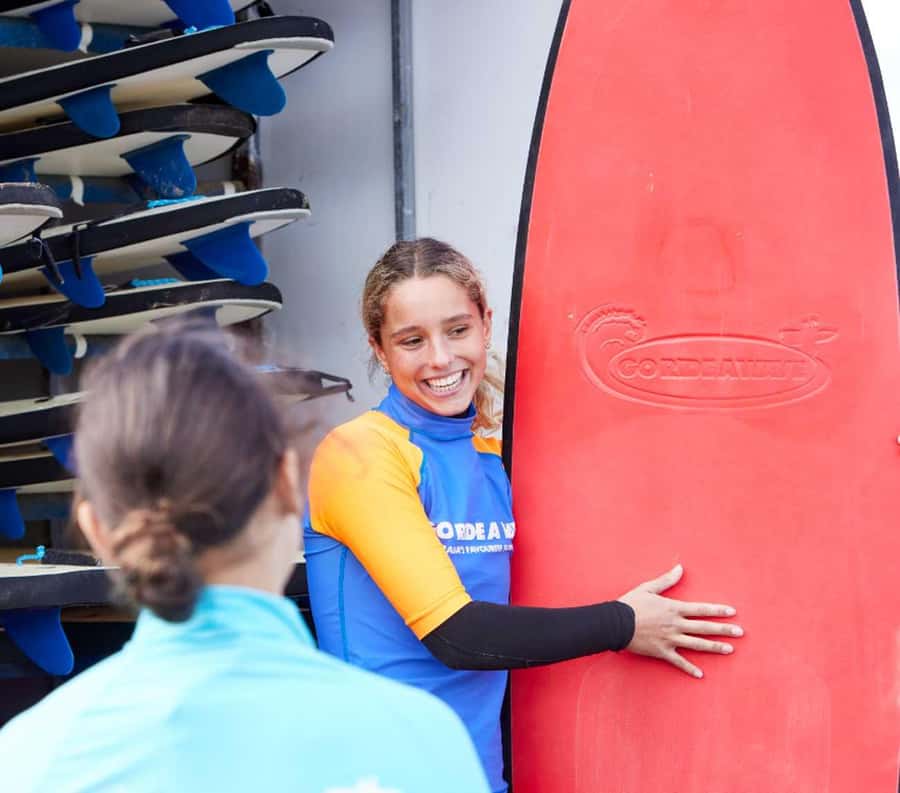
Once you’re checked in, your instructor fits you with a full-length wetsuit rental and assigns you a surfboard based on your height and skill level. That detail is more important than it sounds. The board you start with can change everything:
- A board that’s too small or too advanced makes learning harder.
- A soft beginner-friendly board helps you focus on technique and balance rather than fear.
You’ll also get basic essentials taken care of. Sunscreen is included, and the shop offers hot showers and changing rooms after you’re done. You still need to bring swimwear and a towel, but at least you’re not hunting for rental gear last minute.
If you’re nervous, this early “gear stage” is usually where confidence begins. Getting fitted properly means the wetsuit does its job, and you can spend your energy learning how waves work instead of adjusting your gear every five minutes.
Sand Safety Briefing: The Part That Prevents Bad Surprises
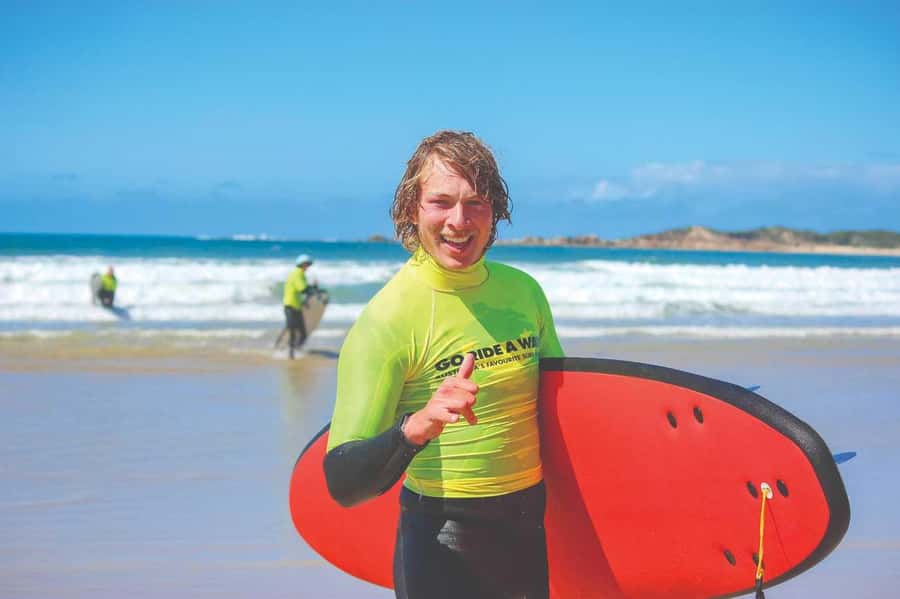
Before you touch the water, you’ll start on the sand with a safety briefing. The lesson includes what you need to know about surf basics like positioning and board control—plus how to handle the situations that happen when you’re learning.
This step is valuable because it sets expectations. Surfing can feel random if you don’t understand the rhythm. The instruction gives you a framework for what you should be doing, when, and why.
You’ll also get the kind of guidance that helps you avoid the typical beginner mistakes:
- Where to place yourself relative to other surfers
- How to manage the board so it stays under control
- What to focus on before you try to pop up
Coaches get praised for making these moments clear and encouraging. Names like Matt and Daniel come up for being friendly and knowledgeable, and people highlight that explanations were easy to follow—especially when the water felt cold.
Waist-Deep Water and First Small Waves
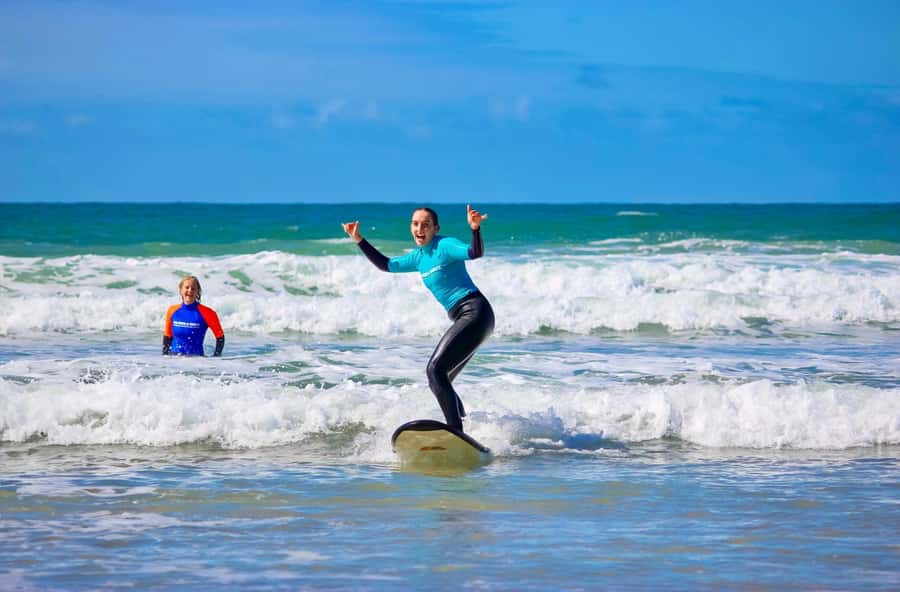
After the briefing, you wade in waist-deep to start catching small waves and get used to the ocean’s movement. This is a smart choice for beginners. You’re in water deep enough to feel like surfing, but not so deep that a mistake becomes a struggle.
What you’re really learning here is timing and body control:
- How your weight shifts on the board
- How to balance while the wave carries you
- How to recover when something doesn’t go to plan
You should also expect that “first wave success” might come after a few tries. That’s normal. Many people end up standing at some point, but the real win is building calm. One of the most striking bits from the experience write-ups is how instructors help people who are not naturally confident in water. A 55-year-old non-swimmer described feeling less scared and finding a rhythm they could trust—so the lesson goal clearly goes beyond just technical performance.
Still, be realistic about conditions. If the beach has rocky bits near the waterline, you might find it a little annoying during the wading phase.
Regroup on the Beach: How the Pop-Up Gets Unlocked
At some point in the session, you’ll regroup on the beach for step-by-step guidance on how to pop up and ride your board. This “break and reset” approach is one reason the lesson can feel productive even when you’re brand new.
On the sand, your coach can slow things down:
- what your hands should do
- where your feet should land
- how to keep your balance as the wave lifts you
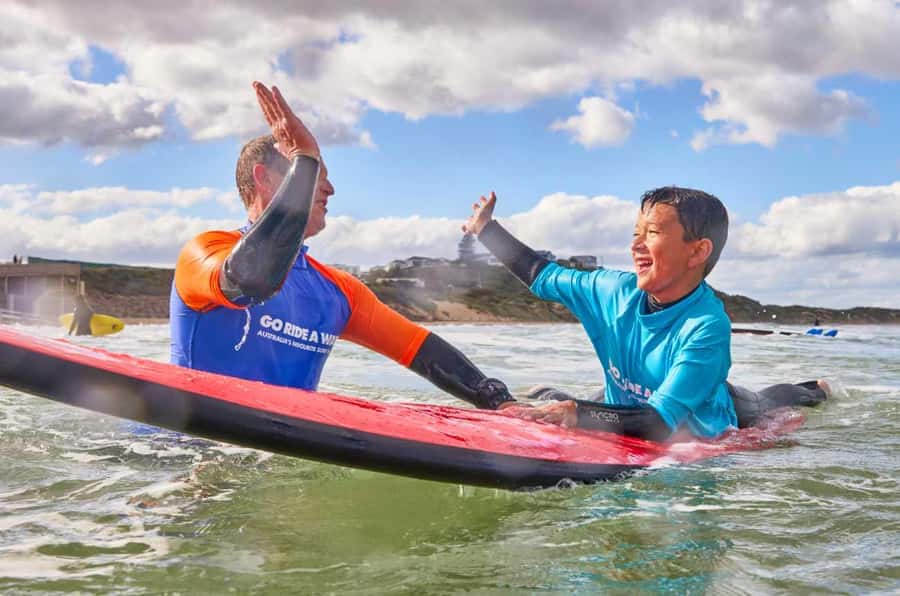
Then you go back in with clearer instructions, which is where you start seeing progress quickly. That’s also why coaching style matters. People consistently mention patience—especially with beginners and kids. Izzy, Will, and Sara are repeatedly called out for encouraging people and offering specific tips without making it feel like a lecture.
If you’re an experienced surfer, you might wish for a faster pace. But for most first-timers, this sand-to-water pattern is the fastest way to improve without confusion.
In-Water Coaching: Individual Tips That Make Waves Click
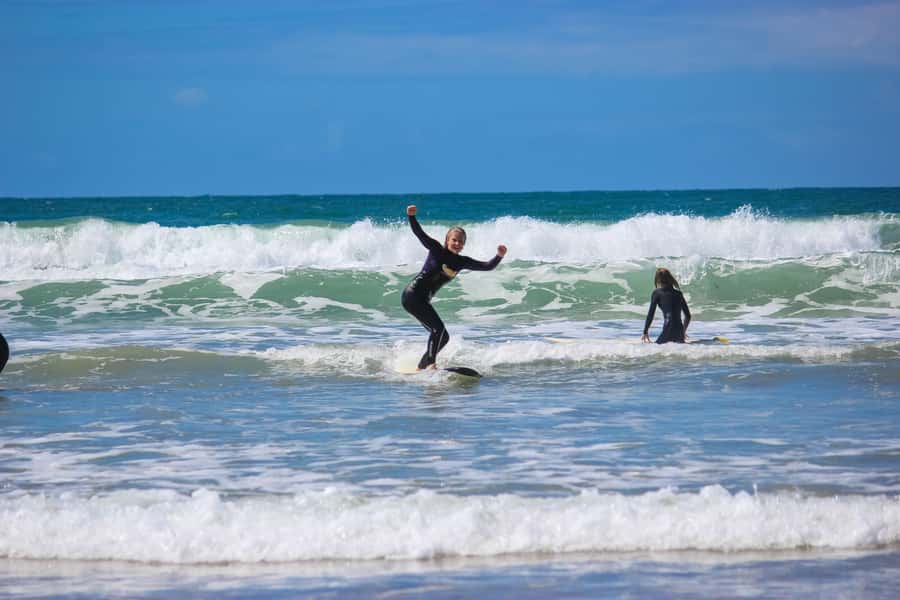
The rest of the lesson is where you put it all together. With your instructor by your side, you’ll catch waves and practice getting to your feet. The key detail here is individualised coaching—not generic shouting from the shore.
From what’s shared in real experiences, instructors focus on what you can change immediately:
- Your stance and balance
- Your positioning relative to the wave
- Simple corrections that improve control
You’ll also notice that the school uses a structure to keep groups learning safely. People describe boundary lines marked so the group has space to practice. That kind of planning makes a big difference. When you’re learning, collisions and crowd chaos can turn technique into survival mode.
Coaches also tend to work hard at motivation. Joel is mentioned for making people feel welcomed and supported. Stephan is highlighted for teaching in a way that helped everyone in the class stand by the end. Those comments line up with what you’d want from a beginner lesson: not just instruction, but reassurance.
When Conditions Are Not Perfect: Crowds, Cold Water, and Rocks
You’re surfing in a popular surf hub. That means two real-world factors can affect your comfort and flow.
First, the water can be cold, especially when you’re in it for hours—even when you have a wetsuit. People often note that being in cold water was still enjoyable because the instructor made it feel manageable. The lesson team’s job is to help you keep moving and stay focused even if you’re shivering a bit.
Second, you might deal with beach crowding. One lesson experience wished the class had a quieter section of the beach so they could practice without as many distractions. That’s not something you can control, but you can control your attitude:
- Bring a towel and dry clothes ready
- Keep your focus on your own waves
- Expect that your “learning lane” might shift with the crowd
And yes, rocky bits in the water can be annoying. It’s not dangerous in a “stay away” way, but it can add friction when you’re getting in and out.
The upside? Even with those issues, people still come away saying the coaching and progress made the time worth it.
Value for $59: What You’re Really Paying For
At $59 per person, this surf lesson is not just paying for board rental. It’s paying for the combination of gear, time in the water, and instruction that’s designed for beginners.
Here’s what’s included:
- A full-length wetsuit rental
- A soft surfboard
- 2 hours of instruction from a Level-1 surf coach
- Sunscreen
- Hot showers and changing rooms
What’s not included:
- Bathers and towel (you bring swimwear and a towel)
That’s why the price can feel fair even when you compare it to “gear-only” options. If you already have your own wetsuit and board, you still need coaching—because the quickest path to standing up is learning the right sequence and fixing the right mistake early.
Also, the lesson’s structure reduces wasted time. You’re not spending the whole morning figuring out how to stand while the instructor is giving one-size-fits-all tips. You start with a safety briefing, then you practice in water deep enough to matter but not too deep to overwhelm you, then you regroup to refine the pop-up.
If your goal is to get your first wave and feel the rhythm of surf rather than just “try once,” this format gives you the best chance within the set time.
Who This Is Best For (and Who Might Want a Different Option)
This lesson fits a wide range of learners. Based on the information, it’s suitable from first-timers to experienced intermediates, which matters if you’re booking with a friend who surfs more than you do.
It’s also designed to help with confidence around the ocean. A person who isn’t naturally confident in water described feeling less afraid and finding rhythm—so you don’t need to arrive thinking you’re a natural surfer. You do need to be willing to listen and try again after a wipeout.
A couple of age notes:
- Children under 8 are not suitable.
- Children under 9 must be accompanied by a parent who is not participating in the lesson and can assist in the water.
If your group includes very young kids, this might not be the right fit. If you’re older and nervous, it can still work well, but choose the lesson that matches your comfort level and ask questions before you start.
If you want to keep momentum after the first session, there are options mentioned that go longer and more progressive (including a 1.5-hour private lesson and a 3 x 2-hour progressive course). That’s useful if you’re hoping to turn first-wave success into real technique.
After the Waves: Rinse Off and Keep the Stoke Going
When the lesson finishes, you return to the shop, rinse off, and use the hot showers and changing rooms. This part matters more than you might think. Surf sessions can leave you salty, sandy, and cold. Having a proper cleanup setup means you can enjoy the rest of your Great Ocean Road day instead of rushing off in discomfort.
And because you’re learning with a group, you’ll likely spend a few minutes processing what happened—especially if you managed to stand up. People often describe the feeling of success as quick and intense, which is exactly what you want from a beginner lesson: progress you can feel before the day ends.
Should You Book This Torquay Surf Experience?
Book it if you want a structured beginner surf lesson in a place where surf culture is real, not staged. You’re getting 2 hours of coaching, a fitted wetsuit, and a softboard designed for learning—not just a ticket to the beach. The coaching reputation is strong too, with instructors like Tim, Matt, Daniel, Joel, Izzy, Will, Sara, and Stephan repeatedly described as patient and encouraging.
Skip it (or choose a different plan) if you’re the type who needs a quiet, private shoreline, because Torquay Beach can be busy. Also, if cold water is a big deal for you, plan to dress thoughtfully and accept that the wetsuit helps, but you’ll still feel the conditions.
If your goal is simple—catch a wave, stand up, and feel safer in the ocean after your first try—this lesson hits the mark.
FAQ
What’s included in the Torquay 2-hour surf experience?
You get a full-length wetsuit rental, a soft surfboard, 2 hours of instruction from a Level-1 qualified surf coach, sunscreen, and access to hot showers and changing rooms.
Do I need to bring a towel or swimwear?
Yes. You should bring swimwear and a towel. Bathers and a towel are not included.
When should I arrive for the lesson?
Please arrive 15 minutes before the start time. You’ll check in at the surf shop and get fitted with your wetsuit and surfboard before heading to the beach.
What should I expect during the session?
You’ll start on the sand with a safety briefing and essential techniques, then wade in waist-deep to catch small waves. After that, you’ll regroup on the beach for step-by-step pop-up guidance and then practice with your instructor in the water.
Is this lesson suitable for children?
Children under 8 are not suitable. Children under 9 must be accompanied by a parent who is not participating in the lesson and can assist in the water.
Is private group instruction available?
Yes. Private group options are available, and the instructor speaks English.