REVIEW · MORNINGTON PENINSULA
Chef Jacqui’s French & Indigenous Australian Cooking Experience
Book on Viator →Operated by Chef Jacqui’s French Cooking Classes · Bookable on Viator
A chef’s home class beats a demo. I love the small-group attention and the way you leave with practical knife-and-pan skills you can use again, fast. One thing to consider: there’s no private transportation, so you’ll want to sort your own ride to Hastings.
You’ll start in Chef Jacqui’s home kitchen on the Mornington Peninsula, greeted by Sophie and Humphrey the golden retrievers, with aromas already coming from the oven. Then you cook, taste, and learn for about 5 hours, with a 3-course gourmet lunch that includes canapés and light refreshments.
In This Review
- Key things you’ll notice right away
- A Mornington Peninsula Home Kitchen With Dogs at the Door
- What You Actually Do for 5 Hours (Cook, Taste, Repeat)
- Knife Skills, Pan Technique, and Food Styling You Can Use Later
- The 3-Course Lunch You Build, Not Just Eat
- French Flavor Balance: Why You’ll Talk About Texture and Taste
- How the Small Group Makes It Feel Like Coaching
- French Meets Indigenous Australian Cooking: The Smart Way to Approach It
- Price and Value on the Mornington Peninsula
- Practical Tips for Your 11:00 am Cooking Day
- Who Should Book This Cooking Class (And Who Might Skip It)
- Should You Book Chef Jacqui’s French & Indigenous Australian Cooking Experience?
- FAQ
- Where does Chef Jacqui’s cooking experience start?
- What time does the class begin?
- How long is the experience?
- What group size should I expect?
- What’s included in the price?
- Is private transportation included?
- Are service animals allowed?
- Can I cancel for a full refund?
Key things you’ll notice right away
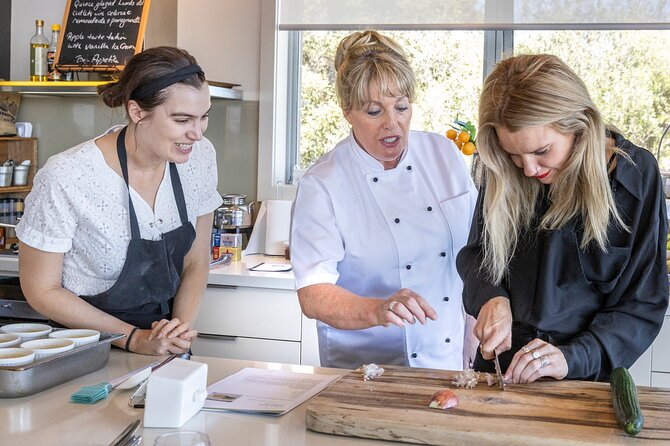
- A max group size of 8 means you get real coaching, not just watching
- Cook, then sit down: each recipe ends with a shared meal and talk about flavors
- Knife skills, pan frying, and food styling are part of the teaching plan
- Lunch is built by you—not just served—plus canapés and light refreshments
- French cuisine focus with a billed French & Indigenous Australian angle, so ask questions if you want the story behind ingredients
- Chef-led at-home setting with a mobile ticket and confirmation at booking
A Mornington Peninsula Home Kitchen With Dogs at the Door
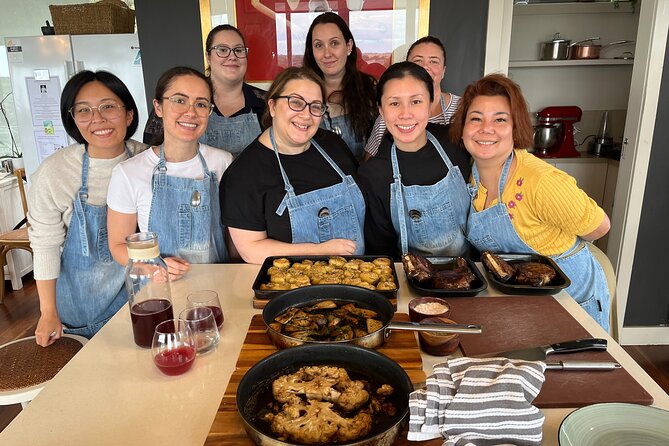
This isn’t a big, hotel-style show. The experience starts at an in-house dining setting in Hastings (3/25 Rankin Rd), and it feels like you’re stepping into a real working kitchen.
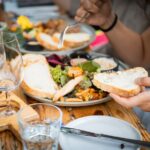
Chef Jacqui welcomes you at the front door, and yes, Sophie and Humphrey the golden retrievers are part of the scene. That small detail matters because it sets the tone: warm, relaxed, and very hands-on. Once you’re in, you’ll see produce ready to be cooked and a table set up for the meal part of the day.
This format is a big part of why people rate it so highly. You’re not just learning the concept of French cooking—you’re doing it with guidance, then eating what you made.
You can also read our reviews of more tours and experiences in Mornington Peninsula.


What You Actually Do for 5 Hours (Cook, Taste, Repeat)
The class runs about 5 hours, starting at 11:00 am. After you’re greeted, you begin with menu and recipe reading, then you jump into prep and cooking right away.
Here’s the rhythm you should expect:
- You work through preparation steps as the menu is reviewed.
- You cook the recipes with tips as you go.
- When a dish is finished, you move to the dining table to eat and talk about what you made.
- The day keeps going in this loop, so it’s more like a long shared cooking day than a short demo.
It’s also framed as an “eat all day” experience. You’re not meant to taste a crumb and wait for the next course—you’ll be constantly eating as each recipe lands on the table. If you’re a true food person, you’ll appreciate that energy.
You can ask questions throughout, and you can take photos as you like. The whole setup encourages you to learn in real time, not just watch and hope you remember later.
Knife Skills, Pan Technique, and Food Styling You Can Use Later
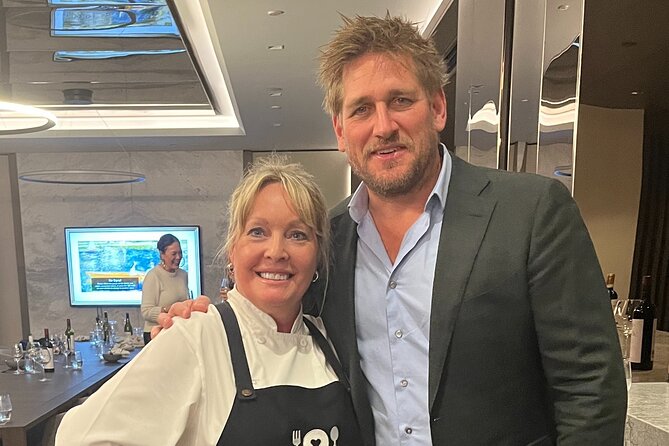
The teaching isn’t vague. The focus includes:
- Knife skills
- Pan frying techniques
- Using and storing ingredients and equipment
- Food styling (yes, that’s a thing, and it’s useful)
That last one surprises people, but it’s practical. When you learn how to present food neatly, you end up thinking differently while cooking—about portions, plating order, and how textures show up on the plate.
What you should walk away with is confidence. Instead of memorizing a single recipe, you’ll pick up methods you can repeat at home: how to handle ingredients, how to manage timing while cooking, and how to get consistent results from basic techniques like pan work and proper prep.
And because the group is small, you’re more likely to get direct corrections. If your technique is off, you can ask and adjust there, not later when the pan is already cold.
The 3-Course Lunch You Build, Not Just Eat
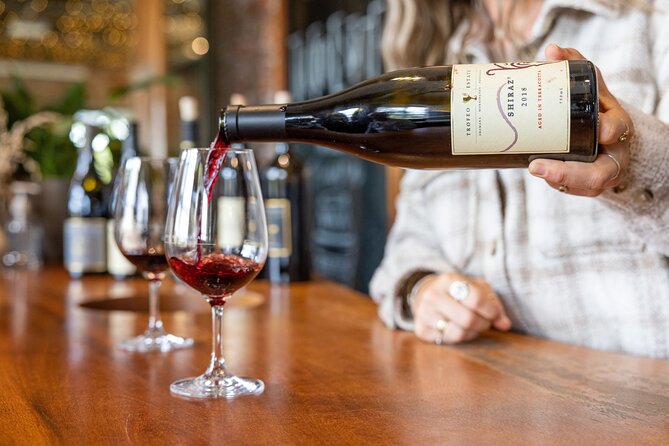
Lunch is a core part of the value here. You’re treated to a 3-course gourmet lunch, which also includes canapés and light refreshments.
The key is that you’re cooking the dishes yourself as part of the class. That turns the lunch into more than a meal—it’s proof of what you learned. When you finish a dish and eat it at the table with the group, you can connect the steps you did (prep, pan timing, seasoning balance) to the final result.
Menu items may vary, but the kinds of dishes mentioned include things like scallops, kangaroo steaks with a French twist, and crepes. That mix matters:
- It gives you seafood and classic French-style ideas.
- It also includes something local (kangaroo) framed in a French way, which is more interesting than repeating the same restaurant menu you can find anywhere.
The experience is designed for you to come hungry. If you like cooking and eating as one continuous experience, this format fits you.
French Flavor Balance: Why You’ll Talk About Texture and Taste
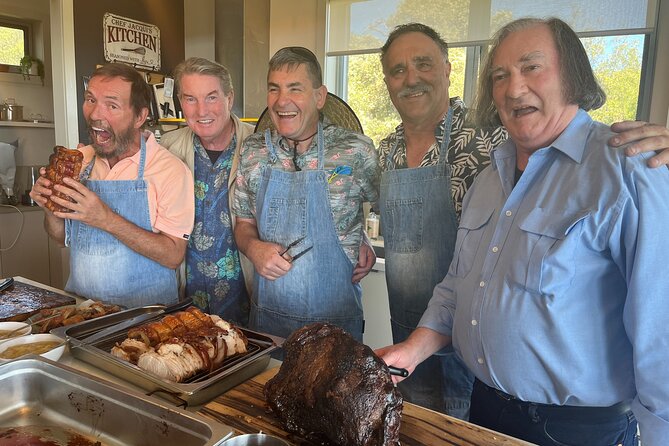
One of the most helpful parts is what happens after each recipe is cooked: you sit down and discuss the balance of flavors and textures.
This matters because French cooking is often talked about like it’s only about sauces or technique. The real lesson is sensory: how salt, acidity, fat, and aromatics work together, and how texture lands—crisp versus tender, creamy versus firm.
So you get both:
- hands-on skill-building while cooking, and
- explanation while tasting
That combination helps you transfer the knowledge to your own kitchen later. You don’t just learn a step-by-step recipe; you learn what to look for when something tastes almost right but needs one adjustment.
It’s also a good chance to ask questions. If you wonder why something is seasoned a certain way or how to get a better pan finish, you can ask during the discussion time.



How the Small Group Makes It Feel Like Coaching
This is a maximum of 8 travelers. That’s a sweet spot.
In a small group:
- You can actually be seen while you cook.
- You can ask questions without feeling like you’re disrupting a big class.
- You get more immediate feedback on knife work and pan technique.
- The pace is more flexible—if you need an extra explanation, you can get it.
If you’ve done cooking classes before where you’re mostly standing back, you’ll feel the difference right away. This one is built around you doing the work.
The at-home setting also helps. You’re not fighting crowds, lines, or distractions. The kitchen setup is part of the experience, and it makes the learning feel personal.
French Meets Indigenous Australian Cooking: The Smart Way to Approach It
The experience is billed as Chef Jacqui’s French & Indigenous Australian Cooking Experience. The information you’re given points strongly to French cuisine skills, with menu dishes that can include local ingredients like kangaroo.
Here’s the best way to approach it on the day: ask questions about how ingredients and flavors connect to the Indigenous Australian side of the class, and how Chef Jacqui frames those flavors alongside classic French technique.
Because you’re in a small group, you can get clearer answers than you would in a larger class. If that part of the title is what drew you in, don’t be shy. The structure encourages questions.
Price and Value on the Mornington Peninsula
It costs $168.55 per person. That’s not “cheap,” but it also isn’t just a quick tasting.
For that price, you’re getting:
- about 5 hours of hands-on cooking instruction,
- a small-group class (max 8),
- and a 3-course gourmet lunch you help prepare, plus canapés and light refreshments.
In other words, you’re paying for instructor time plus meal value plus the kitchen coaching. If you’d otherwise pay for a nice lunch and a separate cooking workshop, this can feel like a bundled deal.
Also, the experience is booked on average 50 days in advance. That’s a clue it’s popular, and classes likely fill when the dates match people’s travel schedules. If you’re serious about doing it, plan ahead rather than waiting for a last-minute opening.
Practical Tips for Your 11:00 am Cooking Day
A few things will make your day smoother.
Plan your travel. Private transportation isn’t included. Arrive on time so you don’t miss the menu prep and early cooking steps.
Come hungry. You’ll eat a lot—canapés, then three courses, plus light refreshments throughout. If you arrive starving, you’ll also be able to taste and learn with better attention.
Wear realistic kitchen clothes. You’ll be in an active kitchen environment, and cooking spills happen. Dress in layers in case the kitchen is warm while cooking.
Bring your camera habit (if you’re into it). You can take photos, and you’ll likely want to capture technique moments and plated results.
Be ready to ask questions. The format includes plenty of conversation while you work and while you eat. If something doesn’t make sense, asking is part of the fun.
Who Should Book This Cooking Class (And Who Might Skip It)
This is a strong fit if you:
- love French cooking and want practical methods, not just a meal,
- enjoy hands-on learning (knife and pan skills),
- want a small-group setting where you can actually interact,
- like local ingredients and want French technique paired with Australian options.
You might think twice if you:
- hate cooking in a shared home kitchen setting,
- need transportation provided for you,
- or you’re only interested in a quick taste, since this runs about 5 hours and centers on making and eating.
Should You Book Chef Jacqui’s French & Indigenous Australian Cooking Experience?
I’d book it if you want a real cooking day on the Mornington Peninsula—small group, lots of food, and instruction you can carry home. The biggest reason is the combination: you cook the meal and then talk through flavor and texture. That’s how skills actually stick.
If you’re a “watch only” type, you may enjoy it, but this class is designed around doing. And if you’re comfortable planning your own ride to Hastings, you’ll get the full value of the day.
FAQ
Where does Chef Jacqui’s cooking experience start?
It starts at In House Dining with Chef Jacqui, located at 3/25 Rankin Rd, Hastings VIC 3915, Australia.
What time does the class begin?
The start time is 11:00 am.
How long is the experience?
It runs for approximately 5 hours.
What group size should I expect?
The class has a maximum of 8 travelers.
What’s included in the price?
Lunch is included: a 3-course gourmet lunch with canapés and light refreshments. The class is also focused on cooking and instruction.
Is private transportation included?
No, private transportation is not included.
Are service animals allowed?
Yes, service animals are allowed.
Can I cancel for a full refund?
Free cancellation is available. You can cancel up to 24 hours in advance of the experience’s start time for a full refund. If you cancel less than 24 hours before, the amount paid is not refunded.