REVIEW · VICTORIA AUSTRALIA
Wilsons Promontory: Afternoon Wilderness Cruise
Book on GetYourGuide →Operated by Wanderer Adventures · Bookable on GetYourGuide
Skull Rock feels like science fiction. This 2pm Wilsons Promontory afternoon cruise takes you along the granite coast in a big, custom-built amphibious boat, with expert commentary and serious wildlife-spotting chances.
I love the southernmost mainland scenery: South Point, Norman Beach’s white quartz sands, and the eerie Skull Rock up close. I also like the human side of the trip—guides such as Damo and Dushan (plus the wider crew team mentioned in onboard feedback like Dave, Deb, and Janice) keep the geology and history clear and practical while you scan the water for seals, dolphins, and birds.
One thing to plan around: this experience runs best in good weather, and if conditions are poor you’ll be offered another date or a full refund. In other words, pack warmth and be ready for the sea to have a say.
In This Review
- Key things to know before you go
- Wilsons Promontory at 2pm: why this cruise works so well
- Getting to the dock and staying comfortable (Tidal River meets Bass Strait)
- The first wow: South Point and the southern mainland feeling
- The Glennies, Anderson Islets, and Anser Island: where spotting stays active
- Mount Oberon and Norman Beach: geology you can actually picture
- Skull Rock: the monolith that earns its nickname
- Wildlife odds: seals, dolphins, and whales (the realistic view)
- Boat comfort, jackets, and the reality of salt spray
- Price and value: is $109 per person a fair trade?
- Who should book this afternoon cruise
- Should you book? My practical call
- FAQ
- FAQ
- What time does the Wilsons Promontory Afternoon Wilderness Cruise start?
- How long is the cruise?
- Where do I check in for the tour?
- What’s included in the ticket price?
- Is food or drinks provided during the cruise?
- What should I wear or bring?
- What happens if the weather is poor?
- Are service animals or infants allowed?
Key things to know before you go
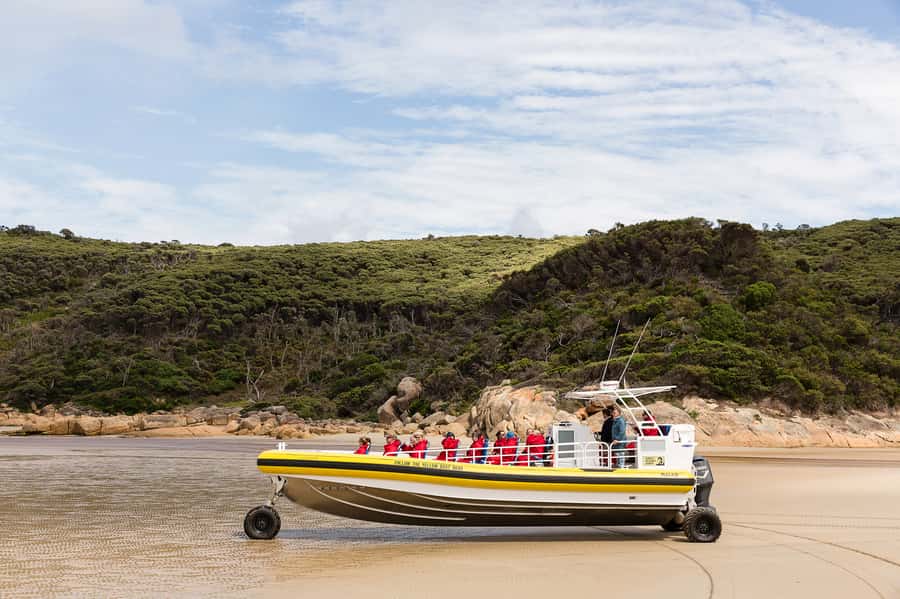
- World-sized amphibious boat ride built for these coastal waters, with a crew that focuses on comfort and safety.
- South Point first impression—the southernmost point of Australia’s mainland sets the tone fast.
- Skull Rock and the granite drama—a monolith shaped by waves, with the skull look getting more obvious as you get closer.
- Stops built around scenery and wildlife including The Glennies, Anderson Islets, Anser Island, Mount Oberon, and Norman Beach.
- Marine life watching with a real shot at seals, dolphins, and (on some days) migrating whales.
- Warm waterproof gear included plus a live English guide and nonstop explanation while you’re out on Bass Strait.
Wilsons Promontory at 2pm: why this cruise works so well
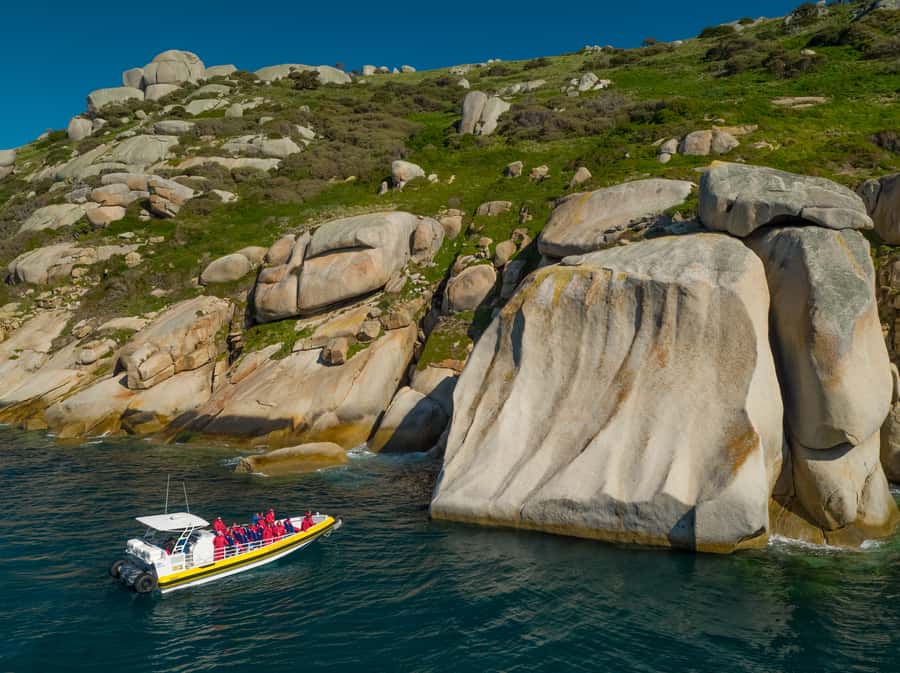
If you only have one afternoon in the Wilsons Promontory area, this is a smart way to spend it. You’re not trying to hike the whole peninsula. Instead, you’re out on the water where the granite coastline looks even more dramatic, and where marine wildlife turns the whole trip into something you can’t fake with photos.
The boat matters here. This is a custom-built amphibious vessel, and it’s billed as both the world’s first custom-built amphibious boat and the world’s largest custom-built amphibious boat. That translates into a ride designed for cruising in these conditions—more comfort, more stability, and fewer “why am I doing this?” moments than an ordinary open boat.
At a little over two and a half hours, it’s long enough to see the signature places—South Point and Skull Rock—without feeling like you’re committing your entire day to the sea. And because it’s guided, you get context for what you’re seeing: the rock formations, the coastal shape, and the living marine world around you.
You can also read our reviews of more tours and experiences in Victoria Australia.

Getting to the dock and staying comfortable (Tidal River meets Bass Strait)
Your meeting point is easy to miss if you show up late: the ticketing office is in the same building as the Tidal River Open Air Cinema. Check in 30 minutes before departure, so you have time for the safety briefing and to get sorted before the boat leaves.
What you wear can make or break the experience. The cruise is weather-dependent, and you should assume wind and spray are part of the deal. The operator provides a waterproof and windproof jacket, so you’re not going out in light clothing, but you still want to bring layers underneath and treat this like a proper southern-coast outing—warm, not just “nice on land.”
One more practical note: there’s no food or drinks included. The cruise may be smooth, it may be bouncy, but either way you’ll be out on the water. If you care about not thinking about hunger halfway through, plan to eat before you go and bring what you need for your own comfort.
The first wow: South Point and the southern mainland feeling
The cruise route takes you toward the iconic South Point, the southernmost tip of mainland Australia. This is where the coastline stops being “another shore” and becomes a statement—big rock, big sea, and that feeling that the continent ends here.
As you move into Bass Strait, you’re also entering the waters associated with Victoria’s marine-protected areas. That matters because the scenery isn’t just pretty; it’s a place where wildlife uses the coastline and nearby waters for feeding and resting. The guide’s job is to point out what you’re looking at and why it’s where it is—so you’re not just staring at rocks. You’re learning how the coastline shapes the sea life around it.
If the day’s weather is decent, you’ll also notice how the color of the water shifts with angle. More importantly, the sea conditions are part of the spectacle. A rougher ride doesn’t have to ruin your afternoon. People often describe the return journey’s waves as fun rather than frightening—especially when you’re dressed for it.
The Glennies, Anderson Islets, and Anser Island: where spotting stays active
After the South Point introduction, the cruise focuses on several stops along the rugged coast: The Glennies, Anderson Islets, and Anser Island. This is a good chunk of the itinerary because it keeps you moving through different visual angles of the same coastline.
Here’s why those names matter: you’re not just circling one famous spot. You’re getting multiple viewpoints on granite walls, small islands, and sheltered areas where animals can show up. When you’re scanning for wildlife, variety helps. Even if the big animals don’t appear, you often still get something—birdlife on the wing, seals hauled out or splashing offshore, or dolphins cutting through the water.
From a practical standpoint, this is also the time when you’ll benefit most from the guide’s commentary. The crew points out what they’re seeing and what to watch for next. That turns “I hope we see seals” into a more relaxed search with a purpose.
A small caution: if the sea is choppy, you’ll want to keep your movement easy. Bring your eyes back to the horizon often, and don’t try to watch the whole ocean at once. Wildlife doesn’t arrive on a schedule, but your viewing gets better when you stay steady.
Mount Oberon and Norman Beach: geology you can actually picture
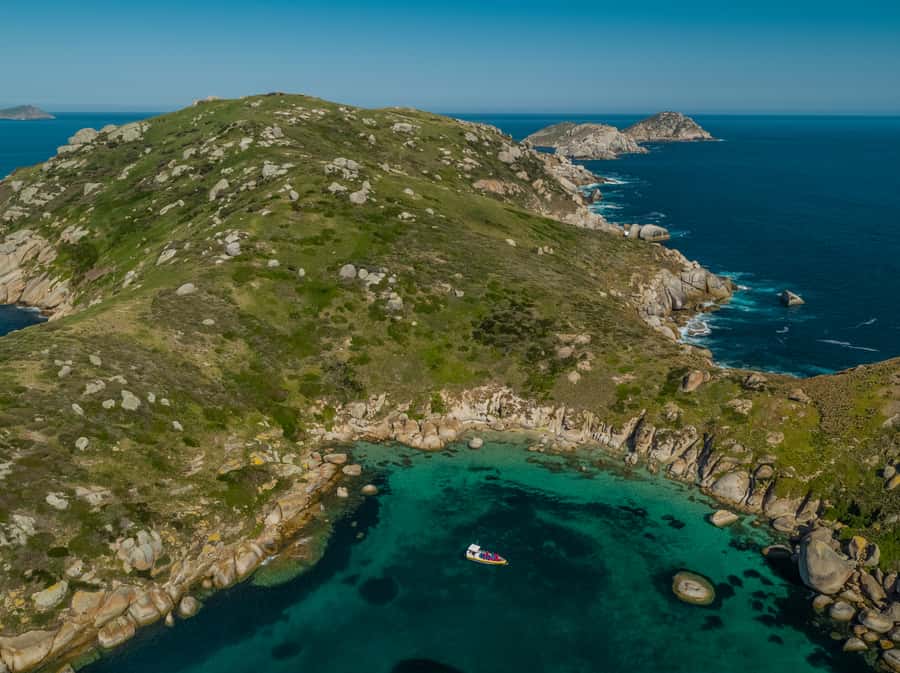
This cruise doesn’t treat rocks like background decoration. It gives them a starring role—especially around Mount Oberon and Norman Beach.
You’ll see prehistoric boulders at Mount Oberon, and then you’ll be pointed toward Norman Beach’s white quartz sands. The contrast is the point. Granite dominates the look of the coastline, but the sand turns into something bright and almost stark against the sea. From the water, that contrast helps you understand the coastal story: rocks break down, sands form, and everything gets shaped again and again by waves.
One of the nicer things about a guided format is that you don’t have to guess what you’re looking at. You can enjoy the view and learn the “why” behind it—how the coastline and rock types affect where animals linger and how the shoreline behaves.
This is also a strong section for photos, even if you’re not a hardcore camera person. Big rock mass, bright sand, and changing light all make for images that don’t look like every other coastline postcard.
Skull Rock: the monolith that earns its nickname
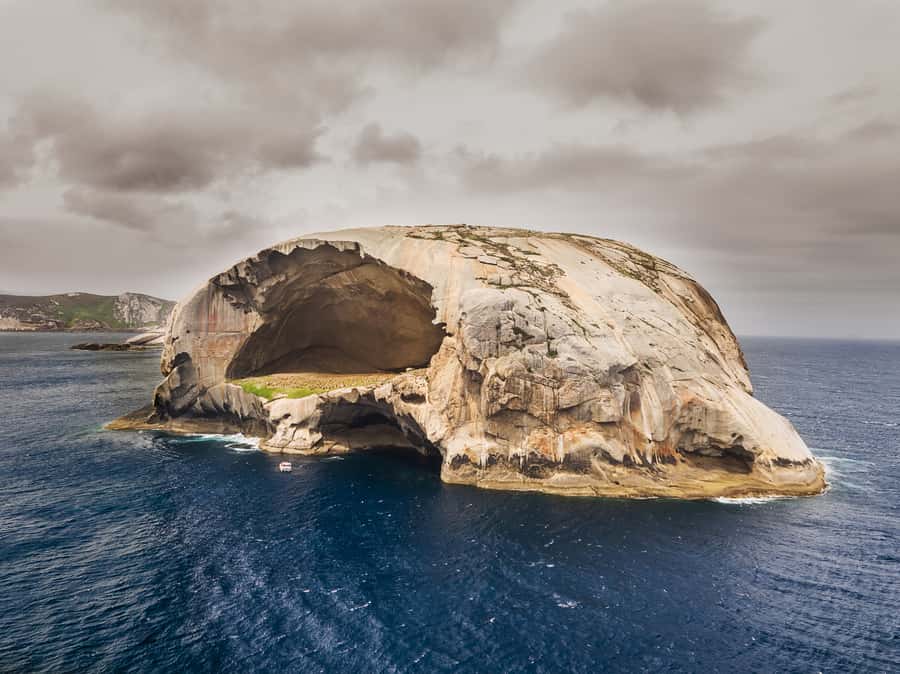
No Wilsons Promontory cruise review is complete without Skull Rock. It’s the iconic granite monolith sculpted by waves, and it becomes even more mysterious as you get closer.
Skull Rock is one of those natural sights where the shape plays tricks depending on your angle and distance. The closer you approach, the more “skull shapes” become visible. It’s a simple effect, but it makes the moment feel like the rocks are revealing a secret as the boat changes position.
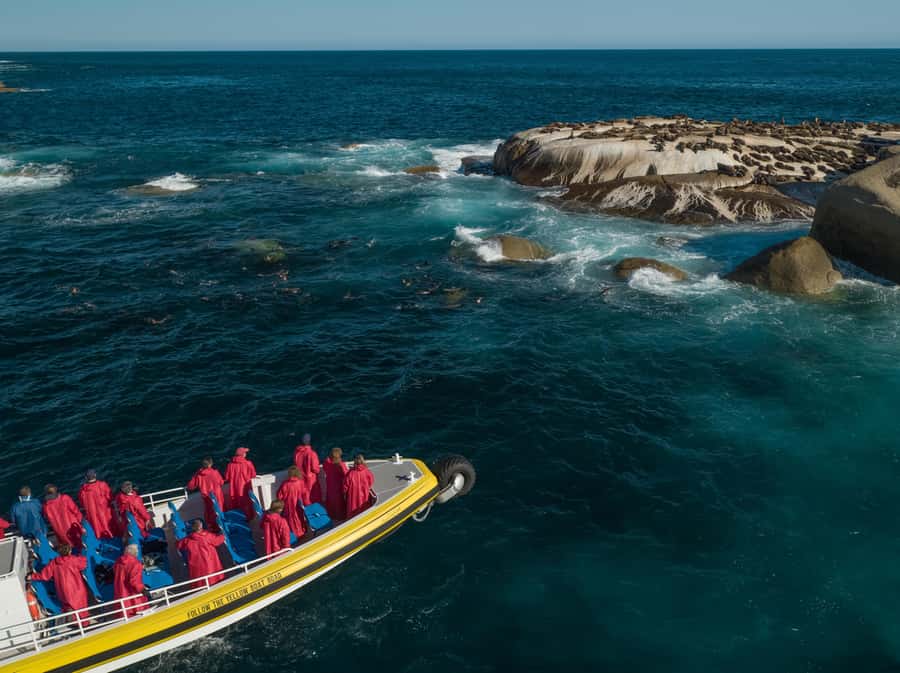
This is also a wildlife hotspot in the overall experience. People often connect the Skull Rock section with seals and birds, and on some days, dolphins show up nearby. The guide’s job is to help you keep an eye on the right parts of the water instead of chasing movement randomly.
If you’re the kind of person who likes structure—knowing what’s coming—Skull Rock is your payoff moment. It’s the place that makes the afternoon feel “complete,” not just a scenic cruise.
Wildlife odds: seals, dolphins, and whales (the realistic view)
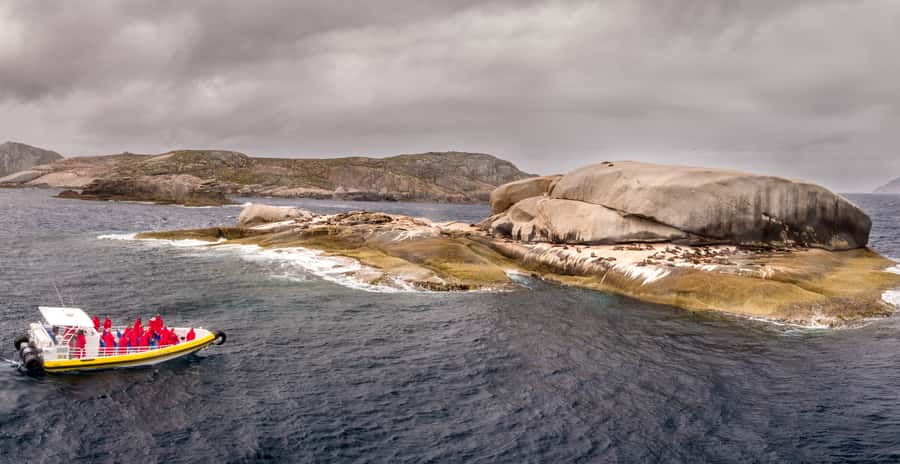
Wildlife is the headline attraction, but it’s also the most weather-dependent part of the planet. Still, the cruise is set up for strong odds because it moves through multiple coastal zones where animals feed or rest.
From what’s consistently described in onboard experiences, you’ll have chances at:
- Thousands of seals in one of Australia’s great marine national areas
- Dolphins that may appear while you’re cruising between points
- Migrating whales on certain days
- Plenty of birdlife, including raptors like white-bellied sea eagles mentioned in feedback
How should you think about it as a rider? Expect the seals. They’re the most consistently seen kind of highlight in this type of trip, and the rocky edges and open water give them plenty of chances to show off. Dolphins are a bonus, especially when you get clear viewing conditions. Whales are the wildcard—worth hoping for, but don’t let the lack of one day ruin your rating. Even without whales, the coastline and the seal activity can easily carry the afternoon.
And one small pro move: when the guide calls something out, don’t immediately jump locations with your camera. First, let your eyes adjust. Then you’ll actually see what they’re pointing to.
Boat comfort, jackets, and the reality of salt spray
A cruise like this lives or dies on comfort. Luckily, waterproof and windproof jackets are included. In the real world, that means you can focus on sightseeing instead of doing last-minute jacket origami.
Many people also point out that the crew keeps people safe and checked-in throughout the trip. If you’re worried about motion sickness, this is the kind of tour where you should take that seriously. The provided gear helps, and there may be travel-sickness remedies available on board, based on feedback from past outings. Ask staff if it matters to you.
One more honest detail: if conditions get rough, you’ll feel it. That doesn’t automatically mean it’s unpleasant. Some people even describe rougher water as part of the fun—because it makes the sea feel real, not staged. The key is dressing for it. Wind off the water can cool you fast.
Price and value: is $109 per person a fair trade?
At $109 per person for 150 minutes, this isn’t a cheap add-on. But it also isn’t just “a boat ride.” You’re buying a guided cruise with:
- a custom-built amphibious vessel designed for these waters
- multiple named stops along a rugged coastline
- included waterproof and windproof gear
- live English interpretation throughout
For me, the value comes down to two questions you can answer fast:
1) Do you want to see Wilsons Promontory from the water without planning a long hike?
2) Do you care about wildlife and geology, explained in plain language?
If you said yes to both, the price starts to make sense. You’re paying for time, access to marine zones, and the guide support that turns scenery into something you remember with details.
What can reduce value for some people: food and drinks aren’t included. If you show up hungry, you’ll feel the cost of that fast. Plan a meal before departure, and you’ll avoid the “why didn’t I bring anything?” regret.
Who should book this afternoon cruise
This cruise fits best if you:
- want a signature wildlife-and-coast experience in a single afternoon
- prefer guided interpretation over wandering solo
- like geology, not just beaches
- travel with people who want a middle-ground activity—less strenuous than a full day on foot, but still exciting
It might be less ideal if you:
- get very anxious on moving boats and can’t handle wind exposure (dress warmly, ask crew questions)
- only want calm, long beach time with zero chance of spray
The good news is that you’re given waterproof gear and a crew that focuses on safety and passenger comfort.
Should you book? My practical call
If your goal is to get the best mix of southernmost-point scenery, Skull Rock, and wildlife chances, this afternoon cruise is an excellent bet. The route hits the named highlights in a short window, and the amphibious-boat setup is built for these waters—so you’re not white-knuckling through the experience.
I’d book it if you can handle cool weather and you’ll dress properly. The sea can be unpredictable, but with the included windproof gear and a guided search for seals and dolphins, the experience has enough structure to stay satisfying even when wildlife is shy.
FAQ
FAQ
What time does the Wilsons Promontory Afternoon Wilderness Cruise start?
It departs at 2pm.
How long is the cruise?
The duration is 150 minutes.
Where do I check in for the tour?
The ticketing office is in the same building as Tidal River Open Air Cinema, and that is where the tour commences. Check in 30 minutes before departure.
What’s included in the ticket price?
Your ticket includes the cruise, a guide, and a waterproof and windproof jacket.
Is food or drinks provided during the cruise?
No. Food and drinks are not included.
What should I wear or bring?
The tour notes recommend bringing a jacket and dressing warmly. The cruise also provides a waterproof and windproof jacket.
What happens if the weather is poor?
This experience requires good weather. If it’s cancelled due to poor weather, you’ll be offered a different date or a full refund.
Are service animals or infants allowed?
Service animals are permitted. Infants must sit on laps.