REVIEW · MELBOURNE
Yarra River Waterbike Tour
Book on Viator →Operated by Waterbikes Australia · Bookable on Viator
Melbourne looks different when it’s under your feet. A silent waterbike ride down the Yarra River turns the skyline into something you can study inch by inch, and I really like the small-group feel that keeps things calm. The ride is pedal-powered and that’s a good thing for most people, but the seat can be a bit uncomfortable for some riders.
You get a condensed tour (about 1 hour 30 minutes) that still hits big-name sights and river spots where you’d swear you left the city. You’ll also be set up with a lifejacket, and the ticket is mobile, so you’re not hunting for paper once you arrive.
The main “consideration” is simple: you do have to pedal. If you want a totally effortless ride, this isn’t the one.
In This Review
- Key highlights to know before you go
- Entering The Mercantile Rowing Club start: easy to find, fast to gear up
- Silent waterbike basics: how much effort you’ll actually need
- The Yarra River route: a city tour from the waterline
- Federation Square: arts-and-events energy, viewed from the river
- Melbourne Park and the Australian Open legacy
- Flinders Street Station: a historic rail landmark with river-side angles
- Birrarung Marr: inner-city park time between the city and the river
- Southbank: culture venues and riverfront atmosphere
- Princes Bridge: the river gateway into the central city
- Price and value: what $140 buys you in 90 minutes
- Weather, comfort, and the smart way to ride
- Who should book this Yarra River waterbike tour
- Should you book this Yarra River Waterbike Tour?
- FAQ
- How long is the Yarra River waterbike tour?
- Where does the tour start and where does it end?
- What is the group size?
- What’s included in the tour price?
- Is bottled water included?
- Is cancellation allowed if the weather is poor?
Key highlights to know before you go
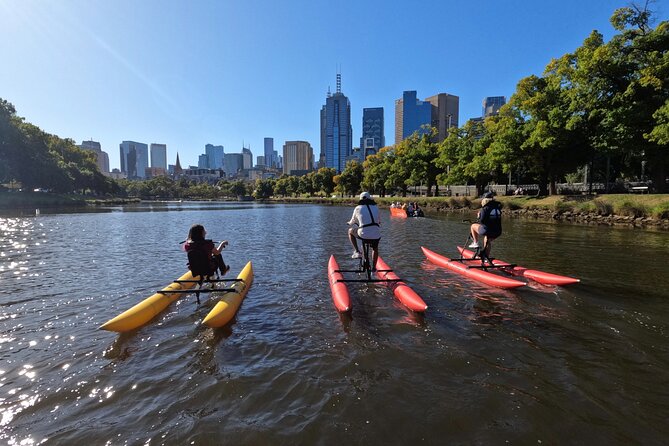
- Small group max of 7, so you get attention and space on the water
- Zero-emission, silent waterbikes that aim to respect the ecosystem
- Landmarks plus park time, with the route mixing CBD icons and inner-city green spots
- Lifejacket included, so you can focus on the ride instead of gear shopping
- Hosts share helpful guidance and photos, a nice extra touch after the ride
Entering The Mercantile Rowing Club start: easy to find, fast to gear up
The tour starts at Mercantile Rowing Club, 5 Boathouse Dr, Melbourne. That matters because you’re stepping into a working watersports setting, not a random dock with unclear instructions. It also means the vibe is practical: quick safety chat, fit the lifejacket, then you’re moving.
Because you start and end at the same place, you don’t have to worry about being dropped off somewhere inconvenient. It’s also described as near public transportation, which is handy if you’re mixing this with other Melbourne plans before or after.
Before you head out, think about one very unglamorous detail: shoes. One rider tip stands out—wear proper shoes with good grip because you’ll be pedaling. If you show up in flimsy sandals or slick soles, your feet will do the complaining before your legs do.
You can also read our reviews of more tours and experiences in Melbourne.

Silent waterbike basics: how much effort you’ll actually need
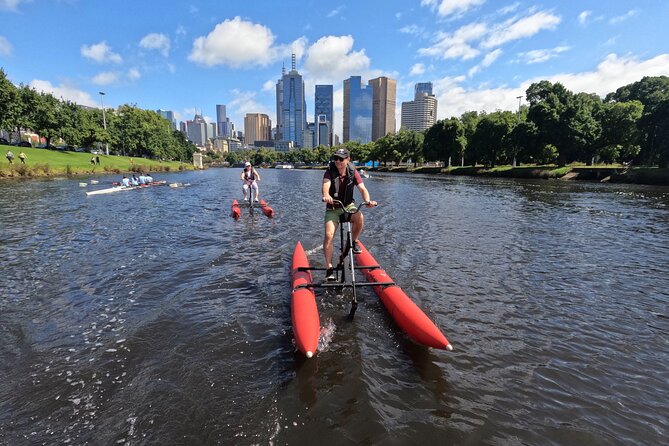
This is a pedal-powered waterbike experience, and the good news is that it’s not framed as a workout grind. Reviews point out it’s not too taxing, but you do have to pedal. So plan for light-to-moderate effort, the kind that keeps you awake and engaged rather than wiped out.
The waterbike is also zero-emission and silent, which changes how the whole trip feels. On a noisy boat tour, you’re half focused on sound levels. Here, you’re more aware of the river itself—movement, reflections, and the way the city looks from the water.
Maneuvering is described as easy, too. That’s important because your attention should go to scenes like Southbank and bridges, not wrestling the bike. Still, comfort can vary. One review flagged that the seat may feel uncomfortable, so if you’re sensitive to saddle time, consider bringing your own coping strategy (like wearing shorts you’re used to).
The Yarra River route: a city tour from the waterline
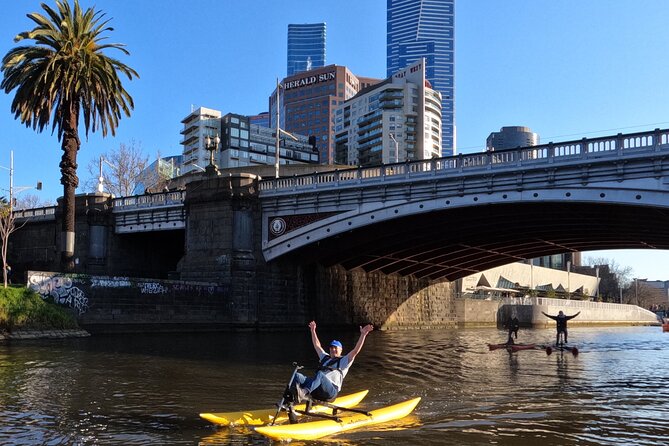
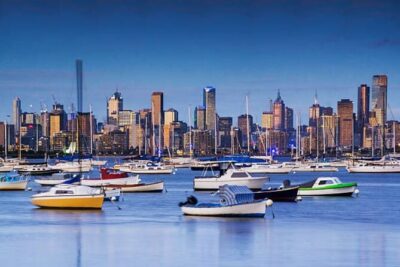
The whole point of this tour is seeing Melbourne from a different height and angle. When you’re on the river, the city’s edges look softer. You get more sky, more reflection, and a sense of scale that’s hard to get from sidewalks.
The route is also described as varied. You don’t just cruise past buildings; you get urban sprawl and greener river patches mixed in. That balance is what makes the hour and a half feel like more than a straight sightseeing loop.
And because the group is capped at seven people, you’re less likely to feel rushed. It’s not a factory line. You can ask questions when your guide points out something interesting, and you’re less likely to get stuck behind slower riders.
Federation Square: arts-and-events energy, viewed from the river
The first big stop is Federation Square, right on the edge of Melbourne’s central business district. From the water, Federation Square isn’t just a venue name on a map—it becomes a landmark you can visually connect to the surrounding streets and buildings.
What I like about this start is how it sets context fast. You’re not launching into the river “cold.” Your guide can point out the city structure around the river corridor early, so later landmarks make more sense.
One drawback of all condensed tours is time. You won’t linger like you would on a self-guided stroll. That’s the trade: quick understanding now, flexible exploring later.
Melbourne Park and the Australian Open legacy

Next comes Melbourne Park, home of the Australian Open since 1988. Seeing it from the water gives a surprising perspective. Instead of imagining the courts as a self-contained sports world, you see how tightly they’re woven into the surrounding urban fabric.
This is a good stop for sports fans, even if you’ve never been to a Grand Slam match. It’s also a nice moment for non-sports fans because the guide can connect how a major event site shaped the area’s identity over time.
A practical note: if you’re the type who likes to take photos at every stop, plan to move quickly when the group pauses. The tour is short, and the best shots often happen right when the guide says to look.


Flinders Street Station: a historic rail landmark with river-side angles
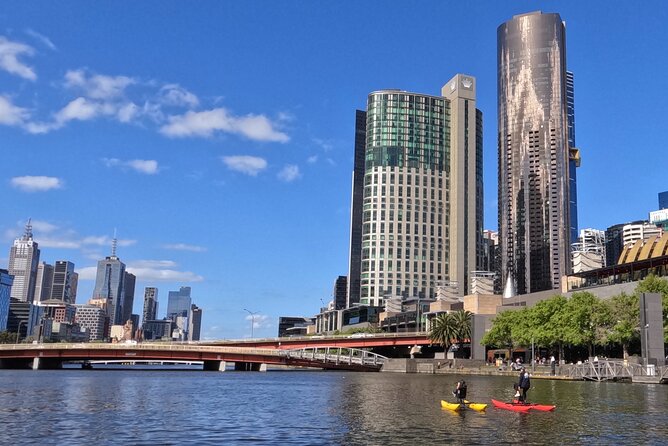
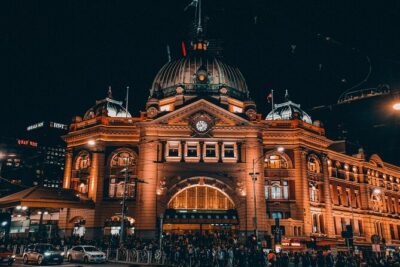
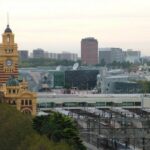
Then you hit Flinders Street railway station, a historic hub opened in 1854. It serves the metropolitan rail network, and from the river you can see why this place matters—its role as a crossroads isn’t abstract when the station anchors the skyline.
From the water, Flinders Street can feel less like a building you pass by and more like a visual anchor that ties neighborhoods together. It’s also a strong reminder that Melbourne’s identity is built on movement—trains, trams, and the river itself.
If you’re hoping for a deep architectural lecture at each landmark, temper expectations. The value here is fast context, not long stops. You’ll learn enough to know what matters, then you can choose whether to go deeper afterward on your own.
Birrarung Marr: inner-city park time between the city and the river
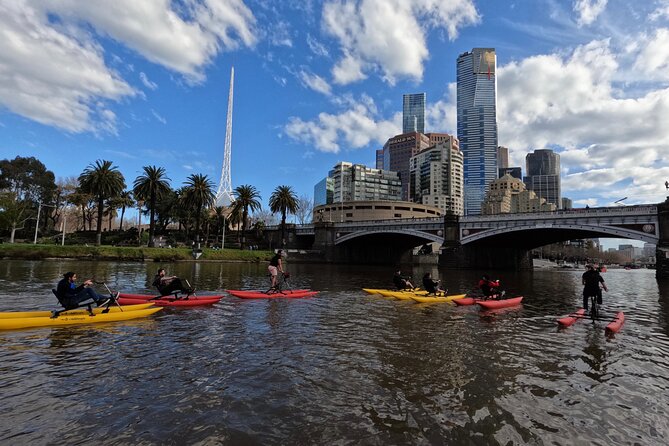
After the rail and sports energy, Birrarung Marr brings you back to softer land. It’s an inner-city park located between the CBD and the Yarra River, which makes it an ideal stop for people who want nature without leaving the city bubble.
This is where the eco-focused angle starts to feel real. Being on a quiet, zero-emission waterbike means you notice how the river corridor shifts from concrete to greenery. It’s a reminder that city sightseeing doesn’t have to mean all pavement.
The main “watch-out” is that you’ll probably want more time here than the tour can provide. The stop helps you spot the park vibe, but it’s not a full picnic-plan experience. If you like parks, plan a follow-up walk after the ride.
Southbank: culture venues and riverfront atmosphere
Next is Southbank, known for cultural venues and a food-and-people scene around the river. From the water, it’s easier to understand the riverfront layout: which buildings face the water, where pedestrian traffic gathers, and how the area feels designed around the Yarra.
Two cultural anchors are often highlighted here: the Malthouse Theatre, housed in a restored brewery, and the Melbourne Recital Centre, which hosts classical concerts. The cool part from the water perspective is how these venues read visually as part of a broader river corridor, not isolated destinations.
One more practical touch: one review noted the hosts email riders their best photos for free. That’s a nice bonus after you’re done pedaling and you can relax while you sort through your day.
Princes Bridge: the river gateway into the central city
Finally, you reach Princes Bridge, which spans the Yarra and acts like a gateway into central Melbourne from the south. It sits on the site of one of the city’s oldest river crossings, so it’s both a working transport piece and a historical marker.
Approaching a bridge from the water gives you a feeling you can’t get from the sidewalk: you’re moving under the city’s infrastructure instead of just passing alongside it. It’s a fitting closing sight because it ties the trip together—river landmarks, urban landmarks, and the way movement stitches the city together.
As with other stops, the time is tight. So if you see a spot you want to explore later, make a note in your head and plan a walk after you get back to the start point.
Price and value: what $140 buys you in 90 minutes
At $140, the question isn’t just whether it’s worth it—it’s whether it’s worth it compared to other ways to see Melbourne.
Here’s why it can feel like good value:
- You’re getting a guided loop with a small group (max 7), which usually makes the experience more personal.
- You’re paying for the waterbike itself, including lifejacket gear, which you don’t have to source yourself.
- You’re buying time-efficient sighting: the route covers major landmarks in about 1 hour 30 minutes, leaving plenty of room afterward for your own wandering.
The extras matter, too. Bottled water isn’t included, and alcoholic drinks aren’t part of the tour. I’d treat this like a short activity where you pack basic comfort: a refillable bottle, sunscreen, and a layer if the weather shifts.
Also, it’s described as having a mobile ticket. That sounds minor, but it reduces stress. Less hassle means more energy for the ride.
Weather, comfort, and the smart way to ride
This experience requires good weather. That’s normal for anything on open water, but it’s worth taking seriously. If it’s overcast or breezy in a way that changes river conditions, expect the operator to prioritize safety and likely reschedule rather than force a bad ride.
Comfort is the biggest rider-specific variable:
- Bring proper shoes for pedaling.
- Expect that the seat may not suit everyone, especially if you usually prefer softer saddles.
- Wear clothes you can pedal in easily, since this isn’t just sitting and drifting.
And because the bikes are silent, you’ll also appreciate the ride pace more. This isn’t about racing. It’s about moving at a human speed through a city corridor that usually looks totally different from land.
Who should book this Yarra River waterbike tour
I’d point you toward this tour if you want:
- A city sightseeing break that’s still outdoors and calm
- A nature-lovers in the city kind of experience, thanks to river greenery and the park stop
- A guided way to connect landmarks like Federation Square, Melbourne Park, Flinders Street Station, Southbank, and Princes Bridge
- A short activity with a small group so you can actually ask questions
It may not be ideal if:
- You hate pedaling or want a fully effortless ride
- You’re very sensitive about seat comfort
- You’re hoping for lots of long stops and walking time at each landmark
Should you book this Yarra River Waterbike Tour?
If you like the idea of seeing Melbourne’s big icons while still feeling the river, this one is a strong pick. The silent, zero-emission aspect is more than marketing—it changes how you experience the city. The route is also efficient, mixing major landmarks with inner-city greenery in a tight 90-minute format that leaves you time to keep exploring.
I’d book it if you’re okay with light pedaling effort and you show up with good shoes. Skip it only if you want zero effort or you know you won’t tolerate a less-than-cushion seat for long. Otherwise, it’s a fun, eco-minded way to get a fresh view of Melbourne that most people miss.
FAQ
How long is the Yarra River waterbike tour?
It runs for about 1 hour 30 minutes (approx.).
Where does the tour start and where does it end?
It starts at Mercantile Rowing Club, 5 Boathouse Dr, Melbourne VIC 3004, and it ends back at the meeting point.
What is the group size?
The tour/activity has a maximum of 7 travelers.
What’s included in the tour price?
The tour includes a lifejacket.
Is bottled water included?
No, bottled water is not included.
Is cancellation allowed if the weather is poor?
You can cancel for a full refund up to 24 hours in advance. The activity requires good weather, and if it’s canceled due to poor weather, you’ll be offered a different date or a full refund.