Melbourne hits hard on day one. This private morning or afternoon walk helps you get your bearings fast, with a local guide leading you through the CBD’s biggest landmarks and the street scenes that give the city its personality. I especially like the quick, stop-by-stop format and the way you’re shown Melbourne from ground level, not from a bus window. You also get a local drink and food tasting, so it’s not only about photos.
My other big plus is the smart mix of well-known stops (like Flinders Street Station and the National Gallery of Victoria) plus the side streets people miss. The main thing to think about is that it’s a lot of walking in a short window: 20 stops, with brief time at each, so if you want long hangs inside museums or shops, you’ll likely want a follow-up day plan.
In This Review
- Key things to know before you go
- What you’re really getting in a 3-hour Melbourne CBD walk
- Meeting at Crown Melbourne and why the start point is convenient
- Yarra River and Southbank bridges: your first Melbourne skyline hits
- Princes Bridge, Arts Centre Melbourne, and the Australian Music Vault
- National Gallery of Victoria: the stained-glass ceiling moment
- Federation Square to Flinders Street Station: the CBD power walk
- Hosier Lane and ACDC Lane: street art you can walk through
- Block Arcade and Bourke Street Mall: shopping arcades as city design
- Chinatown and the Meyers Place Bar stop: culture plus a proper break
- Parliament House and Princess Theatre: big landmarks with storytelling
- Price and value: is $148.99 per person worth it?
- Should you book this Melbourne private walking tour?
- FAQ
- How long is the private tour?
- Is this tour private or shared?
- What’s included in the price?
- Where does the tour start?
- Does the tour include hotel pickup and drop-off?
- Is there an admission fee for the stops?
- What fitness level do I need?
- Is it easy to reach by public transportation?
- Can I cancel for free?
Key things to know before you go
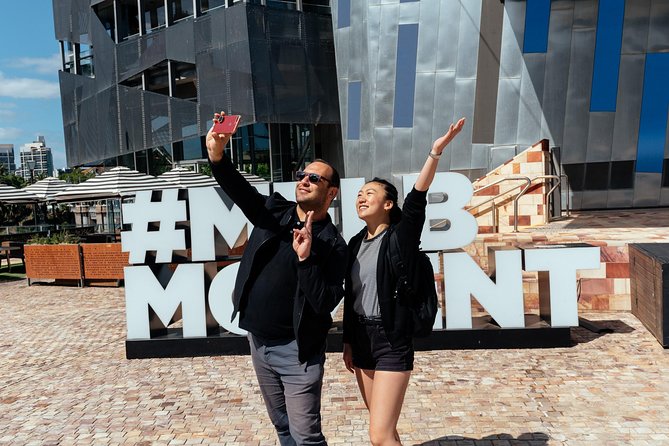
- Private tour for your group only, with a local guide on your schedule
- Three hours, 20 stops: fast orientation for first-timers
- Free-to-view itinerary highlights, with admission marked as ticket free at stops
- Two bridge-crossings over the Yarra for skyline views and great photo angles
- Lane-art stops like Hosier Lane and AC/DC Lane for real street-level character
- One included local drink and food tasting during the walk
What you’re really getting in a 3-hour Melbourne CBD walk
This tour is built for the practical part of travel: figuring out where things are, how neighborhoods connect, and which landmarks you’ll want to revisit later. At about 3 hours, you’ll cover a lot of central Melbourne on foot, with time boxes around 10–15 minutes per stop. That means you get the overview without the “we spent an hour waiting for the next bus” problem.
The private setup matters, too. You’re not sharing your time with a big group or listening to a one-size-fits-all lecture. In the way guides like Ben and Julie have led this walk, you can also expect conversation and small adjustments to how your group moves and what you pay attention to.
One more detail that makes it easier: the itinerary is packed with stops that don’t require buying big attractions along the way. Many stops are marked admission ticket free, so your money goes to the tour (and your later plans), not to paying entry fees every time you turn a corner.
You can also read our reviews of more private tours in Melbourne
Meeting at Crown Melbourne and why the start point is convenient
The tour starts at Crown Melbourne, 8 Whiteman St, Southbank VIC 3006, and it ends back at the same meeting point. That back-to-base finish is nice when you’re traveling with limited time, because you don’t need to plan a transit escape after a walking day.
It’s also a location that makes sense for public transport. The general info says it’s near public transportation, so you can usually arrive without stress. Just do yourself a favor and aim to be there a few minutes early, especially since the tour is short and the walking clock starts right away.
No hotel pickup or drop-off is included, so you’ll want to choose your meeting plan based on your own location. If you’re staying in the CBD or Southbank area, you’ll likely find it simple. If you’re farther out, build in extra time to get to Crown Melbourne.
Yarra River and Southbank bridges: your first Melbourne skyline hits
Your morning or afternoon begins with the Yarra River, walking along the Crown Riverwalk. This is one of the best ways to understand Melbourne quickly: you get a clean line of sight to the skyline and you see the way the city uses the riverfront as a public space, not just a water feature.
From there you cross into Southbank, taking you toward the area around Flinders Street Station. The best part here is the change of perspective. Melbourne’s center can feel like a grid from above; at street level it’s more like a set of viewpoints and sightlines.
Next you move onto bridge structure and design: the Southbank Footbridge is a standout stop for its curved beam that rises above the bridge. Even if you’re not a bridge-nerd, it gives you a strong visual anchor and a great photo moment without needing any paid attractions.
The timing is tight at each stop, so you’ll want to keep your eyes open rather than expecting long photo sessions. But that’s also why this works for orientation: you learn the river-to-CBD connections in a short, memorable loop.
Princes Bridge, Arts Centre Melbourne, and the Australian Music Vault
Princes Bridge comes next, and it’s not just a crossing. It was constructed in 1886–1888, and it carries some architectural weight from the late 1800s. When you’re walking, you notice details that you’d never catch from a moving car—scale, stonework, and how it frames streets beyond.
Then you arrive at Arts Centre Melbourne, a complex with multiple venues. The tour lists Hamer Hall, Playhouse Theatre, State Theatre, Fairfax Studio, and galleries, plus the Australian Music Vault next door. Even if you don’t plan to see a show, it’s useful to know where the cultural “engine room” is. You’ll be better set up for deciding whether you want theater or an art stop later.
At the Australian Music Vault, you’re in the world of Australian music memorabilia. This kind of stop is valuable because it gives you a local lens. Melbourne can be a fashion and art city on the surface, but music and performance are a big part of what people talk about day to day.
One caution: each venue stop is short (again, the tour is fast by design). So treat this as a highlights walk. If you want to read everything or take a long look around, plan a separate visit after you’ve learned where everything is.
National Gallery of Victoria: the stained-glass ceiling moment
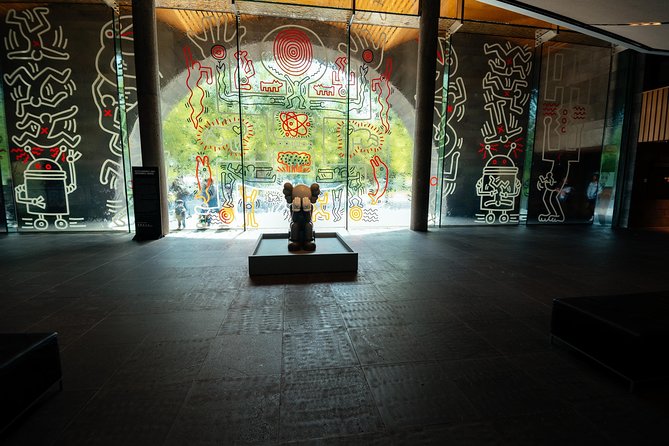
Next is the National Gallery of Victoria, where the tour includes a brief visit to see the world’s largest stained glass ceiling by Simon Fieldhouse. This is exactly the kind of stop that makes a walking tour feel worth it: a specific, memorable “only here” detail.
Because the visit is short, you don’t need to worry about scheduling a full museum morning on top of this tour. You get a taste, you learn what’s there, and you can decide if NGV is a day-trip-worthy priority for you.
A practical tip: if you care about art details, wear comfortable shoes and keep your pace steady. Short stops are ideal for quick viewing, but you’ll still need time to orient yourself once you step inside.
If you’d rather do minimal indoor time, this still works because the ceiling is the kind of visual that grabs you quickly. You can enjoy the moment without needing a long museum plan.




Federation Square to Flinders Street Station: the CBD power walk
You’ll cross over St Kilda Road near Federation Square (Fed Square). From here, the tour points out landmarks in the area like Kings Domain and the Sidney Myer Music Bowl, named after the founder of the Myer Emporium. Even if you don’t visit those spaces today, the view links geography to memory. You’ll recognize where you are when you see these places again later.
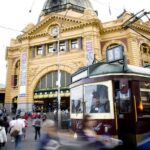
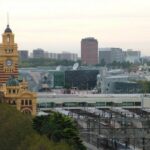
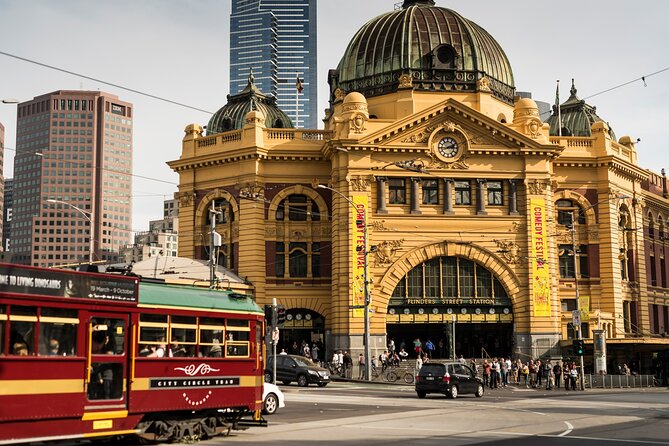
Then comes Flinders Street Station, opened in 1910. The description includes French Renaissance architecture, and the station’s scale—covering two city blocks—is a big part of why it’s such a landmark. It’s also one of those places where the built environment feels like a character. You walk up and suddenly understand why so many Melbourne photos are shot around these tracks and platforms.
After that you get Young and Jacksons, described as a heritage-listed building and noted as the one site saved from demolition for metro works. This kind of stop is subtle but important. It shows you how Melbourne layers old and new, instead of replacing everything as it modernizes.
Then you reach St Paul’s Cathedral, a Gothic cathedral built 1880–1891, and the Anglican cathedral seat of the Archbishop of Melbourne. The value here is perspective: Melbourne isn’t only street art and laneways. It also has “slow architecture,” and this stop gives you a calm visual break in the middle of a walking schedule.
Hosier Lane and ACDC Lane: street art you can walk through
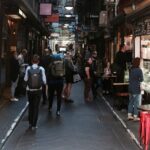
If Melbourne has a visual signature, it’s often the laneways. Hosier Lane is next, known for urban street art on bluestone. The tour notes that it can be political and controversial, and that the artwork changes frequently.
That last part matters for you: don’t treat Hosier Lane like a museum piece. It’s a living outdoor gallery. Go in with curiosity, not expectations of seeing the exact same art every time.
Then you walk to ACDC Lane, named as a tribute to the rock band AC/DC. It’s a fun contrast to the more politically charged art of Hosier Lane. Together, these two lanes show how Melbourne street culture can be both playful and serious.
Because each stop is brief, you’ll want to look up and around as you walk. Street art can be layered—on walls, on corners, and in spots you only see when you pause for two seconds.
Block Arcade and Bourke Street Mall: shopping arcades as city design
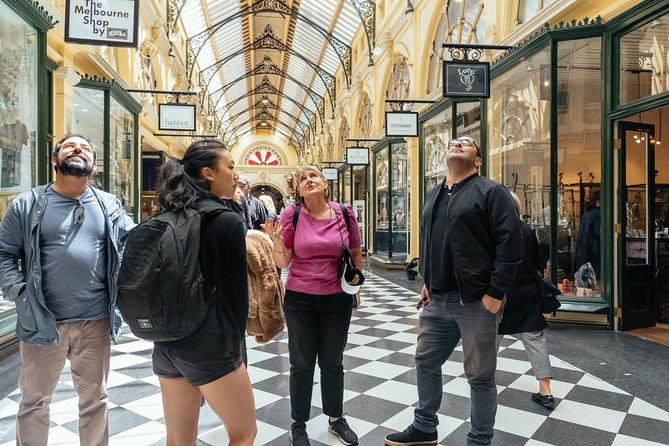
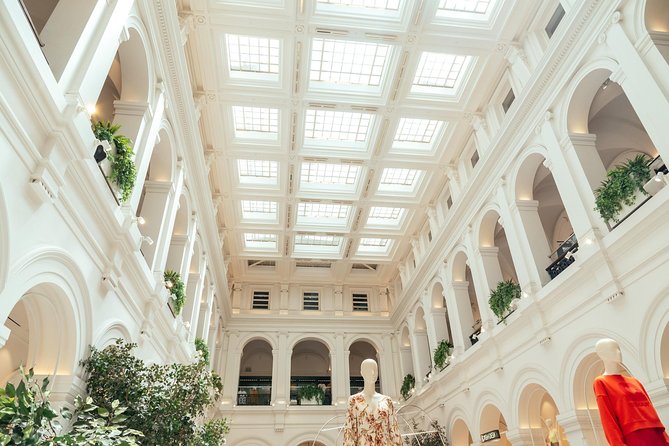
Crossing toward The Block Arcade, you’re moving into a late Victorian-era shopping arcade that opened in 1892. This is one of those places where the building itself is the attraction. You get covered passageways, old-world details, and the sense that Melbourne designed for strolling even before it was trendy.
Next is Bourke Street Mall, described as pedestrian and no smoking. It’s called the heart of Melbourne’s central shopping area, and the tour highlights two major department stores: David Jones and Myer. Even if shopping isn’t your thing, this mall is a useful orientation point. It helps you map where the main retail street energy sits compared with the laneway art and arts spaces.
One practical thought: arcades and malls can be crowded at certain times. The short, planned stop time helps, but if you dislike crowds, bring your patience and expect foot traffic in the center.
Chinatown and the Meyers Place Bar stop: culture plus a proper break
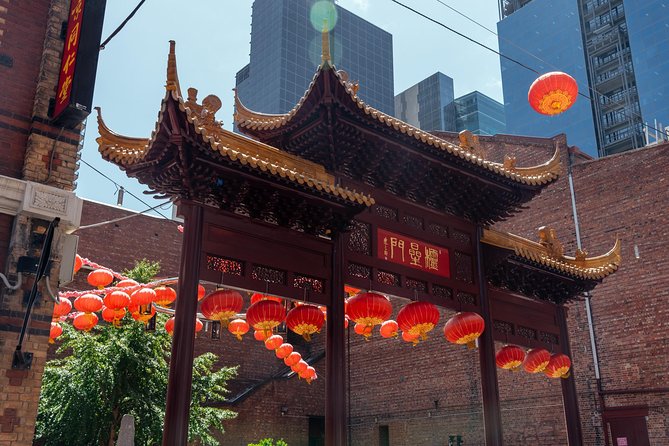
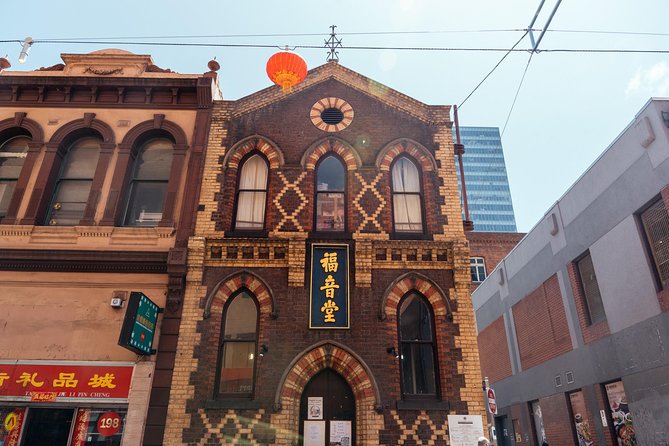
After the mall, the walk turns toward Chinatown, which dates back to gold rush days of the 1850s. This isn’t just a theme area. It’s a historical neighborhood that helps explain how Melbourne grew. Even if you only walk a few blocks, you’ll see the way signs, food, and community space all mesh together.
Then you reach the Meyers Place Bar area, with the itinerary referencing a turn toward Russell and Exhibition Streets and then returning to Pellegrini’s Bar. The tour frames Pellegrini’s as another Melbourne institution.
This part is where you can really feel the tour’s value. Not only are you sightseeing, you’re moving toward the included local drink and food tasting. While the exact moment of the tasting isn’t spelled out in the stop list, it fits naturally with a bar stop like this, and it gives you a realistic break before you head into the final stretch.
If you’re planning your own day after the tour, note the area around these bars. It’s one of the easiest places to extend your evening without having to travel far.
Parliament House and Princess Theatre: big landmarks with storytelling
Near the end, you walk to Parliament House of Victoria on Spring Street, described as one of Melbourne’s best-known landmarks and a meeting place for the Parliament of Victoria. The building’s scale helps you understand why this side of the city feels formal compared with the art-and-food streets earlier in the walk.
Then the final stop is the Princess Theatre. The itinerary includes a fun story: it’s said to be haunted by a friendly ghost named Federici. It also calls out major productions staged there, including Phantom of the Opera.
Even if you don’t believe in ghosts, you’ll probably enjoy the tone. This stop turns the walk from landmarks into local lore—exactly the kind of detail that helps you remember a city, not just an address.
Your tour ends back at the meeting point at Crown Melbourne, so after this you can decide what’s next: a second walk, an easy dinner nearby, or a slower evening in the Southbank area.
Price and value: is $148.99 per person worth it?
At $148.99 per person, this is a premium walking tour, but it’s not hard to justify the price when you look at what you’re buying: a private guide, a tight three-hour CBD orientation, and an included local drink and food tasting. If you’re splitting cost with friends or family, and if the tour offers group discounts (it does), the value usually improves quickly.
The real question for you is what you need from Melbourne on day one. If you want a quick overview and you like structure, this tour makes sense. If you’d rather roam independently, you might decide you can DIY this route. But the guidance matters here because the stops aren’t random. You’re shown a chain of landmarks that builds a mental map fast: river, bridges, arts buildings, NGV, the station, cathedrals, laneways, arcades, Chinatown, and then Parliament and theater.
Also consider the walking style. You’ll be on foot for a short time each stop, so you should treat it as a highlights walk. If you prefer slow travel, you may feel rushed. And if you’re the kind of person who needs a long break every 30 minutes, plan for your own water and snacks outside the included tasting.
Finally, one more reality check: the tour’s success depends on the guide being at the meeting point. There’s been a rare bad experience involving a guide not showing up and a lack of replies. That doesn’t define the tour, but it does mean you should take a practical step: check your messages on the day of the tour and arrive early enough to absorb a small hiccup.
Should you book this Melbourne private walking tour?
Book it if you’re in Melbourne for the first time and you want a structured, local-guided CBD orientation without wasting your day figuring out where everything is. It’s also a good match if you care about street-level details like Hosier Lane, iconic architecture like Flinders Street Station, and quick context that helps you plan your next steps.
Skip it (or plan something else) if you hate walking, want long indoor time, or prefer total freedom with no schedule pressure. The tour’s strength is focus and momentum, not lingering.
If you land on the “I want a smart start” side of the fence, this private walk is a strong value way to meet Melbourne on your terms.
FAQ
How long is the private tour?
It runs for about 3 hours.
Is this tour private or shared?
It’s a private tour, meaning only your group will participate with your local guide.
What’s included in the price?
You get a local guide and 1 local drink and food tasting.
Where does the tour start?
The meeting point is Crown Melbourne, 8 Whiteman St, Southbank VIC 3006, Australia.
Does the tour include hotel pickup and drop-off?
No. Hotel pickup and drop-off are not included.
Is there an admission fee for the stops?
The itinerary lists admission ticket free for the stops shown, including the National Gallery of Victoria visit mentioned in the plan.
What fitness level do I need?
The experience is listed as requiring moderate physical fitness.
Is it easy to reach by public transportation?
Yes. The tour is described as near public transportation.
Can I cancel for free?
Yes. There is free cancellation up to 24 hours in advance for a full refund.