REVIEW · MELBOURNE
Melbourne Park Tennis Sporting Experience
Book on GetYourGuide →Operated by Sporting Capital Tours · Bookable on GetYourGuide
Tennis on blue courts feels unreal. This Melbourne Park–to–MCG experience ties together tennis, Australian sports culture, and a proper walk through the venues that make this city tick. I love how it balances big-name landmarks with real, human stories from guides like Ben and Catherine, who make the history feel like something you can still picture.
I also like the hands-on moment: you get court hire, plus racquets and balls, and most days you’ll get to hit on the courts themselves (except during the Australian Open build-up periods). One fair consideration: the tour length and tennis access change in late December and January, so check the dates closely before you assume you’ll play.
In This Review
- Key highlights worth planning for
- Federation Square to Melbourne Park: the sport-forward warm-up
- Melbourne Park and the blue courts: what you’re really paying for
- The Australian Open calendar twist: when tennis access changes
- From tennis to the city’s football culture at the Olympic Precinct
- The MCG finale: closing with cricket’s big stage
- Guides make the difference: Ben, Catherine, Greg, Cathy, Michael
- Price and value: is $84 a fair deal for 3 hours?
- Timing, pacing, and what to do on a tight Melbourne itinerary
- Who should book this Melbourne Park tennis-to-MCG experience
- Should you book Sporting Capital Tours?
- FAQ
- How long is the Melbourne Park tennis sporting experience?
- Where do I meet the tour guide?
- What’s included in the price?
- Can I play tennis in December or January?
- What should I bring?
- Is an internal tour of the MCG included?
Key highlights worth planning for
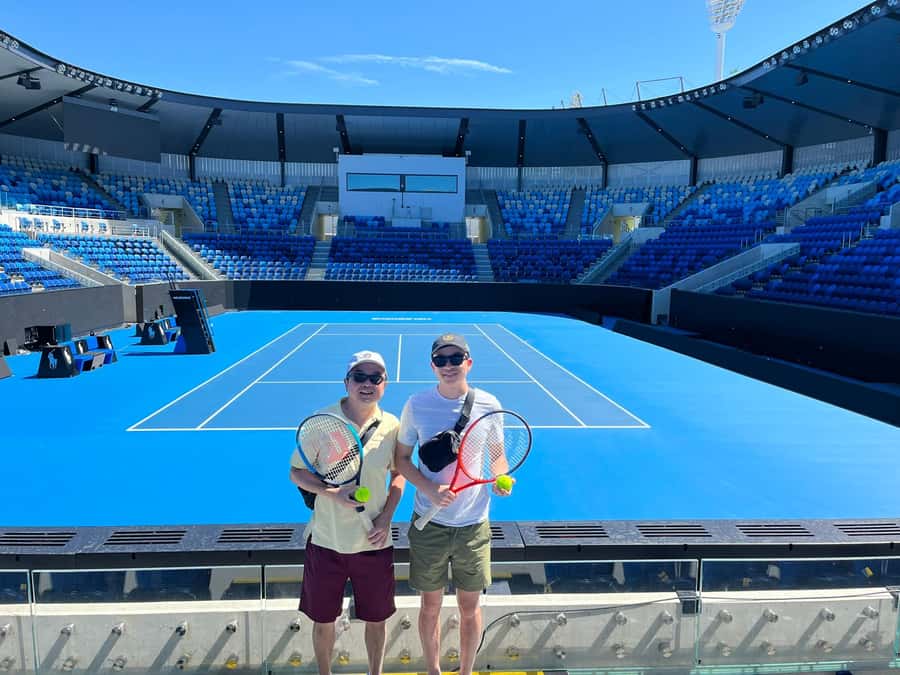
- Australian Open courts and the blue-court moment: you’re not just looking at the complex, you’re getting a hit on the surface
- Federation Square start on the Yarra River: a simple, scenic lead-in with stories on Aboriginal sports and games
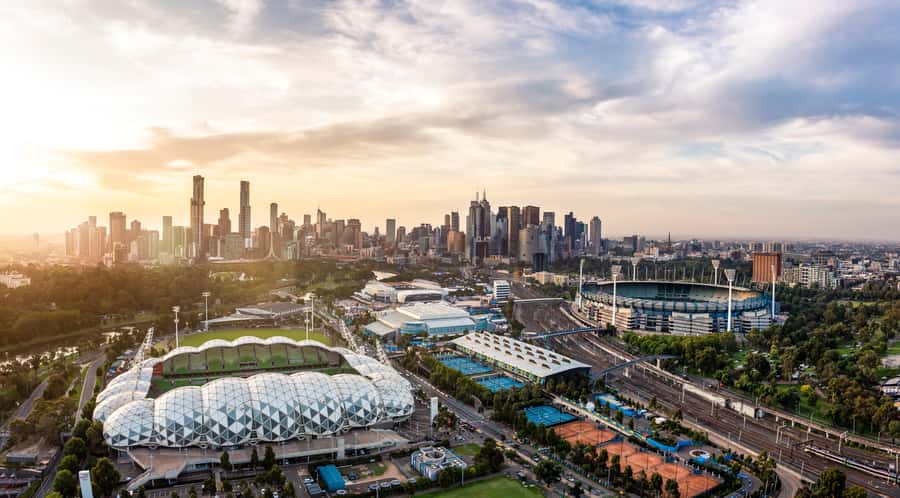
- Melbourne Olympic and Sporting Precinct walk-through: you pass the headquarters of six major football teams plus Rugby, soccer, and Australian Rules context
- MCG finale: the 100,000-seater stadium is your big finish, even if you don’t go inside
- Guides who actually run the show: Ben, Catherine, Greg, Cathy, and Michael are repeatedly praised for clarity and energy
Federation Square to Melbourne Park: the sport-forward warm-up
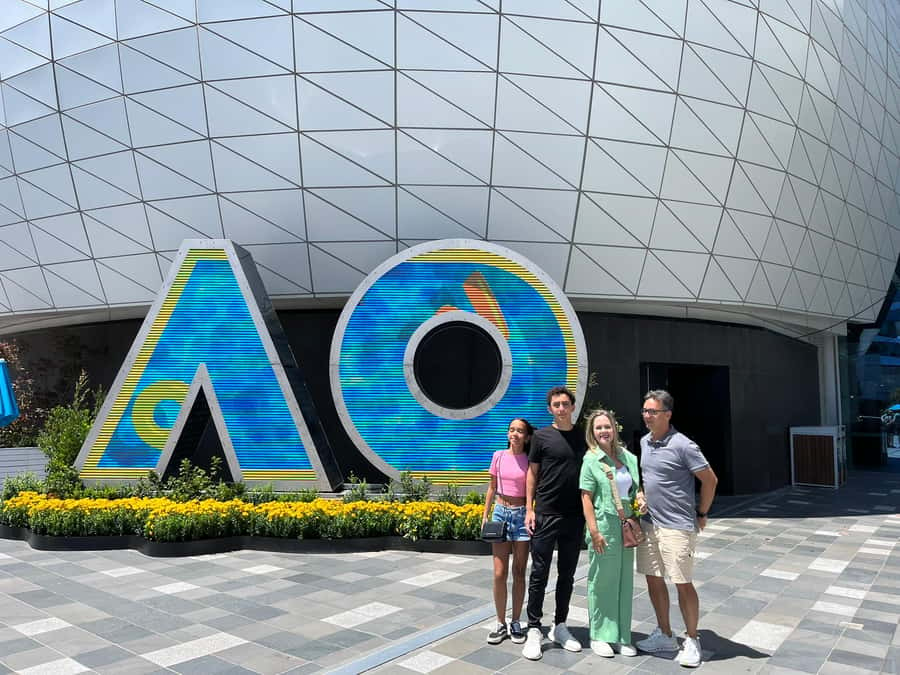
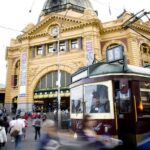
I like how this tour begins in the city, not at some far-off bus depot. You meet at Federation Square, between the Transport Bar and Princes Bridge, and then you head toward the Yarra River and Birrarung Mar. It’s a nice setup because you get moving early, you get the river-side feel of Melbourne, and you’re ready to listen once you reach the sporting machinery.
The walking portion isn’t filler. You’re learning how sport fits into Melbourne’s bigger events and venues, plus Aboriginal sports and games along the way. That matters because it gives context before you hit the headline stadium names. Instead of treating Melbourne like a museum of famous buildings, you understand how sport functions in everyday identity.
If you’re the type who likes to take photos, this stretch helps. You’ll get natural landmarks and river views before the tour funnels you into the high-gloss venue world at Melbourne Park. Practical tip: wear sports shoes. You’ll be walking, and the ground around major venues can be a mix of smooth paths and busy crossing points.
You can also read our reviews of more tours and experiences in Melbourne.

Melbourne Park and the blue courts: what you’re really paying for
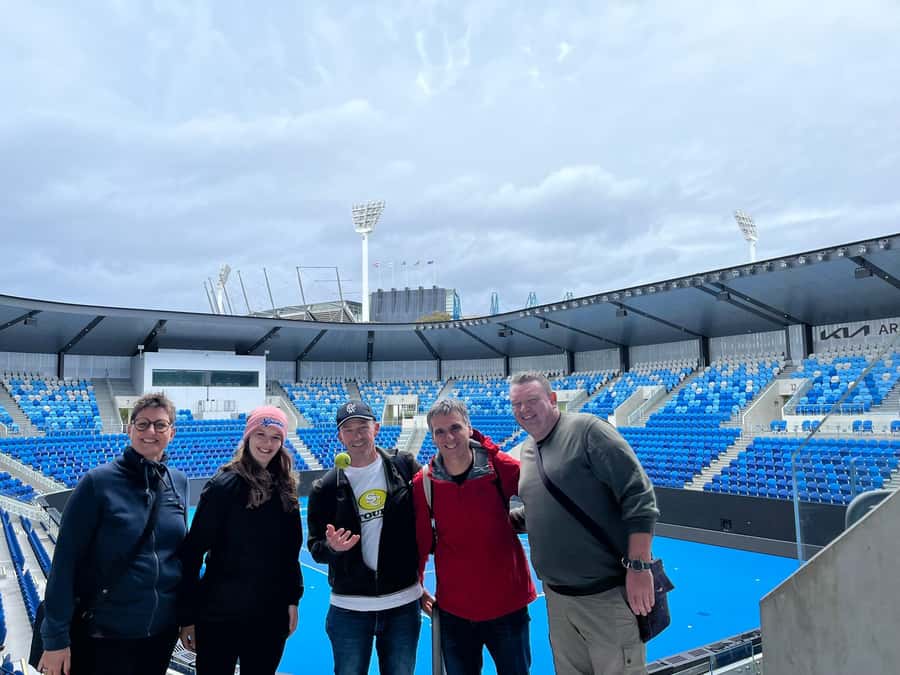
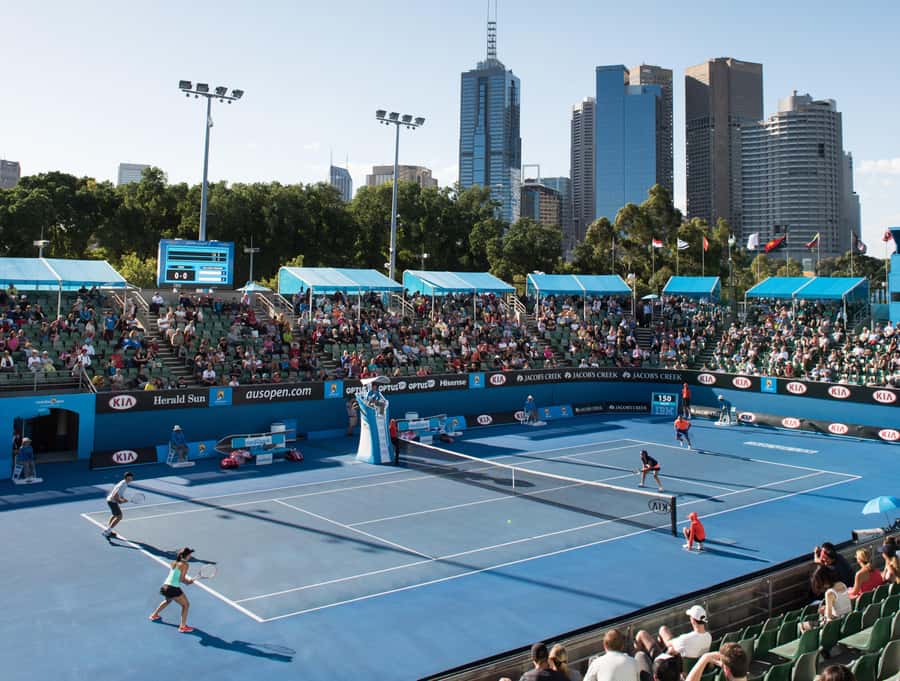
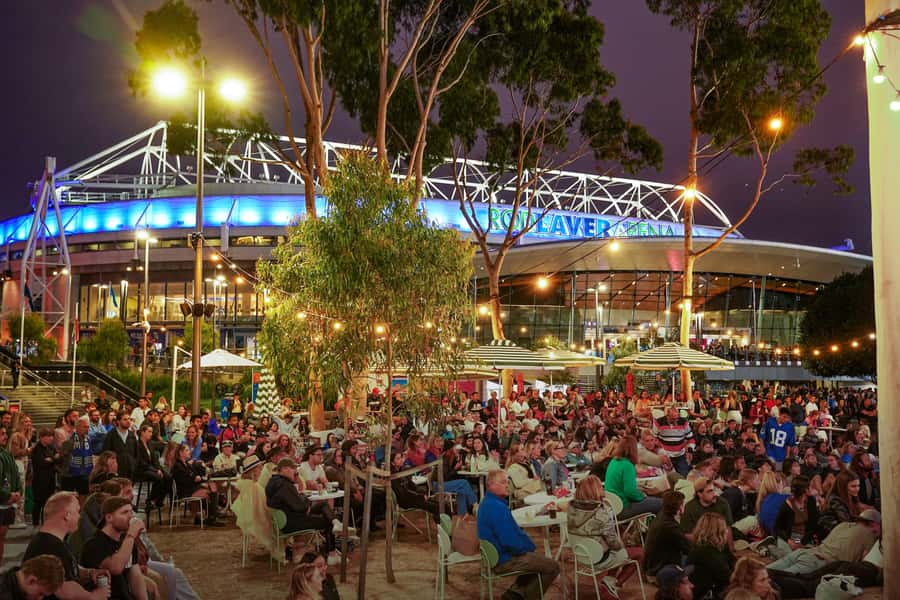
Let’s talk about the reason people book this: playing tennis where the Australian Open happens. The tour focuses heavily on the Melbourne Park Tennis Centre, including the home grounds of famous arenas such as Rod Laver Arena and Margaret Court Arena. Even if you’re not a die-hard tennis fan, the scale and energy of the place land fast.
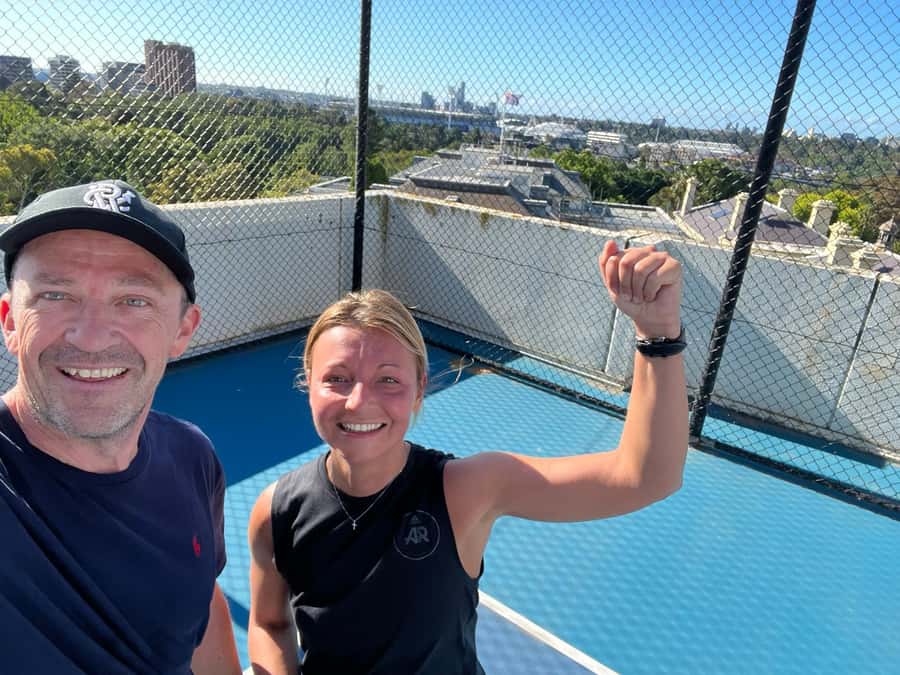
But the more memorable part is the blue-court hit. The blue surface is iconic for a reason, and getting to swing a racket there makes the whole Australian Open story feel personal. In a lot of reviews, the tennis moment is described as the top highlight—and it makes sense. Watching tennis is one thing. Hitting on the same kind of court, with balls under pressure, changes your mental image of the tournament.
One detail I appreciated is that the experience isn’t just “look and leave.” You get racquets and balls, and court access is handled as part of the activity. Depending on conditions, you might play on available courts first—one guide’s experience even included playing on practice courts when rain affected outside court access. So if weather is weird, you’re not necessarily stuck watching.
Also, the guides bring it down to athlete-level storytelling. Ben is repeatedly singled out for sports history knowledge and engaging delivery. Catherine gets praise for clear explanations and fun stories. Michael and Cathy show up in reviews as energetic and easy to follow. Translation for you: if you like asking questions, you’re likely to get thoughtful answers, not just generic tour patter.
The Australian Open calendar twist: when tennis access changes

Here’s the one thing you must plan around: December and January have special rules because the Australian Open event is underway, or the venue is in its construction phase.
During December, court access for playing tennis isn’t available because the Australian Open begins its construction phase. The walking tour still runs, but it’s shorter—about 2 to 2.5 hours—and the tennis component is removed.
In January, court access and playing tennis depend on the Australian Open ticketed format for that period. The good news is that bookings during January include Australian Open tickets as part of what you pay for. In other words, you’re not paying just for a walk—you’re also getting entry into the tournament days covered by the included tickets.
So the real “value” question isn’t the price tag by itself. It’s this: what month are you going? If you want the full play-on-courts version, your best move is to confirm the date range you’re choosing.
From tennis to the city’s football culture at the Olympic Precinct
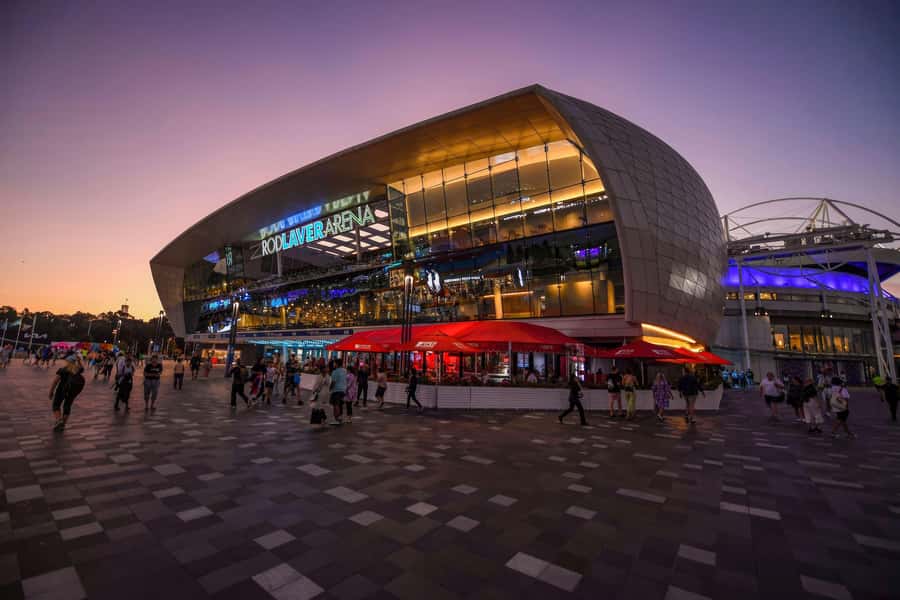
After Melbourne Park, you shift gears. The tour moves into the Olympic & Sporting Precinct, which is where Melbourne’s sports identity stops being about one venue and starts being about a whole ecosystem.
You walk past the headquarters of six top football teams, and you learn how the city’s sports culture connects across codes: Rugby, soccer, and Australian Rules. Even if you don’t follow all of them, this section helps you understand the local rhythms—how sports communities overlap, how rivalries shape neighbourhoods, and why this part of the city feels like a sports headquarters even on non-game days.
There’s also an Indigenous sports thread here. You’ll learn about our truly indigenous football game as part of the tour’s cultural context. I like this approach because it doesn’t treat Indigenous history like an add-on slide at the end. It’s woven into how the guide frames sport as a living practice, not just a set of stadium facts.
This is also where you’ll likely get photo breaks and slightly slower pacing. It’s less about “go fast to the next landmark” and more about understanding what you’re seeing while you’re walking through the complex urban layout.
The MCG finale: closing with cricket’s big stage
The tour ends at the Melbourne Cricket Ground (MCG), a stadium often described as awe-inspiring for one simple reason: it seats about 100,000. Even from the outside, it has a presence that’s hard to ignore.
This ending works well because it gives you a final sporting contrast. You start with tennis courts and the specific geometry of rallies; you finish with cricket’s scale and the sheer stadium mass. It’s a satisfying switch, especially if you’re a multi-sport person.
Do you go inside? The activity data says internal stadium tours require additional tickets. So you should expect an exterior/area experience unless you separately arrange entry options. That said, one guide (Greg) in a specific case helped arrange tickets on the spot so people could tour further. The takeaway for you: ask your guide on the day what’s possible, but don’t assume stadium interior access is included by default.
If your group includes someone who just wants the big photo moment, the MCG ending delivers. If someone wants deeper stadium access, you’ll need to plan for that beyond the tour.



Guides make the difference: Ben, Catherine, Greg, Cathy, Michael
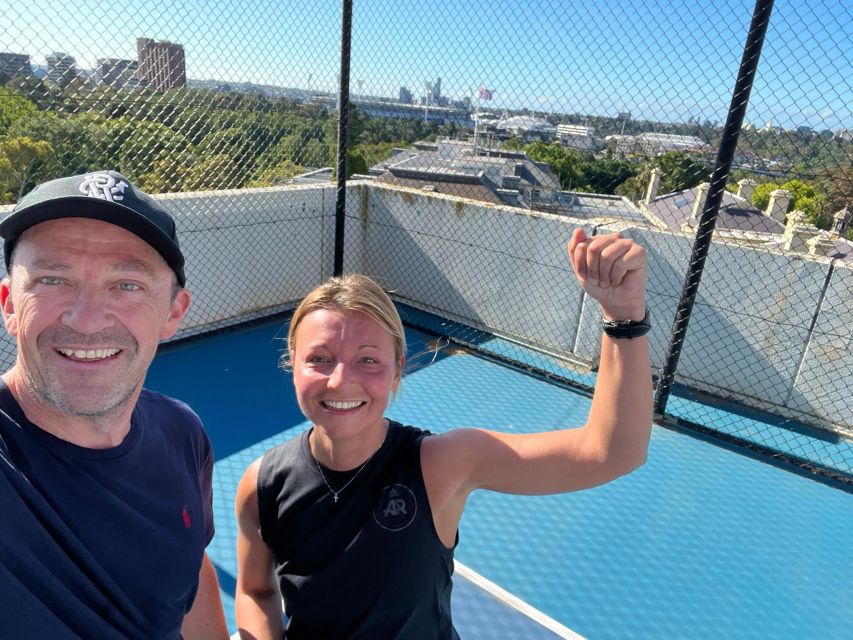
A tour like this lives or dies on the guide. The repeated theme across guides’ names in the experiences is that they combine sports knowledge with storytelling that’s easy to follow.
- Ben: frequently praised for passionate delivery and sports history knowledge, especially with tennis and how it connects to Melbourne. Some people also loved his personal style and patience with questions.
- Catherine: praised for clear explanations and humor, plus a spirited way of teaching. Her delivery seems to work whether you’re tennis-focused or just curious about broader Australian sport.
- Greg: highlighted for being engaging and for going above-and-beyond in some cases by arranging extra MCG tickets for those who wanted the inside view.
- Cathy: described as enthusiastic and attentive, with lots of guided insights around the Australian Open environment.
- Michael: called out for being fun and accommodating different interests, including delivering tennis context and then guiding people around the MCG area.
What this means for you: if you’re choosing between tours in Melbourne and tennis is your priority, this one has an edge because the guide role is central. You’ll spend enough time at Melbourne Park that you’ll want someone who can make the space make sense.
Price and value: is $84 a fair deal for 3 hours?
At $84 per person for about 3 hours, this tour is priced like an experience, not like a low-cost museum walk. The value comes from two included components that would cost extra on their own: playing tennis court time (when available) and—during January—Australian Open tickets.
If you’re traveling outside the Australian Open disruption window (when court access is offered), you’re essentially paying for:
- a guided walk that puts Melbourne Park and MCG into a story,
- equipment (racquets and balls),
- court hire so you’re not just watching.
And if you’re traveling in January, the pricing changes meaningfully because AO tickets are included. That’s a big deal. You’re not only getting the venue walk; you’re also getting access to the tournament itself, depending on your booking’s details.
A fair drawback: the tour is sport-focused, and it leans tennis-heavy. Some people who wanted a lot of time at the MCG inside the stadium might want to add a separate MCG option. Also, you only get what the schedule/date provides in terms of court access.
Still, for the target audience—tennis lovers, sports fans, and people who want authentic Melbourne identity rather than generic sightseeing—this price generally tracks well with what’s included.
Timing, pacing, and what to do on a tight Melbourne itinerary
The experience runs about 3 hours, and you start at Federation Square. That’s a workable chunk for most travel plans. You can usually fit it between other Melbourne activities without needing to rearrange your entire day.
If you’re on a tight schedule, treat this as a “sport identity” block. It’s not a slow wander through multiple neighbourhoods. It’s a structured walk that hits major venues in a concentrated way: Melbourne Park first, Olympic Precinct second, MCG last.
For best results, keep your next plans flexible right after the tour. If you want to ask your guide about extra options—like ways to get inside the MCG area—you’ll be glad you didn’t schedule something too soon afterward.
Also, note the guide communication detail: you’re told to look out for a guide playing with a tennis ball, and they’ll share updates via WhatsApp Live Location. That’s actually useful because it reduces the stress of finding the group quickly at a busy meeting point.
Who should book this Melbourne Park tennis-to-MCG experience
This tour is a good fit if you:
- want the bucket list payoff of playing on Melbourne Park style courts,
- care about Melbourne as a sports capital, not just a list of famous buildings,
- like learning how different Australian sports connect—tennis, cricket, and football codes,
- want a guided walk that’s active but not exhausting.
It may be less ideal if you:
- only want one sport and don’t care about the walk-and-learn structure,
- are visiting in December expecting guaranteed court play,
- want a fully inside-stadium tour of the MCG without additional tickets.
If you’re unsure, consider pairing it with an optional MCG add-on (if you’re traveling when stadium entry options make sense). The tour gives you the big stadium feeling; extra ticketed access gives you the deeper “inside” experience.
Should you book Sporting Capital Tours?
I’d book it if tennis (and Melbourne sport culture) is central to your trip. The combination of a guided venue pilgrimage, the real chance to hit on the famous blue courts (when your date allows it), and the way the tour threads tennis into the larger Melbourne sporting picture makes it feel like more than a standard sightseeing stop.
If you’re budget-conscious, double-check the month you’re going. The tour’s value can swing depending on whether tennis court access is available and whether your booking includes Australian Open tournament access.
Bottom line: this is a practical, high-return experience for sports fans. Bring sports shoes, ask questions, and don’t rush your photo stops. The best part isn’t just the landmarks—it’s getting to participate for real.
FAQ
How long is the Melbourne Park tennis sporting experience?
The duration is listed as 3 hours. During December, the experience becomes shorter (about 2–2.5 hours) because playing tennis isn’t available during Australian Open construction.
Where do I meet the tour guide?
You meet at Federation Square, between the Transport Bar and Princes Bridge.
What’s included in the price?
The included items are a tour guide, court hire (subject to exclusions), racquets and balls supplied, and Australian Open tickets during January bookings.
Can I play tennis in December or January?
December and January have exclusions for playing tennis due to the Australian Open. December does not offer court access for playing tennis, and the tour format changes. January bookings include Australian Open tickets, but court access for playing tennis is handled according to the event schedule information provided for that period.
What should I bring?
Bring sports shoes.
Is an internal tour of the MCG included?
Internal stadium tours are not included and require additional tickets.