REVIEW · MELBOURNE
Melbourne Park Tennis Experience
Book on Viator →Operated by Sporting Capital Tours · Bookable on Viator
Play tennis on Australian Open blue courts. I love that this experience mixes a real tennis hit with a guided walk through Melbourne’s famous Olympic sports precinct, so you’re not just staring at stadiums—you’re involved. The standout for me is getting to play on the Melbourne blue courts at Melbourne Park, led by high-energy guides such as Michael, Ben, and Catherine, who bring the stories to life as you move between venues.
I also like the way the route connects sport to place: you walk past the precinct and hear about Aboriginal sports and games, plus Melbourne’s Indigenous football game and how the different football codes fit together. One consideration: in December, access can be tighter during Australian Open preparation, so courts and arena entry may vary depending on what’s reserved for training.
In This Review
- Key points worth knowing
- Tennis on Melbourne’s blue courts: what makes it feel special
- Birrarung Marr start: walking in and getting context fast
- Melbourne Park arenas: Margaret Court and Rod Laver—what to expect
- The tennis session: racquets, balls, and the December reality check
- Olympic Precinct walk: six team HQs and the Indigenous football lesson
- AAMI Park and the precinct flow: why the walk beats random sightseeing
- The MCG finish: 100,000 seats and the Melbourne scale moment
- Duration, group size, and how the pacing works
- Price and value: does $86.07 make sense for what you get
- Potential downsides to plan for (so you won’t get surprised)
- Should you book Melbourne Park Tennis Experience?
- FAQ
- How long is the Melbourne Park Tennis Experience?
- Where does the tour start and end?
- Is this experience ticketed with a mobile ticket?
- What’s included for the tennis part?
- Are kids allowed, and do infants pay?
- Do I get Australian Open tickets?
- Will I definitely play on the main Australian Open courts?
- How big is the group?
- What’s the cancellation policy?
Key points worth knowing
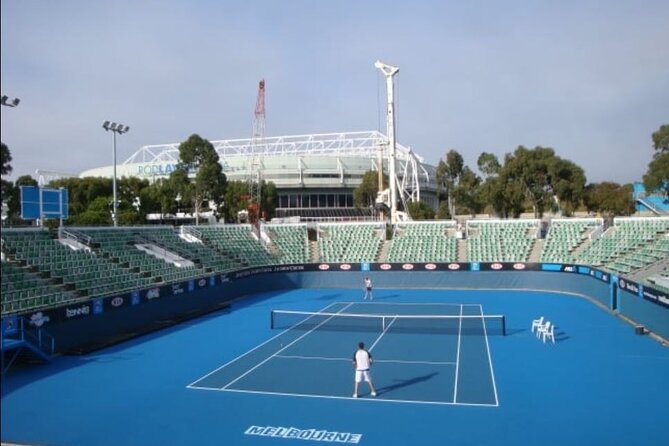
- Play tennis on Melbourne blue courts at the Australian Open venue area, with racquets and balls provided
- Short, focused walk (about 3 hours) from Birrarung Marr through Melbourne Park and the Olympic Precinct
- Aboriginal sports and Indigenous football stories are built into the walk, not tacked on at the end
- Pass by team headquarters across multiple football codes as you cross the precinct
- Big-photo finish at the MCG with its 100,000-seat scale
- Small groups (max 16) keep the pacing friendly for questions and photos
Tennis on Melbourne’s blue courts: what makes it feel special
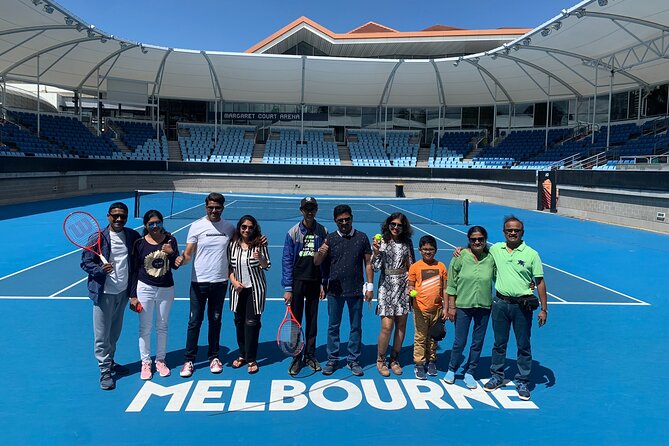
Let’s start with the obvious: playing tennis at the Australian Open venue is a mental cheat code. Even if you’re not chasing a trophy moment, the setting makes the rally feel like it matters. You’re on Melbourne Park courts, the same blue-court look that’s instantly recognizable during the Australian Open.
What you’ll actually appreciate is that this isn’t just a photo stop. You get court hire plus racquets and balls, so you show up and play. That bundling matters for value, because you’re not separately hunting down rentals or trying to coordinate a last-minute court booking.
The other “special” part is that the tennis time is paired with a walk that explains what you’re seeing. That means you’re not leaving with only one good photo—you’re leaving with a sense of how Melbourne built a sports culture around these grounds.
You can also read our reviews of more tours and experiences in Melbourne.



Birrarung Marr start: walking in and getting context fast
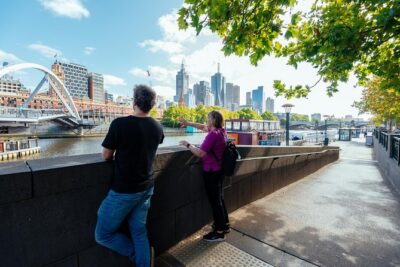
Your experience begins at 1 Birrarung Marr Walk, with the day starting in the city area near Federation Square. You’ll walk down Birrarung Marr as the guide sets the tone with stories about Aboriginal sports and games and what to watch for across the big events Melbourne hosts.
I like this start because it gives you a frame before you hit the stadium blocks. Instead of seeing a wall of buildings and steel, you understand why these spaces matter and how sport shows up in culture. If you’ve ever wandered a stadium district without a guide and felt like you were missing the “why,” this section fixes that.
Also, it’s a walk, so it works well if you don’t want a full-day schedule. You’re moving, you’re learning, and you’re not stuck in one spot listening for hours.
Melbourne Park arenas: Margaret Court and Rod Laver—what to expect
As you come into the Melbourne Park zone, you’ll pass by key arenas tied to the Australian Open precinct—Margaret Court Arena and Rod Laver Arena among them. The important thing is not to treat this as guaranteed “walk inside and roam the seating bowl” access.
During Australian Open build-up—especially in December—court and arena availability can be restricted. The experience notes that court access may depend on training and reservation needs as construction ramps up. That’s why your best expectation is: you’ll see and experience the precinct closely, and you’ll get tennis time, but main arena access may be limited on certain dates.
When the day lines up well, you might get more access than you’d expect from a normal walking tour. But when it doesn’t, you’ll still have the heart of the experience: the walk plus playing on the venue courts where possible.
The tennis session: racquets, balls, and the December reality check
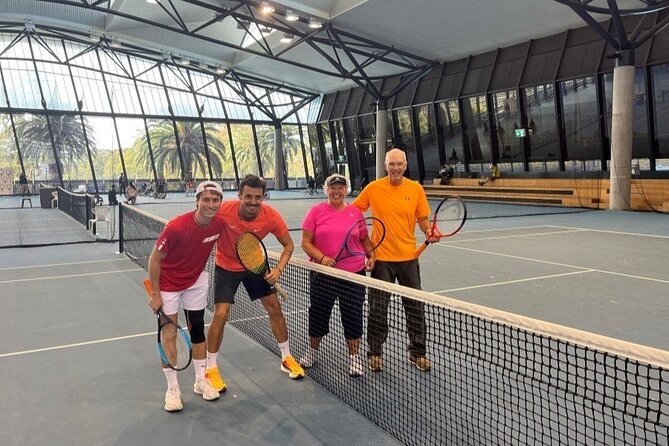
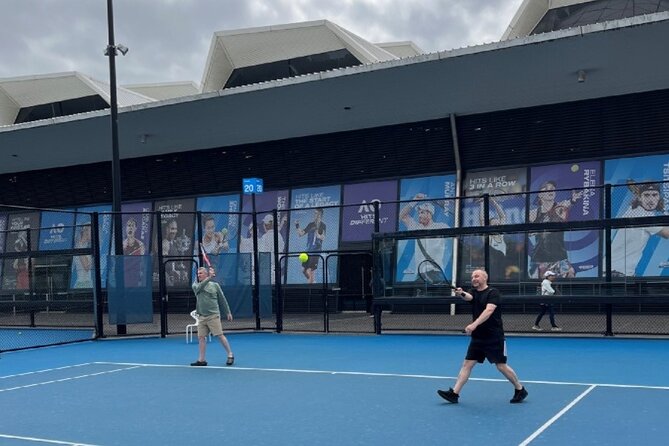
Your tennis time happens after the grounds tour, at Melbourne Park’s tennis centre area, where the courts are known for the Australian Open blue look. Racquets and balls are included, and you’ll have court hire time to hit.
Now here’s the practical part you should plan around. The experience specifically warns that December court access is subject to availability because the Australian Open begins its construction phase and courts may be reserved for players training for the tournament. So if you’re traveling in early December with a strict “must play on the exact main AO show court” expectation, temper it.
What this means in real life: you’re still getting tennis, but the specific court access can vary. If your goal is to get on an AO-blue-court surface and feel the vibe, you’ll likely be happy. If your goal is maximum arena entry, you’ll want to be flexible.
This is also where the guide can shape your experience. The best sessions I’ve seen on tours like this come down to whether the guide keeps energy up, sets expectations clearly, and helps people of different skill levels get time on court smoothly.
Olympic Precinct walk: six team HQs and the Indigenous football lesson

After tennis, you continue through the Olympic Precinct, crossing the sports landscape in a way that feels like a guided “where everything connects.” A big part here is walking past the headquarters of six top Melbourne football teams.
The tour focuses on multiple codes—Rugby codes, soccer, and Australian Rules—and includes learning about the Indigenous football game and the deeper role sport has in Aboriginal culture and community. I like this pacing because it changes the tone. You go from the physical release of hitting tennis to the “how the city thinks about sport” conversation.
This section also helps you connect what you saw earlier. When you’re later standing near big venue names, you’ll understand what those venues represent in Melbourne’s sporting ecosystem, not just the brand value.





AAMI Park and the precinct flow: why the walk beats random sightseeing
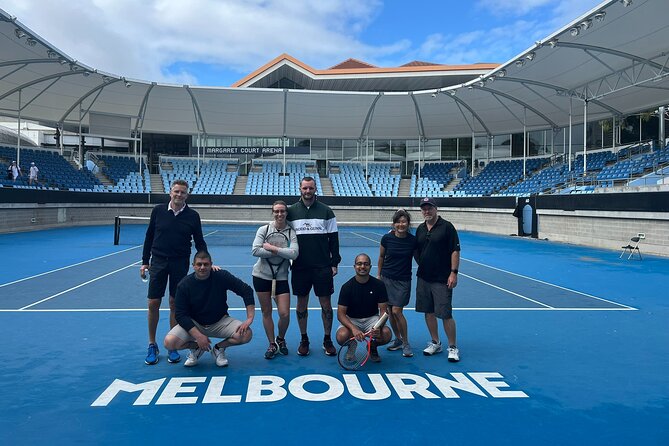
You’ll also pass through the precinct area that includes AAMI Park as part of the route. Even if you only glance at some stadium exteriors, the guided flow matters because you’re not guessing which team or code belongs where.
This walk is value-packed for people who like learning while moving. It’s not a long lecture, and it’s not endless wandering. You’re covering the big nodes of Melbourne’s sports geography in around the 3-hour window.
One practical note: because it’s a walking format, wear shoes you trust. This is a “you’ll be glad you walked” kind of day, not a “dress up and float” kind of day.
The MCG finish: 100,000 seats and the Melbourne scale moment

The grand finale is Melbourne Cricket Ground (MCG), the massive 100,000-seater stadium that anchors the city’s sports identity. Even from outside (and depending on access on your date), you feel the scale fast.
I like ending here because it’s the easiest place to turn facts into emotion. The guide can talk about what makes the MCG central, and you can do the simple human thing: stare at the size and realize this is more than a venue. It’s a stage Melbourne built its sporting pride around.
If you’re a photo person, this is the stop you’ll want to slow down for. If you’re not, you’ll still appreciate that the tour ends with a site that’s big enough to justify the effort.
Duration, group size, and how the pacing works

The whole experience runs about 3 hours. That’s a sweet spot: long enough to include tennis plus the stadium-precinct walk, short enough to still let you keep plans for the rest of your day.
Groups cap at 16 people, which usually helps a lot. Smaller groups mean less awkward waiting, and you’ll have a better chance to ask questions without the guide juggling everyone at once.
The tour ends back at the meeting point near Birrarung Marr, so you don’t need to worry about complicated end-of-day logistics if you’re heading elsewhere afterward.
If you’re traveling solo, this also tends to feel easier than big group bus tours. You’ll naturally chat while moving between stops, especially during the precinct walk sections.
Price and value: does $86.07 make sense for what you get
At $86.07 per person, the value depends on what you want most: the tennis, the storytelling, or the venue access.
Here’s what you’re paying for that actually has cost built in:
- Racquets and balls included
- Court hire included
- A guided walk that connects Aboriginal sports, Indigenous football, and multiple football codes to the precinct
- A finish at the MCG
During January, the experience includes Australian Open tickets, which can make the day feel like a two-for-one sports hit—tour context plus AO access. During December, access can be more variable due to preparation, and the experience notes December court access may be restricted as construction starts and courts are reserved for training.
Balanced take: if you want a tennis-playing experience with venue atmosphere and a guided sports-culture walk, this price can feel fair. If your expectation is full arena entry like you’d get from a stadium tour that’s built around behind-the-scenes access, you may feel the difference.
Potential downsides to plan for (so you won’t get surprised)
I’d go into this tour with three expectations clearly in mind:
First, arena access can vary. The experience is built around the precinct plus tennis time, and it explicitly calls out that December access is subject to availability due to Australian Open construction and training reservations.
Second, the experience name is Melbourne Park Tennis Experience, but the day isn’t only tennis. You’re also walking and learning about football codes and Indigenous sports stories, plus seeing major stadium exteriors.
Third, tennis time is real, but court time is still shared in a group setting. If you’re imagining a private coaching session on a main show court, this isn’t that kind of format.
If you go in with flexibility, you’ll likely enjoy it. If you go in with a rigid checklist of where you must enter, you’ll probably feel let down.
Should you book Melbourne Park Tennis Experience?
Book it if you want tennis on AO-blue courts with equipment and court hire included, plus a guided walk that explains how Melbourne’s sporting identity connects across Indigenous football and multiple football codes. The small group size and the way the walk is structured make it a good choice if you like moving through a place while learning the context.
Skip or think twice if your top priority is guaranteed entry into every main arena and stadium-style inside access. The experience itself warns that December access can be affected by Australian Open preparation, and venue access may not match what you hoped for.
If you fall somewhere in the middle—tennis plus precinct stories—you’re exactly the target. This is a practical, fun way to spend a half-day in Melbourne’s sports world without turning it into a checklist exercise.
FAQ
How long is the Melbourne Park Tennis Experience?
It’s approximately 3 hours.
Where does the tour start and end?
The tour starts at 1 Birrarung Marr Walk, Melbourne VIC 3000, Australia, and ends back at the same meeting point.
Is this experience ticketed with a mobile ticket?
Yes. It includes a mobile ticket.
What’s included for the tennis part?
You get tennis racquets and balls, plus court hire.
Are kids allowed, and do infants pay?
Infants aged 0–4 years are free.
Do I get Australian Open tickets?
Australian Open tickets are included for January.
Will I definitely play on the main Australian Open courts?
Court access during December is subject to availability due to Australian Open construction and courts being reserved for player training. You’ll still have tennis as part of the experience, but access may vary.
How big is the group?
The experience has a maximum of 16 travelers.
What’s the cancellation policy?
You can cancel up to 24 hours in advance for a full refund. If you cancel less than 24 hours before the experience, the amount paid will not be refunded.