REVIEW · MELBOURNE
Melbourne Sports Walking Tour
Book on Viator →Operated by Sporting Capital Tours · Bookable on Viator
Some walks are for sightseeing. This one is for sports.
I like the way this Melbourne Sports Walking Tour turns the city into a scoreboard, starting at Fed Square and threading you through the big names of Melbourne sport. You get the stories behind the places, not just postcard views, including a clear focus on the 1956 Olympic Games and how the Yarra River helped shape the sporting precinct.
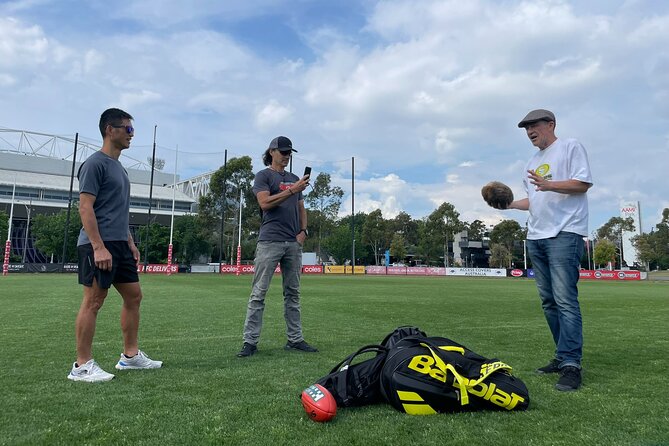
Two things I especially appreciate: first, the tour is kept small (max 8), so your guide can actually answer your questions instead of doing a race-to-the-finish narration. Second, the guide style is hands-on, with explanations of how sports work and plenty of behind-the-scenes detail; I’m thinking of guides like Ben, Greg, and Cathy, who bring personal stories and even props into the mix.
One consideration: you’re outdoors and you’re walking between venues, so it helps to dress for the weather and expect mostly exterior-or-public-area viewing. Some people are excited to see everything up close, but if you’re hoping for a full stadium tour with heavy interior access, you might feel you didn’t get enough time inside.
In This Review
- Key things to know before you go
- Starting at Fed Square: an easy meet-up for a compact route
- Yarra River first: why this walk sets the sports scene
- Rod Laver Arena and Melbourne Park tennis complex
- Melbourne & Olympic Parks: putting the 1956 Games on your feet
- AAMI Park to the MCG: soccer, rugby, and Aussie sport culture
- What you learn: rules, athletes, and why stadiums matter
- Price and value: is $63.12 a fair deal?
- Pacing, photos, and how to dress for the day
- Who this tour suits best
- Should you book this Melbourne sports walking tour?
- FAQ
- Where do I meet, and where does the tour end?
- How long is the tour, and how big is the group?
- Which stadiums and sports venues are included?
- Do I need to buy tickets for the stops?
- Is this tour suitable for kids?
- What happens if the weather is bad or I need to cancel?
Key things to know before you go
- Max 8 people means a more personal pace and easier Q&A.
- 2 hours is tight enough to fit into a morning plan, without feeling rushed.
- Fed Square to the MCG keeps the route straightforward and easy to navigate.
- Major stadiums in one loop: Rod Laver Arena, Melbourne & Olympic Parks, AAMI Park, and the MCG.
- 1956 Olympics + Yarra River give the walk context beyond Aussie rules talk.
- Admission at stops is free, but your main cost is for guided storytelling and route time.
Starting at Fed Square: an easy meet-up for a compact route
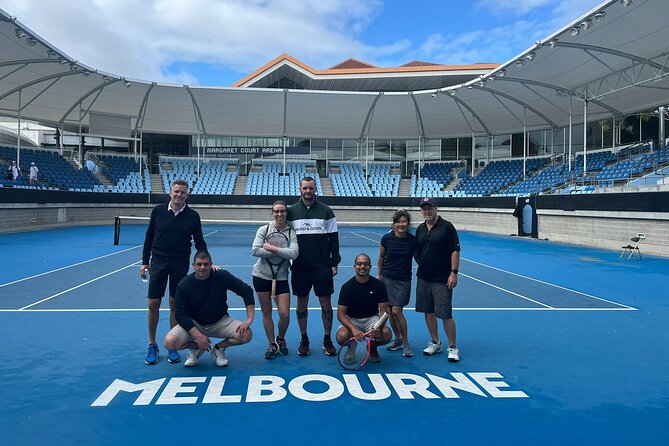
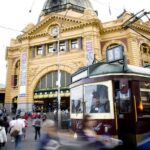
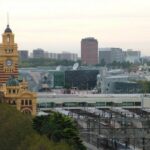
You meet near Fed Square, in the central part of the city where arriving is simple and awkward logistics are minimal. The experience is designed as a quick, focused loop, roughly 2 hours, and it’s built for people who want the “greatest hits” of Melbourne sport without a full-day commitment.
The group size helps. With a small team—up to 8—you’re not shouting to be heard, and the guide can read the room. If you’ve got questions about rules, players, or why certain venues grew where they did, this tour gives you space to ask.
You can also read our reviews of more walking tours in Melbourne


Yarra River first: why this walk sets the sports scene
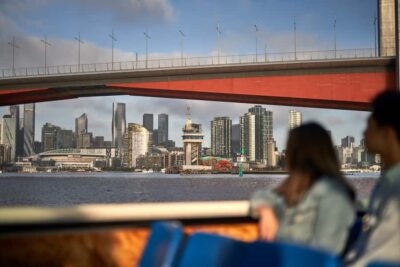
The walk begins along the Yarra River, and that opening matters more than it sounds. The river isn’t just pretty; it’s part of how Melbourne developed, including how crowds moved and how the city built major public spaces over time. Starting here gives the rest of the stadium tour a foundation—so the venues feel connected, not random.
It’s also a good warm-up. You get a quick chunk of walking early, then you’re ready for the stadium precinct section where everything feels more iconic and photo-worthy.
Rod Laver Arena and Melbourne Park tennis complex
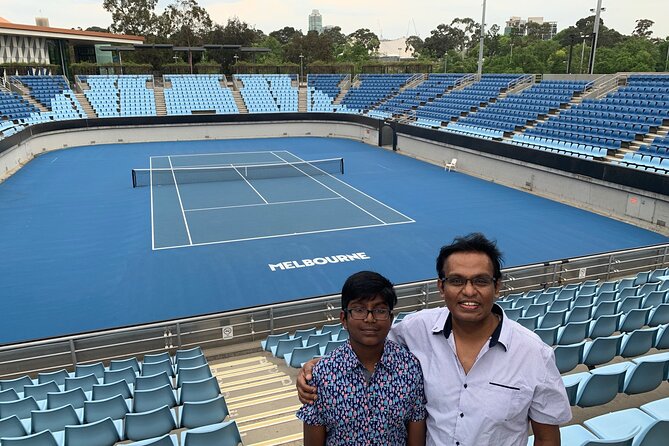
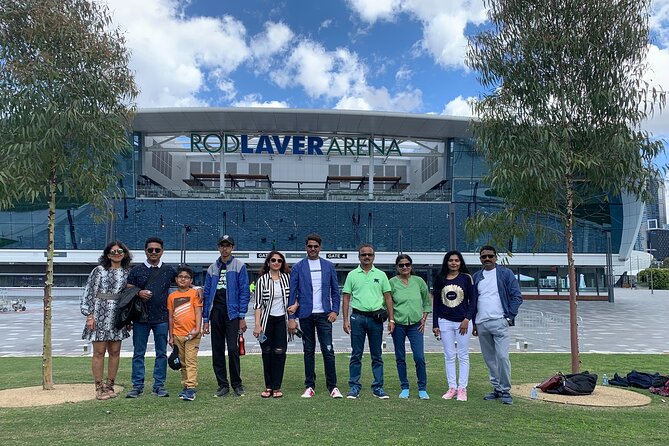
Next up is the Rod Laver Arena area, part of the Melbourne Park tennis complex. This stop is short—about 15 minutes—but it’s timed well. You’re not forced to spend hours in a single venue. Instead, you get the story and the setting, then you move on while the route still feels energetic.
This is also one of the most fun stops if you like tennis. Some sessions include hands-on touches like time in the venue area and, in at least one case, even stepping onto a court. You’re not stuck only watching from a fence, and that’s a big deal for a walking tour.
Melbourne & Olympic Parks: putting the 1956 Games on your feet
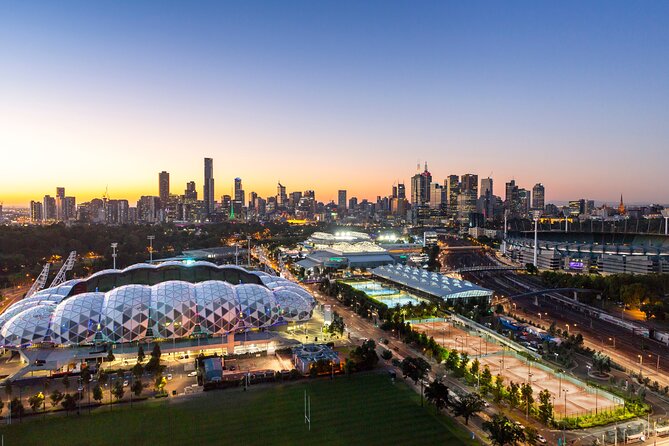
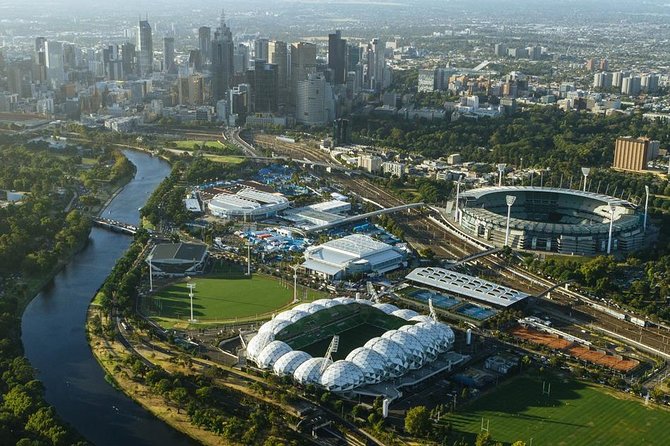
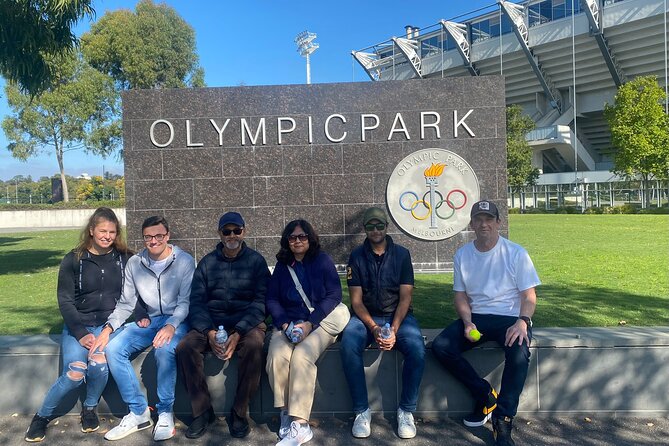
The tour then moves through Melbourne & Olympic Parks, where the focus turns to the 1956 Olympic Games. This is where the tour does something smart: it connects major modern venues to a specific moment in time.
Why it works: the guide ties the Olympics to what you see now, so the history doesn’t float around as trivia. You understand how Melbourne positioned itself for global events, and you get a sense of why this sporting precinct became such a long-term home for major competitions.
This stop is quick—about 10 minutes—but it sets you up for the next venues with clearer context: big crowds, major events, and the way the city plans space for them.
AAMI Park to the MCG: soccer, rugby, and Aussie sport culture
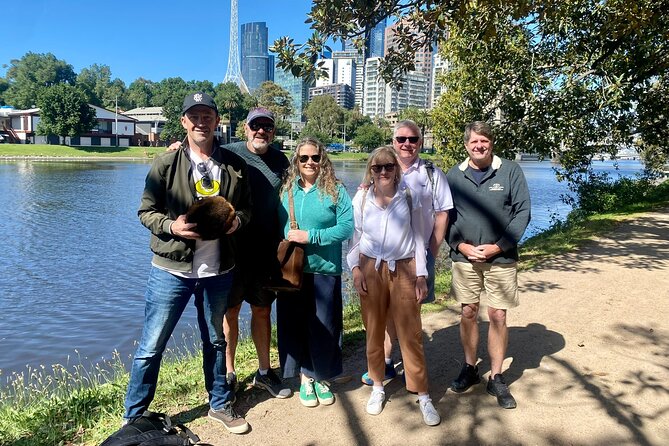
From Olympic Parks you head to AAMI Park, Melbourne’s main stadium for soccer and rugby. It’s another 10-minute stop, which keeps the pace brisk. The value here is how your guide connects sport culture across codes—so you’re not just learning facts about one sport.
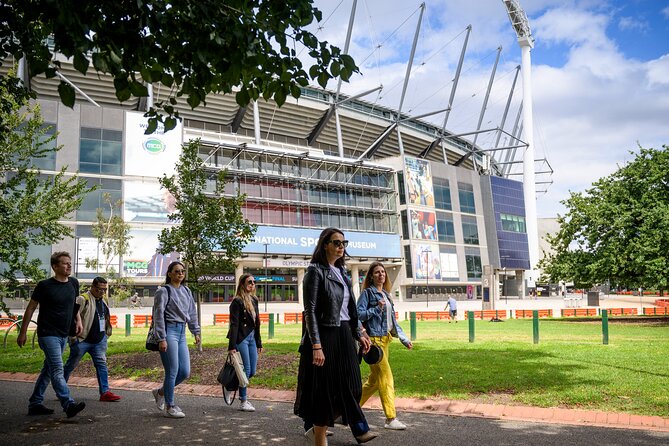
Then you end at the Melbourne Cricket Ground (MCG), the big finish and the most emotionally loaded stop on the route. The MCG is treated as more than a building; it’s presented as a symbol of Australian sport, and the tour’s tone shifts accordingly.
Also pay attention to the walking flow: the MCG is the tour’s end point at Brunton Ave, Richmond, and from there it’s a short walk back toward Federation Square or you can use nearby train and tram options. The route is practical, so you don’t get stranded at the far end of the city.




What you learn: rules, athletes, and why stadiums matter
This isn’t a stadium facts-only walk. A key part of the experience is the way guides translate sport into something you can picture and understand.
Expect stories and explanations that cover multiple sports, including Australian football, tennis, cricket, and even horse racing. The guide approach often includes teaching the basics of how the games are played and sharing insights about the facilities and the athletes connected to the venues.
I also like that the guides are willing to respond to what you care about. One guide style that shows up strongly in the experience is that guides bring personal touches—stories from time around the sporting world, and even props to make the explanations easier to hold onto.
If you’re a true sports fan, you’ll likely enjoy the specifics. If you’re a casual fan, you’ll still get enough context to follow what you see without already knowing every player and every rule.
Price and value: is $63.12 a fair deal?
At $63.12 per person for about 2 hours, this isn’t a freebie walk, but it also isn’t priced like a ticketed stadium tour. The value comes from three places.
First, the tour is small. You’re paying for a guide to manage a group of up to 8 and answer questions without turning it into background noise. Second, the main stops are major stadiums—you’re not spending your time on minor roadside attractions. Third, the stops are admission ticket free, so you’re not stacking your cost with venue fees just to learn the story.
One practical note: the tour is often booked about 22 days in advance on average, so if you’re traveling in a busier stretch, booking early helps you avoid missing your preferred time.
Pacing, photos, and how to dress for the day
This is a walking tour, so comfort matters more than you might think. The total duration is around 2 hours, but you’ll still want sturdy shoes since the route moves between key points of Melbourne’s sporting precinct.
Also, plan for weather. The experience is designed for good weather, and that matters because you’ll be outdoors during much of it. If the day is hot, it’s smart to bring water and dress in breathable layers. In the past, guides like Ben have been known to adjust meeting time to help reduce exposure during peak heat, so if that’s an issue for you, it’s worth asking on the day.
For photos: the stops are short, so keep your camera ready. The tour’s flow is built for quick looks at iconic arenas, not long waits for the perfect angle.
Who this tour suits best
You’ll probably love this if you:
- like sport enough to care about how venues connect to big events
- want a guided walk that’s faster than a full-day “tour bus” plan
- enjoy asking questions and getting direct answers from your guide
- want a straightforward way to see multiple Melbourne stadiums without paying for separate admissions
If you’re the type who wants detailed interior access everywhere, you might find some stops feel too brief. But the trade-off is that you see the whole spine of Melbourne’s sporting scene in one outing.
This is also a good option for people who aren’t obsessed with one single sport. The guide covers multiple codes and keeps the stories moving across tennis, soccer/rugby, and the MCG atmosphere.
Should you book this Melbourne sports walking tour?
Book it if your goal is a focused, small-group introduction to Melbourne’s sporting precinct, with the 1956 Olympics and the Yarra River giving the tour meaning. The $63.12 price makes sense when you compare it to the cost of trying to piece together a similar day on your own with guides and transport.
Skip it only if your top priority is a deep, inside-the-stadium tour at every stop. This experience is built around walking, viewpoints, and guided context, and that’s the deal you’re choosing.
FAQ
Where do I meet, and where does the tour end?
You start near Princes Bridge / Fed Square in Melbourne and finish at the Melbourne Cricket Ground (MCG) on Brunton Ave, Richmond. From the MCG it’s a short walk back toward Federation Square, or you can use nearby train and tram stops.
How long is the tour, and how big is the group?
The tour runs for about 2 hours and has a maximum group size of 8 travelers.
Which stadiums and sports venues are included?
You visit the Rod Laver Arena (Melbourne Park tennis complex), Melbourne & Olympic Parks (linked to the 1956 Olympics), AAMI Park, and the Melbourne Cricket Ground (MCG). You also walk along the Yarra River.
Do I need to buy tickets for the stops?
Admission at the listed stops is free, and the experience includes a mobile ticket for your tour.
Is this tour suitable for kids?
Infants aged 0–4 years are free, and the tour notes that most travelers can participate.
What happens if the weather is bad or I need to cancel?
The experience requires good weather. If it’s canceled due to poor weather, you’ll be offered a different date or a full refund. The tour also allows free cancellation up to 24 hours before the start time for a full refund.