REVIEW · VICTORIA
Victoria Panorama Scenic Seaplane Tour
Book on Viator →Operated by Harbour Air Ltd · Bookable on Viator
Victoria from the air feels like a cheat code. This 30-minute seaplane loop gives you a rare angle on downtown Victoria, the Strait of Juan de Fuca, and the Olympic Mountains, plus water take-offs and landings that are pure West Coast theatre. You also get a pass over landmarks like the Esquimalt Dockyards and the fjord-like Finlayson Arm, all in a small cabin built for quick, close-up sightseeing.
Two things I like a lot: the experience is genuinely about views from a floatplane, not a long bus ride or a long wait, and the flight stays intimate with a maximum of about 14 people total. The pilot flying the route makes the whole loop feel coordinated, and the timing gives you enough air time for photos without turning the day into a half-trip.
One drawback to plan for: comfort is basic. Seats are small with limited leg room, there’s no narration during the flight, and with a full load you may end up in the middle where windows are less useful.
In This Review
- Key highlights to know before you go
- Harbour Air boarding: what to expect at 950 Wharf St
- Timing tip that actually helps
- The 30-minute loop: downtown Victoria, inlets, and Olympic Mountains
- Victoria and the Strait of Juan de Fuca
- Elk Lake: calm water and forest edges
- Mount Douglas: Saanich Peninsula viewpoints
- Finlayson Arm: a deep fjord-like inlet
- Saanich Inlet: marine ecosystems and reflective water
- Western Communities and Esquimalt Dockyards
- The real show: take-offs and landings on water
- A quick motion reality check
- Seats, comfort, and the no-narration factor
- Window strategy that improves your odds
- Photos: how to get the shot without fighting the cabin
- Photo-friendly mindset for a short flight
- Price and value: is $143 worth 20 minutes in the air?
- Who gets the best value
- Who should think twice
- Weather, whales, and expectations you should set early
- Dress for the water experience
- Who should book this seaplane flight in Victoria
- Should you book Victoria Panorama Scenic Seaplane Tour?
- FAQ
- How long is the Victoria Panorama Scenic Seaplane Tour?
- Where do I meet for the flight?
- What ID do I need?
- Is there narration during the flight?
- What should I expect to see, and are whales included?
- What happens if weather cancels the flight?
Key highlights to know before you go
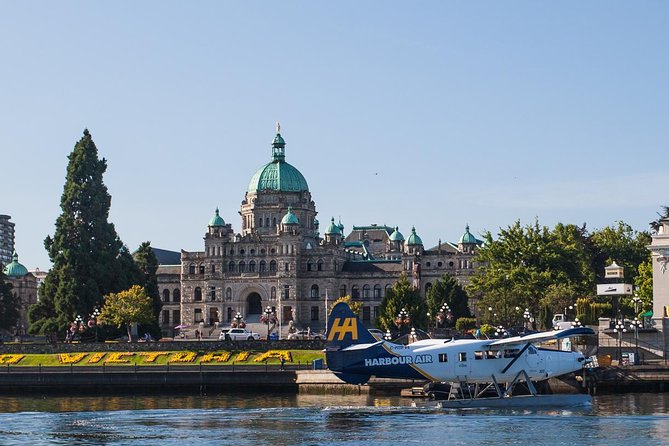
- Water take-off and landing: you feel the spray and motion, not just watch it happen
- Downtown Victoria to inlets loop: harborside views, then Elk Lake, Mount Douglas, Finlayson Arm, and Saanich Inlet
- Olympic Mountains on clear days: you’ll often see them on a good-weather flight
- Esquimalt Dockyards pass: a close look at Canada’s naval heritage from above
- Small group, tight cabin: up to 14 passengers, so window access can be a factor
- No onboard narration: bring your own headphones and be ready to read the scenery with your eyes
Harbour Air boarding: what to expect at 950 Wharf St
This tour runs from Victoria Harbour Airport at Harbour Air’s location on Wharf Street (950 Wharf St, Victoria, BC). Since there’s no hotel pickup, you’ll want to plan your trip to the terminal and get there early. The process is straightforward: you check in, board, and then you’re up and over the city quickly.
You’ll use a mobile ticket, so have your phone ready, and double-check that you have the right ID documents. All passengers 18+ need government-issued photo ID, or two government-issued IDs without a photo. If you’re traveling with kids, the flight is open to children, and there’s a separate child fare for ages 2 to 11 at departure.
You can also read our reviews of more tours and experiences in Victoria.
Timing tip that actually helps
Show up early enough to avoid stress. The tour requires that you arrive at the terminal at least 40 minutes before departure, and you need to be checked in 20 minutes before the flight time. If you’re late, you won’t board—and the ticket won’t be refunded—so build in buffer time.
The 30-minute loop: downtown Victoria, inlets, and Olympic Mountains
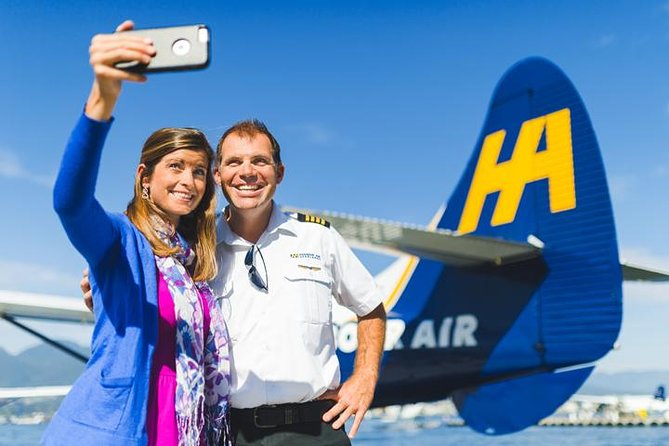
The flight is short on purpose. You’re looking at a 30-minute experience, with about 20 minutes in the air, and a loop that takes you from the harbor out over the region and back again. That format is ideal if you want big variety without losing your whole day to transportation and waiting.
Here’s how the route plays out, in plain English.
Victoria and the Strait of Juan de Fuca
Right after boarding, you lift off and head over downtown Victoria and the coastline. You’ll see the Strait of Juan de Fuca, and on clear days you can look for the Olympic Mountains in the distance. One reason this section feels special is that Victoria from above isn’t just buildings and water—it’s coastline curves, harbor lines, and the way the geography shapes neighborhoods.
You may also spot grand houses perched above rugged shoreline. That’s the kind of detail that’s hard to appreciate from street level, and it’s exactly why people choose floatplanes for a first look at the region.
Elk Lake: calm water and forest edges
Next up is Elk Lake, a popular rowing and recreation area. From the air, it’s easier to see how the lake sits inside its greener surroundings—water framed by tree cover and rural charm. This stop is quieter visually than downtown, but it’s great if you want a “breathe for a second” view between denser city scenes.

Mount Douglas: Saanich Peninsula viewpoints
Then your route crosses toward Mount Douglas, with views stretching across the Saanich Peninsula. This area matters because it helps you connect what you saw earlier (harbor and city) to what’s inland—more rolling terrain and big-sky angles. From the plane, you get a quick sense of scale: the peninsula isn’t flat, and it wraps the region like a big green arc.
Finlayson Arm: a deep fjord-like inlet
After that, you’ll fly over Finlayson Arm, described by many as a deep, fjord-like inlet between forested hills and dramatic cliffs. Even on a short tour, this is the part where the scenery shifts from “city + water” to “wow, the coast is wild.” It’s also a reminder that southern Vancouver Island isn’t just tourist-friendly views—it’s truly rugged right offshore.
Saanich Inlet: marine ecosystems and reflective water
You then move across Saanich Inlet, known for calm, reflective water and lots of marine life. You’ll likely see a broader, flatter stretch here compared to the cliffier inlet you just passed. It’s a good photo section because water tone changes with light, and the inlet’s edges help your eye follow the coastline.
Western Communities and Esquimalt Dockyards
As the flight arcs back, you pass over Victoria’s Western Communities and then head toward the Esquimalt Dockyards. From the air, the dockyard details are easier to understand than from land—layout, shoreline geometry, and the way the facility sits in the harbor.
Then you descend back over the water and land at Victoria Harbour, where the loop ends right where it began.
The real show: take-offs and landings on water
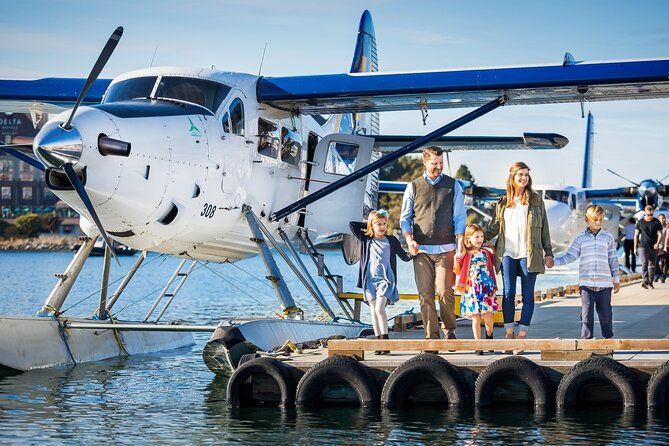
Most “scenic flights” are basically window rides over roads and buildings. This one adds a key ingredient: you take off and land on water. That’s why the spray shows up, and why the motion feels different from a typical airplane.
The take-off and landing moments are often what people remember most, even on a short flight. If you’re the type who likes hands-on experiences—watching from a balcony is nice, but being inside the aircraft is better—this is where you’ll feel it.
A quick motion reality check
You should expect some up-and-down movement as the floatplane transitions between water and air. It’s part of the adventure. If you get sea sick or motion sensitive, this is worth thinking about in advance.
Seats, comfort, and the no-narration factor
This is not first-class. The cabin is small, and the seats are tight. Many people describe the leg room as limited, and with full loads you may feel it even more—especially if you’re taller or you like personal space.
Also: there’s no narration during the flight. That means you’ll rely on what you can visually pick out, plus your own pre-reading or curiosity. If you love commentary—facts, history, and “you are looking at X”—you may wish there were a guide speaking over the speakers. A practical workaround is to use your headphones and follow along with a map or guidebook on your phone, so you’re not just looking but also connecting names to views.
Window strategy that improves your odds
With only about 14 passengers total, you want to think about where you’ll sit. In a packed cabin, window seats go fast. If you’re aiming for photography, I’d put this high on your priority list when boarding.
One helpful move: come prepared with a phone camera that’s ready to shoot fast. The best views change quickly, and you’ll want to be ready during the passes over downtown, the inlets, and the dockyard area.
Photos: how to get the shot without fighting the cabin
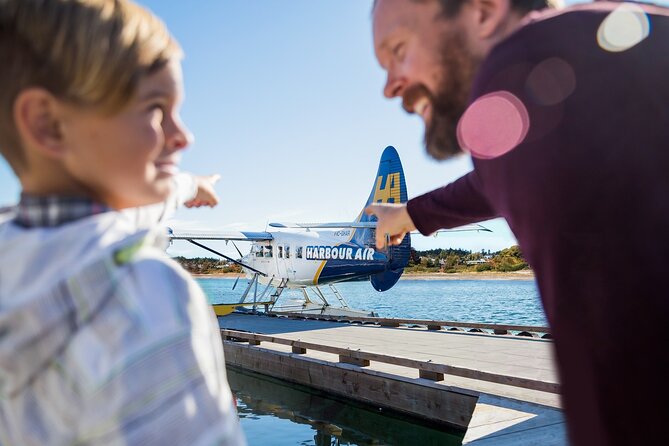
Floatplane windows can be great for photos, but the angle and timing matter. You’ll be shooting out over water, cliffs, and built areas, often with changing light. That means you’ll want to keep your expectations realistic: some seats won’t give you clean lines, and the middle of the cabin can make the view feel narrower.
If you get a window seat, your job gets simpler: aim to capture the “big picture” first (harbor curves, coastline bends, the inlet shape), then zoom in mentally on details like shoreline structures around the dockyards.
Photo-friendly mindset for a short flight
Because the flight is roughly 20 minutes in the air, you won’t have time for slow, careful framing. I treat it like a quick museum tour: get the key shots, then do a second pass when the light looks good.
Price and value: is $143 worth 20 minutes in the air?
At $143.09 per person for the 30-minute experience (with around 20 minutes of flight time), the value depends on what you want most. If you want a full-day scenic experience, this might feel short. But if you want maximum novelty with minimal schedule chaos, it’s one of those “pay for the perspective” deals.
This tour also includes key costs in the quote: it covers GST and includes “sustainable fees.” You’re basically paying for a compact flight route that hits multiple types of scenery—harbor city, lakes, peninsula viewpoints, fjord-like inlets, and naval dockyard structures—without the long transit steps.
Who gets the best value
- People who like aviation and want the floatplane experience specifically
- Short on time but craving a big “I can’t believe I saw that” viewpoint
- Families looking for something exciting that still fits a tight itinerary
Who should think twice
If you’re extremely sensitive to cramped seating, or you need guided narration to enjoy scenic tours, you might find the experience less satisfying than you hoped—especially on a fully booked flight.
Weather, whales, and expectations you should set early
This experience depends on good weather. If conditions aren’t right, the operator will offer a different date or a full refund. That’s important because visibility affects everything: Olympic Mountains sightings, photo sharpness, and the clarity of inlets all depend on sky conditions.
On the “what wildlife will I see” question: this route is designed around Victoria, coastline views, and inland inlets. So plan your day assuming you’re here for scenery, not a guaranteed wildlife encounter.
Dress for the water experience
Even though you’re not on a boat, you’re flying from water and landing on water. Bring a layer you’re comfortable in and be ready for wind chill near the harbor side of the terminal. You don’t need to overpack, but I wouldn’t show up in just thin summer fabric.
Who should book this seaplane flight in Victoria
I think this tour hits hardest for three types of travelers.
First, it’s perfect if you’re doing a first visit to Victoria and want a fast, high-impact orientation. Second, it’s great for couples and friends who want something different from the usual harbor walk and museum day. Third, it works well as a family activity because it’s short, exciting, and doesn’t require long hiking or complicated logistics.
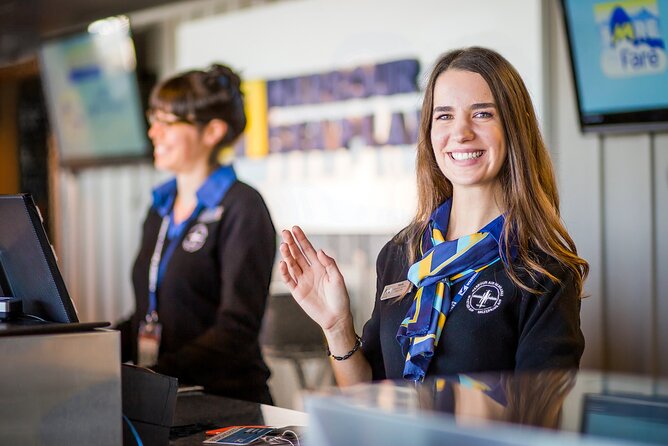
It’s also a strong choice for people with limited mobility compared to walking-heavy excursions. The ground crew is present and can help you move around at the terminal, so the experience can be more manageable than you might expect for an aviation activity.
If you’re the kind of person who needs tons of narration to stay engaged, or you’re bothered by tight seating and motion, you may prefer a different kind of tour.
Should you book Victoria Panorama Scenic Seaplane Tour?
If your goal is a quick, unforgettable West Coast view from a floatplane, book it. You’re paying for access to angles you can’t get from land: the harbor geometry, the coastline shapes, and those inlets that look almost otherworldly when you’re above them. The water take-off and landing are the main event, and the route packs several distinct scenery types into one compact loop.
Skip it if you know you’ll be unhappy with basic seating, limited leg room, and a lack of onboard narration. Also think twice if you’re very motion sensitive, because floatplane movement is part of the experience.
If you’re flexible with weather and want to trade time on the ground for time in the sky, this is a smart use of your Victoria budget.
FAQ
How long is the Victoria Panorama Scenic Seaplane Tour?
The tour is about 30 minutes total, with approximately 20 minutes of flight time.
Where do I meet for the flight?
You’ll meet at Harbour Air in Victoria Harbour Airport, located at 950 Wharf St, Victoria, BC V8W 1T3. The tour ends back at the same location.
What ID do I need?
Passengers 18 years and above must present either one piece of valid government-issued photo identification or two pieces of government-issued identification without a photograph.
Is there narration during the flight?
The flight experience does not include narration, so you’ll be focused on spotting landmarks visually.
What should I expect to see, and are whales included?
The route focuses on Victoria’s harbor and coastline, plus inlets and lakes. Whale viewing isn’t part of the planned route, so I’d set your expectations around scenery rather than marine animals.
What happens if weather cancels the flight?
This experience requires good weather. If it’s canceled due to poor weather, you’ll be offered a different date or a full refund.