REVIEW · VICTORIA
Victoria Whale Watch Tour
Book on Viator →Operated by SpringTide Whale Watching Tours · Bookable on Viator
Whale spotting starts the moment you step aboard. On SpringTide Whale Watching & Charters out of Victoria, I love the combo of a 60ft Ocean Cruiser with a heated cabin plus top-deck viewing, and the way the onboard naturalists help you make sense of the wildlife as the boat searches the Salish Sea.
One thing to plan for: whales are wild animals, so sightings can vary, and sometimes you’ll spot activity farther out than you hoped.
In This Review
- Key things to know before you go
- Victoria’s whale watch starts at 1119 Wharf St
- The 60ft Ocean Cruiser: top deck views and indoor warmth
- How the 3 hours usually feel on the water
- Who you might see: orcas, humpbacks, seals, otters, and eagles
- The naturalists and captain: how the info makes sightings better
- Comfort plan: dress for spray, layers, and quick temperature swings
- Pricing and value at about $126.92 per person
- Best fits: who this Victoria whale watch works for
- Should you book SpringTide Whale Watching & Charters?
Key things to know before you go
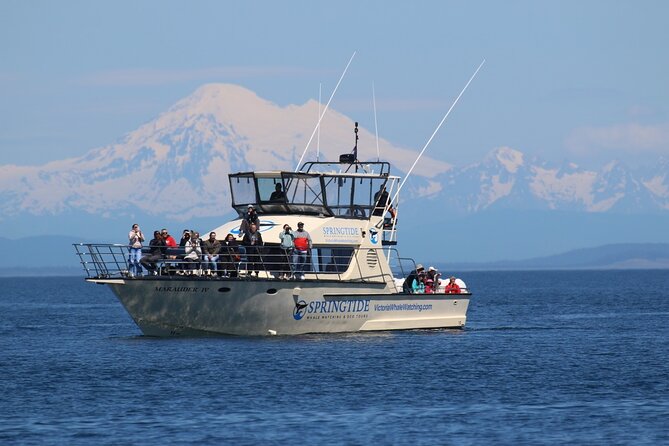
- 60ft Ocean Cruiser (18m) with viewing from both top deck and inside the heated cabin
- Small cap: max 65 travelers, so you usually don’t feel packed in
- Warm-up setup on board: heated cabin plus complimentary coffee, tea, or hot chocolate
- Naturalists on board call out species and behavior (and they’ll answer questions)
- Flexible timing with morning or afternoon departures
- No-whale-guarantee reality: you’re out for wildlife, not a staged show
Victoria’s whale watch starts at 1119 Wharf St
The whole trip is simple from the start. You meet at 1119 Wharf St, Victoria, BC, and your tour ends back at the inner harbour—so you’re not dealing with long transfers or complicated logistics. The dock area is also close to public transportation, which makes it easier if you’re staying downtown.
From there, the experience is all about getting you onto the water quickly and comfortable enough to watch for hours. And the good news: the boat setup means you can shift locations as weather changes, instead of being stuck facing one direction the whole time.
You can also read our reviews of more whale watching tours in Victoria
The 60ft Ocean Cruiser: top deck views and indoor warmth
This isn’t a tiny skiff. You’re riding a 60ft (18m) Ocean Cruiser, built for whale watching with good sight lines from multiple areas—inside and on deck.
What matters in real life is this: Victoria weather can turn on you fast. Even when it feels warm on land, it can feel chilly once you’re moving across open water. The heated cabin helps you stay out of misery without giving up the view. Large windows let you watch while you warm up, and you can step back inside when the wind hits.
A theme I noticed in feedback: people like being able to move around. The boat layout gives options—walk, shift your angle, and find a viewing spot as whales surface and move. If you’re the type who hates being trapped on a bench, this design plays nicer than many more basic boats.
How the 3 hours usually feel on the water
The tour runs about 3 hours (approx.). In practice, the rhythm is pretty straightforward:
- You cruise out while the crew keeps their eyes on the water for signs of whales and other marine life.
- As sightings come in, the naturalists share what you’re seeing—species, behavior, and how the Salish Sea supports them.
- If conditions get cold, you can duck into the heated cabin, sip a hot drink, and keep watching through the windows.
- You return to the inner harbour when the tour time ends.
There’s no need to rush your brain here. The best whale watches do two things: they help you understand the animals and they help you stay comfortable enough to actually enjoy waiting for the next good moment.
Who you might see: orcas, humpbacks, seals, otters, and eagles
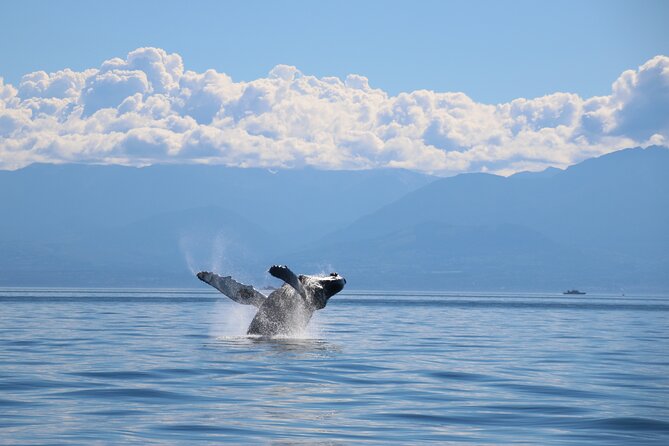
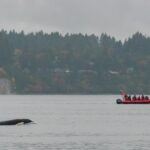
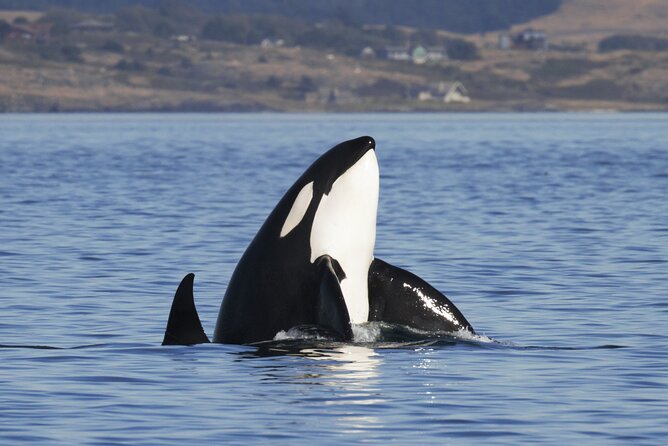
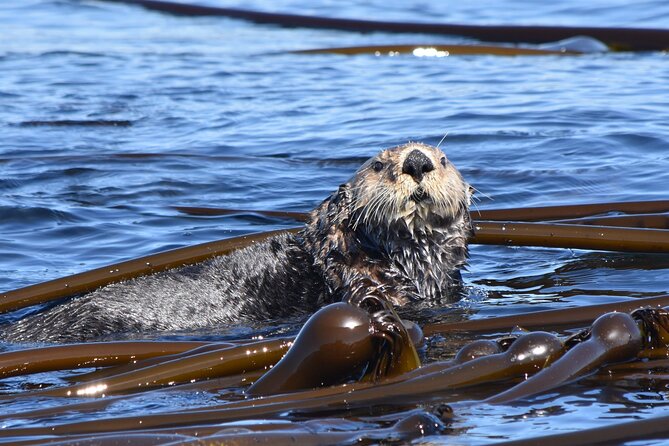
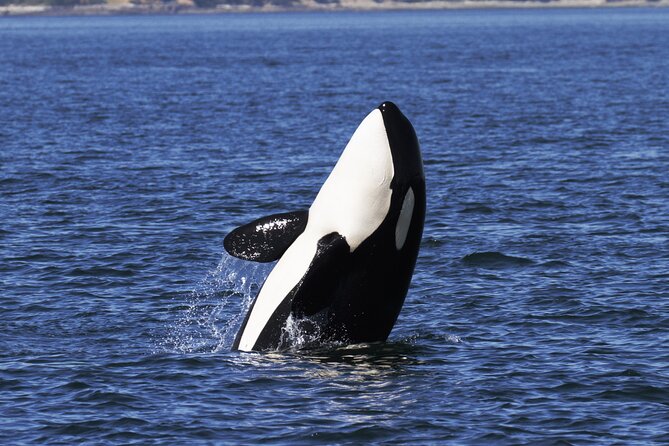
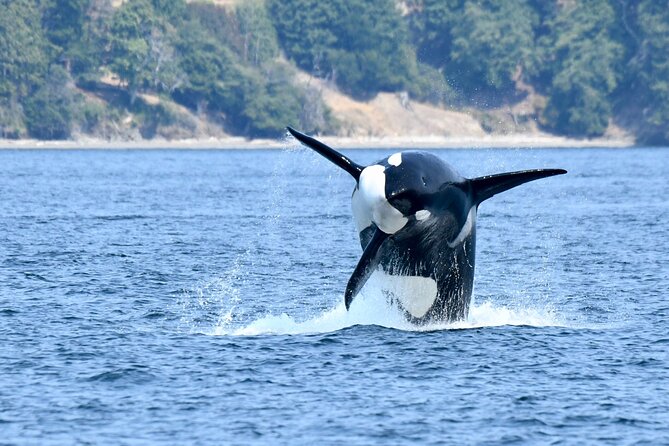
You’re in the Salish Sea, and the whole purpose is to spot whales and other marine wildlife in their natural habitat. The tour’s wildlife focus includes orcas and humpback whales, plus sea lions, seals, otters, and eagles.
Here’s the realistic part: whales can be unpredictable. Some trips hit multiple species. Others focus more on one or two types of activity at the right time and distance. Either way, the “other” wildlife can make the trip feel full—sea lions and seals are often easier to see than whales because they pop up near haul-out areas and along the coastlines.
Also, wild viewing comes with rules. Wildlife viewing distances are set by federal wildlife viewing guidelines, and that means you might see whales at a respectful range rather than right beside the boat. When whales breach or surface close enough for clear views, it’s a highlight—but distance is part of the deal.
The naturalists and captain: how the info makes sightings better
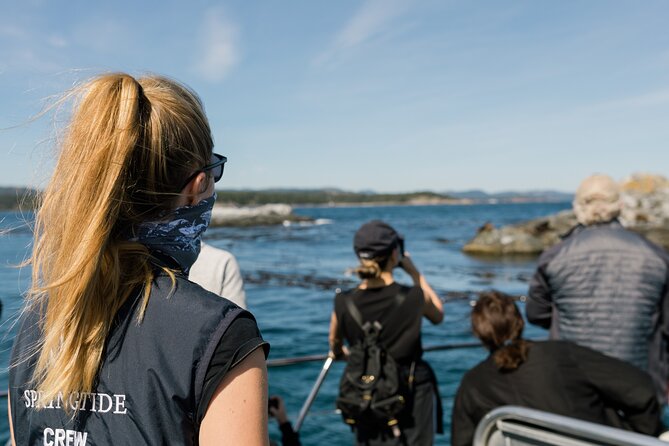
The standout value here is not just finding wildlife—it’s helping you understand what you’re looking at.
The onboard team includes expert naturalists and a captain who work together to locate whales and get you good viewing angles without disturbing the animals. You can ask questions anytime, and the answers aren’t generic. People specifically mentioned learning about whale biology and the whales’ role in the ocean ecosystem.
Names came up often in feedback, and they matter because they signal consistency in the team:
- Katie was credited with clear, structured explanations and a passion for ocean life.
- Jasper (captain) was praised for skilled boat handling and helping everyone get the best view.
- Ian, along with crew members like Aly, Marty, Heather, Molly, and Kelly, were mentioned for friendliness, wildlife spotting, and answering questions.
One more detail that adds value: there’s often photo sharing after the trip. People noted free photos available online a few days later, which is a nice bonus when you want something better than a shaky phone shot.



Comfort plan: dress for spray, layers, and quick temperature swings
If you only do one thing, do this: dress like you’ll be on a boat in wind and mist. A lot of people recommended layers, and they’re right. Even when conditions feel manageable before you board, the deck can feel colder once you’re out on the water.
A few practical tips that showed up repeatedly:
- Bring a waterproof jacket. Expect some spray, and yes, you might get wet.
- Wear layers you can peel off if it warms up.
- If you’re prone to motion sickness, it’s worth planning for it, since water conditions can be rough at times. One person mentioned feeling queasy, and the crew was supportive in that moment.
Good to know: the tour provides warm clothing support. People reported warm jackets being offered, and at least one review mentioned extra help like additional jackets or pants if you need more warmth.
And yes, the hot drinks matter. You can warm up with complimentary coffee, tea, or hot chocolate while still watching through the cabin windows.
Pricing and value at about $126.92 per person
Let’s talk money without hand-waving. At $126.92 per person for roughly 3 hours, the price can feel steep at first—until you look at what’s included and what kind of experience it is.
Here’s where the value comes from:
- Education included, not tacked on. Naturalists are on board, answering questions and explaining behavior.
- Comfort included. The heated cabin and complimentary hot drinks are real, not marketing fluff.
- A proper whale-watch boat. A 60ft cruiser with indoor viewing and multiple viewing options is easier on your body than cramped boats.
- Capacity is capped at 65, which tends to make the experience less chaotic than high-cap boats.
Is there a downside? You’re paying for a wildlife experience with no full control over what you’ll see. If you’re the type who needs a guaranteed moment at a specific distance, this is not that kind of product. But if you want a strong chance at orcas and humpbacks with a team that helps you actually understand the sightings, the math can make sense.
Best fits: who this Victoria whale watch works for
This is a great choice if you want a mix of wildlife and explanation in a relaxed format. It also tends to suit different travel styles:
You’ll like it most if:
- you want orcas and humpbacks in one outing (and you’re open to wildlife timing)
- you appreciate narration and Q&A, not just scanning the horizon
- you’d rather move between deck and heated cabin than endure full exposure to wind
- you plan to take photos but also want a clearer picture of what you’re seeing
It’s also ideal for people who want a shorter day. At about 3 hours, you can fit it alongside other Victoria classics without losing the entire afternoon.
If you’re sensitive to steps or movement, keep in mind access can be tricky. One feedback mention noted high steps to reach upper decks and the cabin bathroom, and they couldn’t access those areas due to joint replacements. If mobility is a concern, it’s smart to ask directly about onboard access details before you book.
Should you book SpringTide Whale Watching & Charters?
If your goal is a real whale watch with expert interpretation, strong onboard comfort, and a boat designed for viewing from multiple angles, I’d book it.
This one has a strong track record: a 4.8 rating across 458 reviews, with 95% recommending the tour. People consistently praised the staff’s organization, the friendliness of the crew, and the way naturalists made sightings click—especially when orcas and humpbacks showed up.
Here’s the only reason not to book: if you need a guaranteed checklist outcome (like a specific whale at a specific distance), wild animals can’t promise that. This is about being out on the water with the right setup and the right team, then letting the Salish Sea do its thing.
If you’re flexible, dress warmly, and come for the wildlife experience (not a scripted show), you’re very likely to walk away smiling.