REVIEW · MELBOURNE
Melbourne Sports Experience + Free Australian Sports Museum entry
Book on Viator →Operated by Sporting Capital Tours · Bookable on Viator
Sport in Melbourne, on one tight route. This small-group tour ties together the city’s biggest venues with an easy walking plan from the Yarra River area to the MCG precinct. I especially like how you get the whole sporting picture without needing to hop between tickets and transport.
I also love that the end point includes free entry to the Australian Sports Museum, so your walk doesn’t feel like it stops at a fence. One small drawback: the tour is only about 3 hours 30 minutes, so you’ll see a lot from the outside and in key viewpoints, but you won’t have long, slow time inside each venue.
In This Review
- Key highlights at a glance
- The 3.5-hour route that makes the sporting precinct easy
- Fed Square: a simple start with a clear orientation
- Walking the Yarra River and why it matters for sport
- Melbourne Park and Rod Laver Arena: tennis culture without the ticket hassle
- Melbourne & Olympic Parks: 1956 is the story you’ll remember
- AAMI Park: soccer and rugby, front and center
- Melbourne Cricket Ground (MCG) and the built-in museum payoff
- Small-group tour energy: how it affects the whole experience
- Price and value: what $86.07 really covers
- Practical pacing: what you should expect at each venue
- Who should book this tour (and who might want a different plan)
- Should you book Melbourne Sports Experience + Free Australian Sports Museum entry?
- FAQ
- How long is the Melbourne Sports Experience tour?
- What’s the group size?
- Where do you meet and where does the tour end?
- What’s included in the ticket price?
- Is there an admission charge at the stops during the walk?
- What happens if the weather is poor?
- Can I get a full refund if my plans change?
Key highlights at a glance

- Small group (max 8): more time for questions and a less rushed feel
- Rod Laver Arena and Melbourne Park: the tennis precinct is built right into the route
- Olympic Park context: the tour explains the sporting weight of the 1956 Olympics
- AAMI Park stop: a focused look at Melbourne’s main soccer and rugby stadium
- MCG + Australian Sports Museum: big-stage sights plus a payoff at the museum
The 3.5-hour route that makes the sporting precinct easy
This is a classic Melbourne sports day, but with a smarter structure than trying to do it alone. You start in the CBD by the Birrarung Marr area, meet up at Fed Square, then walk your way along the Yarra River toward Melbourne’s main stadium cluster. It’s designed for people who love sport, but also for those who want a quick education in why Melbourne’s venues matter.
The route keeps things moving in short chunks—about 10 to 15 minutes per major stop—so you’re never stuck wandering for ages. That matters if you’re traveling with a tight schedule. It also helps you connect the dots: tennis, Olympics, soccer/rugby, and cricket all appear in sequence instead of as separate standalone attractions.
You can also read our reviews of more museum experiences in Melbourne



Fed Square: a simple start with a clear orientation
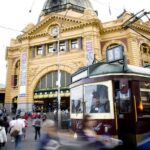
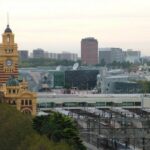
Your first stop is Fed Square, right opposite Flinders Street Railway Station. It’s one of those spots in Melbourne where you can’t miss the big-picture layout of the city, and it’s a convenient meeting point for public transport.
From there, the tour eases into the walk along the Yarra River. I like this approach because it gets you oriented right away. You’re not spending your “tour time” figuring out where you are. You’re in position to start learning the geography of Melbourne’s sporting story immediately.
Walking the Yarra River and why it matters for sport
The Yarra River segment is short, but it’s not random. The guide uses the river as a connector—linking how Melbourne grew, how crowds gathered, and how the sporting precinct developed close to the action.
What I find practical here is that you’re not just seeing venues; you’re seeing the spacing between them. Once you’ve walked that path, places like the MCG and Melbourne Park don’t feel like isolated dots on a map. They feel like part of a single sports-focused zone.
If you’re the kind of person who likes cities where neighborhoods and history show up in the street layout, this river walk is a good warm-up.
Melbourne Park and Rod Laver Arena: tennis culture without the ticket hassle
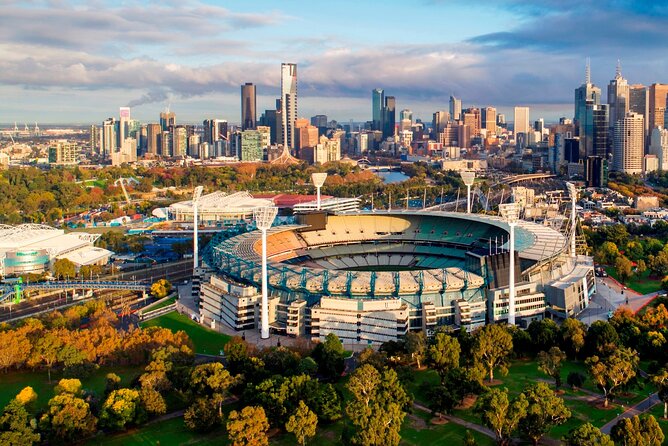
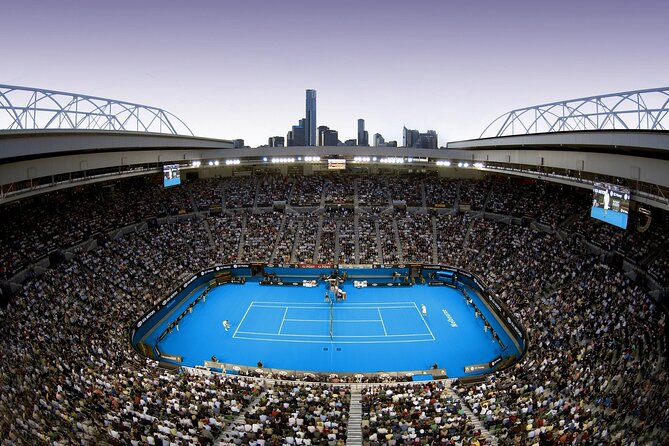
Next up is Rod Laver Arena, reached as you move through the Melbourne Park tennis complex. Even if you’re not a tennis die-hard, Rod Laver Arena is one of the easiest venues to recognize because it’s become a global tennis symbol for Melbourne.
The big win with this stop is that it’s built into a walking tour. You don’t need to plan a separate visit or worry about sorting out a specific show or match time. You get the venue context and the “feel” of Melbourne Park as a sports campus.
One more thing: depending on the day and what’s happening around the courts, you may catch activity in the complex area. In past moments shared by the tour team, guests have reported seeing tennis action during their visit—so keep your eyes up as you walk through.
Melbourne & Olympic Parks: 1956 is the story you’ll remember
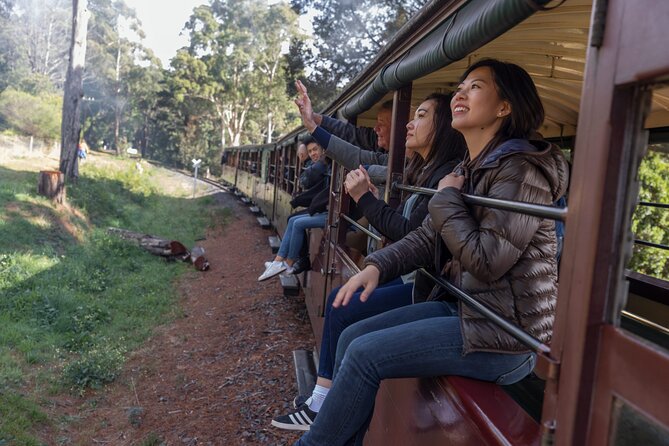
The tour then heads to Melbourne & Olympic Parks, where the key theme is the sporting significance of the 1956 Olympic Games. This is where the tour becomes more than sightseeing. It gives you the why behind the venue cluster.
Even if you’re not obsessed with Olympic history, understanding 1956 helps you make sense of why Olympic Park looks and feels the way it does today. It also gives you a framework for other sports sites you’ll see later on the walk, because the tour is basically building a chain of major events across decades.
A small tip: when a guide ties a place to an event like 1956, listen for the details about what changed afterward. Those explanations make the stadium landscape feel like an ongoing story, not a list of landmarks.




AAMI Park: soccer and rugby, front and center
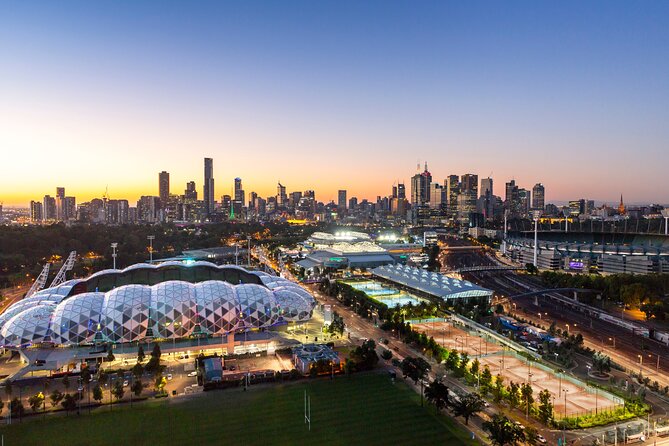
Then you hit AAMI Park, Melbourne’s main stadium for soccer and rugby. This stop is valuable because it rounds out the mix. A lot of sports-focused walking routes get stuck on cricket and tennis; here, you get a clear look at where local fans go for the big matches.
Even though your time at each site is brief, the pacing helps you compare them in your head:
- tennis as a scheduled global event,
- Olympics as legacy and infrastructure,
- and then league sports as weekly culture.
That contrast is part of why this tour feels efficient and satisfying. You walk away with an understanding of how different sports shape different parts of Melbourne’s identity.
Melbourne Cricket Ground (MCG) and the built-in museum payoff

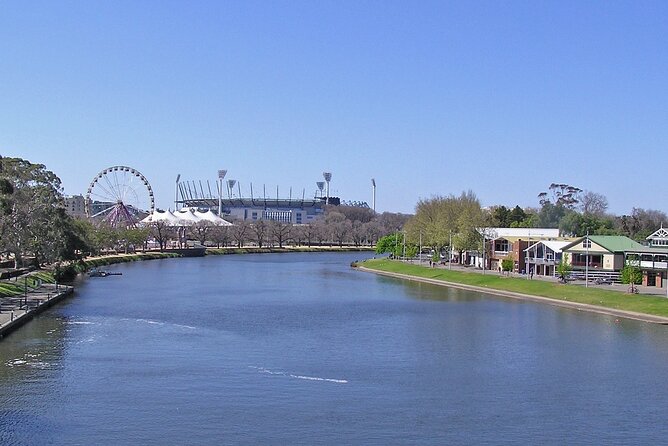
Finally, you arrive at the MCG, home of Australian sport. This stop is always a high point on an itinerary like this, and the tour makes it work by using the MCG as the emotional finish of the stadium walk.
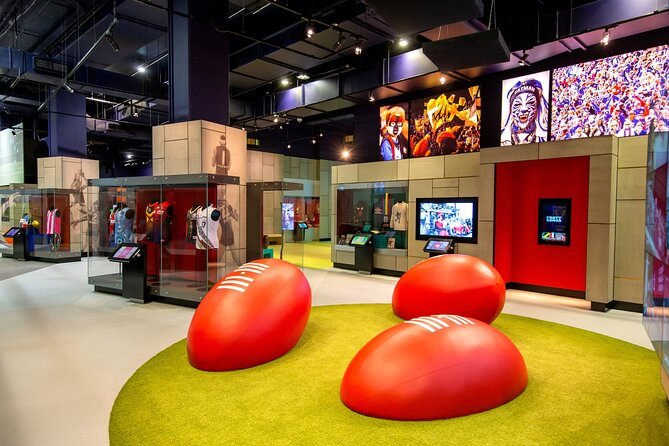
But the real payoff is what comes right after: you end at the Australian Sports Museum at the MCG precinct (Gate 3, Brunton Ave, East Melbourne). Since museum entry is included, you’re not left with that “now what?” feeling you can get after touring stadium exteriors.
Instead, you can keep the momentum going and explore Melbourne’s sporting culture in a more detailed way. This is also a good moment to slow down, regroup, and decide what you want to look at more closely if the museum has areas that match your sport interests.
If you’re a photo person, you’ll want to plan for a few shots around the MCG area. The museum also makes this tour feel like more than a walk—it’s a complete half-day sports visit.
Small-group tour energy: how it affects the whole experience
A max group size of 8 travelers changes the tone. You’re not tucked into the back while a guide talks past you. Questions land faster. Small side comments can actually connect to what you care about.
In the experience, the guide’s enthusiasm really matters. One guide named Ben is mentioned as being passionate about Melbourne’s sporting history and the sporting precinct. That kind of guide style usually translates to better explanations—short, clear, and tied to what you’re seeing right in front of you.
Also, the tour team’s personality comes through in how they talk about chance sports moments. They don’t promise famous athlete encounters, but they do acknowledge that local stars sometimes show up across Aussie Rules, rugby, and cricket. If you love the idea of a sports “moment,” it’s a fun extra layer to the day—even if you treat it as a bonus, not a requirement.
Price and value: what $86.07 really covers
At $86.07 per person, this isn’t a budget bus tour. The value is in the combination:
- a guided walk that bundles multiple major venues into one half-day,
- small-group attention,
- and included entry to the Australian Sports Museum.
The “value math” is fairly simple. If you were to separately plan a stadium-area walking experience plus museum time, you’d spend more on transport time, entry planning, and effort. Here, the structure is the service. You show up, walk, learn, and end with museum access that’s already paid for.
Another smart value point: the tour is mobile-ticket based. That usually means less admin stress on the day, and you can focus on the walk and the sights.
Practical pacing: what you should expect at each venue
Because each stop is short (10 to 15 minutes), it’s best to think of this as a guided “sports highlights walk,” not a long museum-style visit at each stadium.
Here’s how to mentally prepare:
- You’ll see a lot from key vantage points rather than doing deep interior tours.
- You’ll get context fast—enough to make you want to return later if you want more detail.
- The included museum at the end is your longer-form time, so plan to use that as your main indoor exploration.
The tour also requires good weather. That’s not a small detail in Melbourne. If it’s raining or miserable, you’ll likely feel the impact more because it’s a walking experience. If you’re flexible with dates, it can make the whole thing more enjoyable.
Who should book this tour (and who might want a different plan)
This tour is a great fit if:
- you want a concentrated introduction to Melbourne’s major sporting precinct,
- you like walking tours that connect places with stories,
- you want museum time included without doing extra planning,
- and you appreciate small groups.
It may not be the best fit if you:
- hate walking for 3+ hours, even at a steady pace,
- prefer long, inside-only stadium experiences,
- or you’re traveling with someone who’s only interested in one sport and nothing else.
If you’re somewhere in the middle—curious about several sports—this route tends to work well because it gives you a taste of multiple worlds.
Should you book Melbourne Sports Experience + Free Australian Sports Museum entry?
I’d book it if your goal is to understand Melbourne’s sports identity in one efficient morning/afternoon slice. The included museum entry turns the ending into something more useful than just walking away from the MCG.
The only reason not to book is weather and expectations. Treat it as a guided walking highlights tour with short stops, then museum time at the end. If that matches what you want, you’ll likely come away feeling like you got a lot of Melbourne sport culture for your money.
FAQ
How long is the Melbourne Sports Experience tour?
It runs for about 3 hours 30 minutes.
What’s the group size?
The tour is a small group with a maximum of 8 travelers.
Where do you meet and where does the tour end?
You start at 1 Birrarung Marr Walk, Melbourne VIC 3000, and the tour ends at the Australian Sports Museum at the MCG, Gate 3 Brunton Ave, East Melbourne VIC 3002.
What’s included in the ticket price?
You get free entry to the Australian Sports Museum included with the tour.
Is there an admission charge at the stops during the walk?
The listed stadium and landmark stops are shown with free admission tickets.
What happens if the weather is poor?
The tour requires good weather. If it’s canceled due to poor weather, you’ll be offered a different date or a full refund.
Can I get a full refund if my plans change?
Yes. You can cancel up to 24 hours in advance for a full refund.