REVIEW · VICTORIA
Victoria Ultimate Marine Whale & Wildlife Tour
Book on Viator →Operated by Five Star Whale Watching · Bookable on Viator
Whales in the wild beat any screen. This 3-hour Salish Sea cruise is built around a flexible route for maximum sightings, and you get live on-board commentary to help you spot what you’re actually looking at.
If you like real-time guiding, not just a “go find whales” cruise, this one is set up for that.
I also like the fact that you can choose where to watch from. You can bounce between indoor shelter and outdoor viewing decks depending on wind and weather, and the company keeps the group small (up to 30).
On top of that, the captain and marine guide steer based on what’s happening in the area, not a fixed script.
One thing to keep your expectations grounded: wildlife sightings are never guaranteed. Even with the best searching, you might end up with lots of seals and humpbacks and still miss a particular whale species like orcas on your day.
In This Review
- Key things I’d plan around
- Why this Victoria whale tour works (the Salish Sea angle)
- Starting at Five Star: check-in and getting out on the water
- Three hours: what the captain is really doing
- Deck choice and boat comfort when the weather shifts
- What you’re likely to see: whales, porpoises, seals, and birds
- Live commentary: turning “I saw a whale” into real understanding
- The “value” question: $134.02 for 3 hours, is it fair?
- Who should book this, and who might want another option
- Weather and motion: what to do so the trip feels good
- Should you book the Victoria Ultimate Marine Whale & Wildlife Tour?
- FAQ
- Where does the tour start?
- How long is the Victoria Ultimate Marine Whale & Wildlife Tour?
- How much does it cost, and is the price per person?
- What’s included in the ticket price?
- What is not included?
- Is the tour offered in English?
- How big is the group?
- Is the tour suitable for someone with moderate physical fitness?
- Are service animals allowed?
- What should I know about weather?
Key things I’d plan around
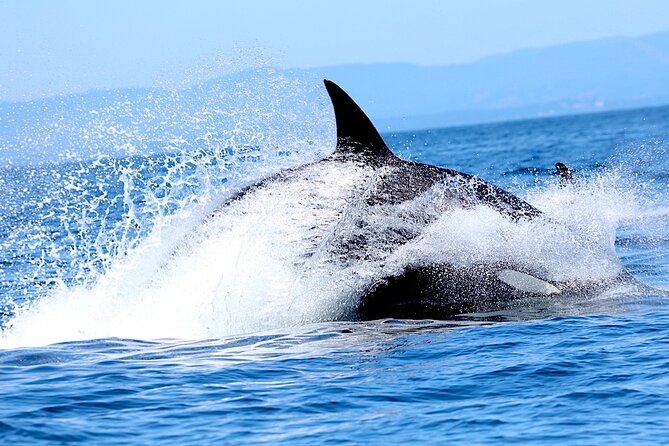
- A flexible route based on recent whale activity, guided by the captain and marine team
- Indoor and outdoor decks, so weather is less of a deal-breaker
- Small-group feel (max 30), and people often describe it as not overcrowded
- Live commentary that turns sightings into context, not just animal spotting
- Respectful viewing rules, including slowing or disengaging propulsion if a whale gets too close
Why this Victoria whale tour works (the Salish Sea angle)
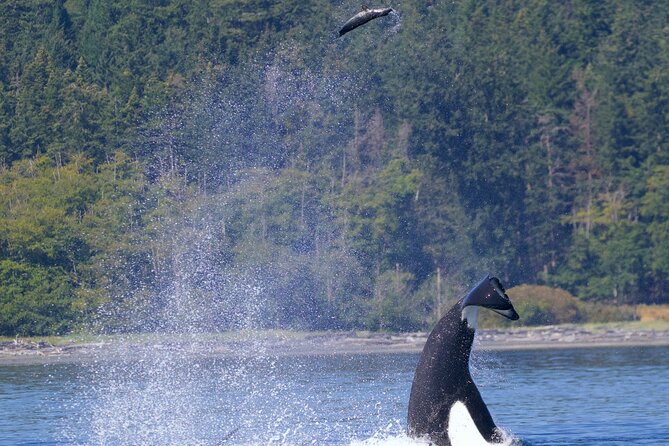
Victoria is surrounded by water that’s basically a buffet for marine life, and this tour stays in the Salish Sea waters around southern Vancouver Island. That matters, because the Salish Sea attracts whales and other animals for the same reasons you’d follow food in the real world: currents, prey, and the timing of seasonal activity.
What you’ll appreciate is that the route isn’t “we’ll go here and hope.” It’s designed to respond to what’s been spotted lately. The captain steers for the best places to see animals, using shared information from other vessels and updates from the wider whale-watching network. In practice, this is how you get more than one interesting moment in a 3-hour window.
The species list is broad, too. You might spot orcas, humpbacks, minke whales, gray whales, dolphins, and both Dall’s porpoises and harbor porpoises. You can also see harbor seals, Steller sea lions, California sea lions, and you may spot lots of seabirds (the region has more than 127 marine bird species). That’s not a promise of every animal on your trip. It is a sign that the area is genuinely active.
You can also read our reviews of more whale watching tours in Victoria
Starting at Five Star: check-in and getting out on the water
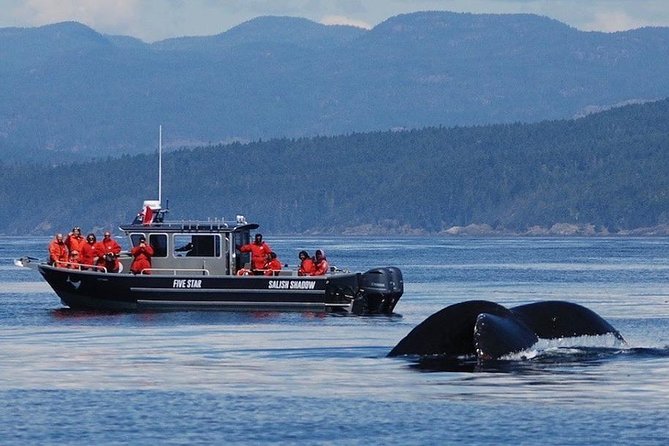
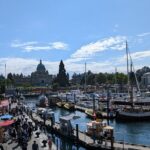
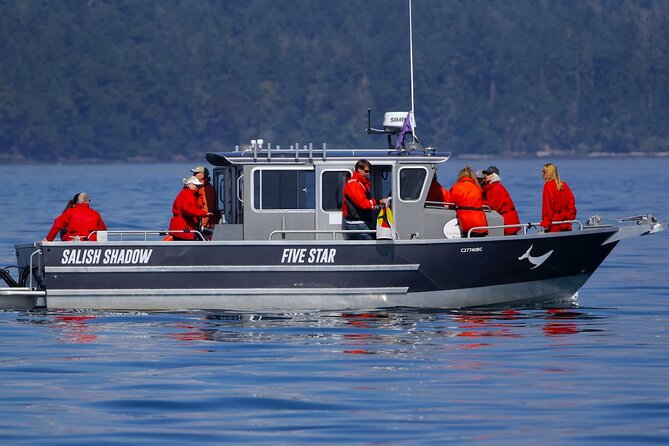
You meet at Five Star Whale Watching at 645 Humboldt St, Victoria, BC. Check-in follows at the office meeting location, then the vessel departs from a nearby dock.
This is the kind of tour where timing matters. If you’re even slightly late, you can lose your spot in the flow of getting boarded and settled. I’d plan to arrive a bit early, especially if you’re also dealing with parking. Speaking of which: the tour price does not include a parking fee, payable at check-in.
Good news for logistics: the tour is near public transportation and service animals are allowed. The day-to-day vibe also feels organized—people mention friendly, punctual staff and a smooth run once everyone is aboard.
Three hours: what the captain is really doing
The tour runs about 3 hours, give or take by day conditions and animal activity. The real “itinerary” is the search pattern.
Here’s what that means for you: you’ll travel through Salish Sea waters looking for whales and other marine life, and your experienced marine guide and captain steer toward the most promising sightings. On some days that means lingering near a pod, on others it’s more scanning and repositioning while you wait for something to surface.
A helpful detail: if a whale approaches within the legal viewing distance, the vessel shuts down or disengages propulsion until the whale moves away. That’s not just a rulebook line. It’s how they keep watching respectful and safe. So instead of charging after animals, you’re more likely to drift, pause, and watch how the whales behave when they’re in the area.
This also explains why “shorter than expected” or “we didn’t go out far enough” can show up in people’s stories. When the sightings are right there, the crew may spend more time watching than cutting distance. And when a sighting disappears fast, other agencies and vessels keep searching—because whales move.
Orcas are a perfect example. One piece of context I found striking is that orcas can travel up to 100 miles in a day. That’s why your odds don’t depend on one captain’s effort. It’s the nature of animals in the wild.
Deck choice and boat comfort when the weather shifts
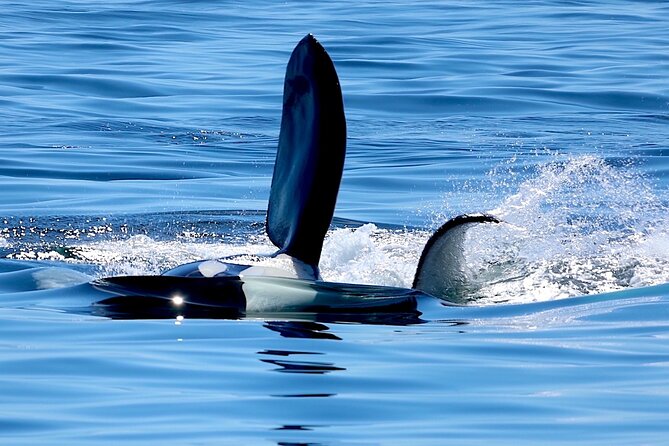
This tour gives you options: you can watch from outdoor decks or from an indoor area when conditions get windy or damp.
In plain terms, that’s one of the smartest design choices in whale watching. Pacific Northwest weather doesn’t ask permission. Being able to move where you’re comfortable means you can keep your focus on the water instead of spending the whole trip fighting cold spray.
Some people describe sitting at the front deck and getting windswept—fun, but it also signals that you’ll feel the breeze. My advice: bring a warm layer and plan for wind. Even if the air starts pleasant, the water action usually changes the temperature quickly.
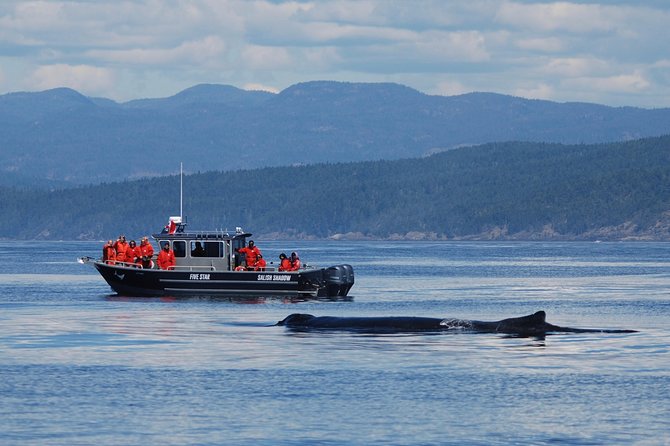
Boat size is another factor. The tour caps the group at 30, and multiple people mention a small boat feel (with one reference to a 12-passenger boat). Either way, the smaller scale tends to improve the viewing experience because you’re not all stacked in one cramped corner.
What you’re likely to see: whales, porpoises, seals, and birds
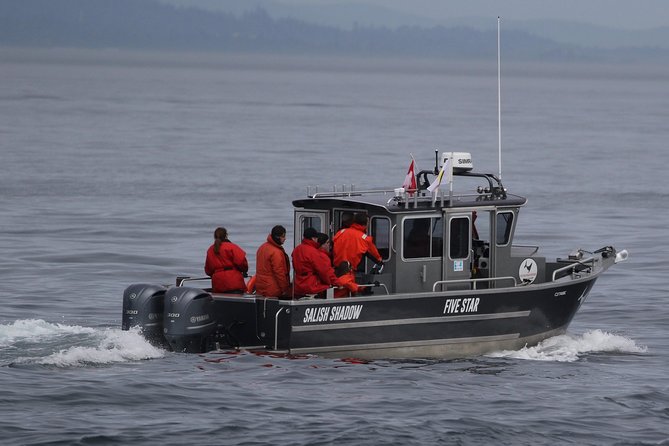
You’re searching for whales, but you’ll probably get a mixed show. That’s good, because it increases the odds you’ll still have a great trip even if one species is quiet that day.
Here’s a realistic way to think about it:
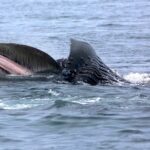
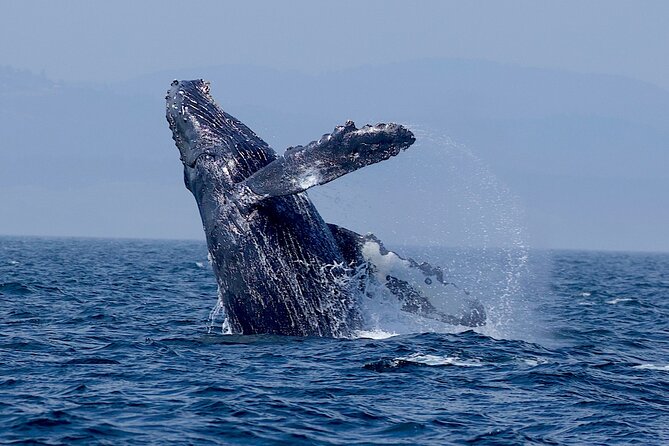
- Whales: You could see orcas and humpbacks most often in Victoria-area whale watching. Humpbacks can be active, including close passes and tail-slap behavior when conditions line up. Orcas are the wildcard. When they’re out, they can be incredible, but they can also be moving fast or harder to predict.
- Porpoises and dolphins: Dall’s porpoises and harbor porpoises are part of the possible mix. Even when whales are farther away, smaller marine life can keep the trip lively.
- Seals and sea lions: Harbor seals, Steller sea lions, and California sea lions often show up around islands and rockier areas. One of the nice things about sea lions is that they can be visible longer, like they’re willing to pose while you watch.
- Birds: The region supports lots of seabirds. If you like scanning the sky while you watch the water, this helps fill in the quiet moments.
You might also hear the crew talk about ecological reserves and specific local spots. One name that came up is Race Rocks Ecological Reserve, which is a classic area where you can see both marine mammals and birds.
You can also read our reviews of more tours and experiences in Victoria
Live commentary: turning “I saw a whale” into real understanding
A whale is a whale, right? Sure. But the difference here is that you’re not just looking—you’re learning as you go.
The tour includes live commentary on board from a professional guide. Many people highlight that the captain and guide know where to look and explain what you’re seeing. Some teams are described with names like Captain Gordon, Howard, and guides such as Sam and Meagan.
Even better, this crew has training grounded in marine education. There’s also a connection to local research training involving Ron Bates, who has supported training of naturalists and captains. That gives the whole operation more credibility than “we read a brochure.”
If you’re the type who likes to understand behavior—why whales surface where they do, why a pod moves, what different animals sound or look like—this part is where the tour can feel worth it. You leave with a story you can actually tell.
The “value” question: $134.02 for 3 hours, is it fair?
Let’s talk money in a no-nonsense way.
At $134.02 per person for around 3 hours, this isn’t a budget activity. But value here comes from several practical factors that add up:
- Small-group feel (max 30), which usually means better chances at seeing wildlife without elbow-to-elbow crowding.
- Flexible route designed to chase sightings rather than follow a fixed path.
- Live on-board commentary from a professional guide, not just a captain doing route updates.
- Indoor/outdoor viewing options, which helps you actually enjoy the whole trip instead of retreating the moment it gets rough.
The one extra cost to remember is the parking fee, paid at check-in. If you’re driving, factor that in early so you don’t get surprised when you arrive.
Also, whale watching is a “results vary” business. The price is for time on the water and the skill of finding animals, not a guarantee of orcas on cue. If you accept that nature is nature, this tour is priced in a way that feels competitive for the experience type.
Who should book this, and who might want another option
I’d point this tour toward you if you want:
- a 3-hour outing that stays focused on wildlife
- a small-group vibe
- a crew that prioritizes respectful viewing and safe behavior around whales
- live learning while you watch, so your time feels “useful,” not passive
It may not be ideal if you’re expecting a guaranteed orca sighting. Orcas can be elusive, and other animals like humpbacks, dolphins, and sea lions often carry the day instead.
Also note that the tour lists a moderate physical fitness level. That likely matters for boarding, moving around, and standing at viewing spots on a moving vessel. If you’re unsure, I’d think about your own comfort with movement in a short water outing.
Weather and motion: what to do so the trip feels good
This experience requires good weather. If conditions aren’t right, you may be rescheduled or you might receive a full refund depending on the situation. The key point for planning: don’t lock the day down with a tight schedule that leaves no flexibility.
On the water, wind can hit hard. One guest specifically mentions loving sitting at the front and getting windswept, which is fun—until you realize you’ll want to stay warm. Pack like you’re going to be outside in changing conditions: layers help, and a warm outer layer makes a big difference.
And because it’s a boat, some people feel motion even when they’re fine on land. The tour is short, but still: if you know you’re sensitive to boat movement, plan for that ahead of time.
Should you book the Victoria Ultimate Marine Whale & Wildlife Tour?
Yes—if your goal is a focused whale-and-wildlife cruise with a crew that actively looks for animals and explains what’s going on, this is a strong pick. The flexible route, indoor/outdoor deck options, and small-group cap make it feel built for real viewing time, not just “time spent on a boat.”
Book it if you’re excited by possibilities: humpbacks, orcas if you’re lucky, plus seals, sea lions, porpoises, dolphins, and a lot of birds. Nature won’t schedule itself for you, but this tour is set up to maximize your odds and turn sightings into a richer experience. If you go with the right mindset—expect wildlife, not a script—you’re very likely to have a memorable couple of hours on the water.
FAQ
Where does the tour start?
It starts at Five Star Whale Watching, 645 Humboldt St, Victoria, BC V8W 1W5, Canada.
How long is the Victoria Ultimate Marine Whale & Wildlife Tour?
It’s approximately 3 hours.
How much does it cost, and is the price per person?
The price is listed as $134.02 per person.
What’s included in the ticket price?
The ticket includes live on-board commentary and a professional guide.
What is not included?
Parking is not included. A parking fee is payable at tour check-in.
Is the tour offered in English?
Yes, it’s offered in English.
How big is the group?
The tour has a maximum of 30 travelers.
Is the tour suitable for someone with moderate physical fitness?
The activity notes that travelers should have a moderate physical fitness level.
Are service animals allowed?
Yes, service animals are allowed.
What should I know about weather?
This tour requires good weather. If it’s canceled due to poor weather, you’ll be offered a different date or a full refund.