REVIEW · VICTORIA
Historical Chinatown Walking Tour
Book on Viator →Operated by Walking Tours by Discover the Past · Bookable on Viator
Gold-rush Victoria starts under your feet. This 90-minute Chinatown walk pairs historic research with sights you can still see today, plus mobile listening aids so you don’t miss a word. I love the way it connects the past to what Chinatown offers now, and I also really appreciate the focus on specific buildings and places instead of vague storytelling. One thing to plan for: it runs in all weather, so dress for the day.
You’ll meet your guide at 1681 Government St and head through a compact stretch that tells a big story about Chinese life in Victoria—from work in the city to labor tied to the gold rush and beyond. The tour caps at 10 people, so you can ask questions and actually hear the answers. If you want a long, quiet museum-style experience, this isn’t that; it’s a walking tour, so expect to be on your feet.
In This Review
- Key Highlights Worth Knowing Before You Go
- Stepping Into Victoria’s Chinatown With a Real Timeline
- Finding the Starting Point: Where the Walk Begins and How It Feels
- Stop 1: Victoria’s Chinatown National Historic Site and the Gold-Rush Context
- The Chinese Public School: Why Ornate Architecture Has a Purpose
- How Mobile Listening Aids Change the Tour Experience
- Stop 2: Fan Tan Alley and the Surviving Feel of Gambling Dens
- A Fan Tan Demo Might Happen
- Guides Who Connect Past and Present (John and Chris)
- Price and Value: What $18.01 Gets You in Victoria
- Weather, Timing, and How to Prepare Like a Pro
- Who Should Book This Tour (and Who Might Skip It)
- Should You Book This Historical Chinatown Walking Tour?
- FAQ
- How long is the Historical Chinatown Walking Tour in Victoria?
- Where do I meet the guide?
- Where does the tour end?
- Is the tour in English?
- Does the tour run in bad weather?
- Is there an extra cost for any temple stop?
- What’s included in the price?
- What is the cancellation policy?
Key Highlights Worth Knowing Before You Go
- Historic Chinatown research, grounded in what you can see now
- Mobile listening aids help you hear clearly even with street noise
- Chinese Public School explained beyond its ornate details
- Fan Tan Alley and the surviving feel of former gambling dens
- Optional fan tan demo may be included for extra context
- Small group size (max 10) for better Q&A time
Stepping Into Victoria’s Chinatown With a Real Timeline
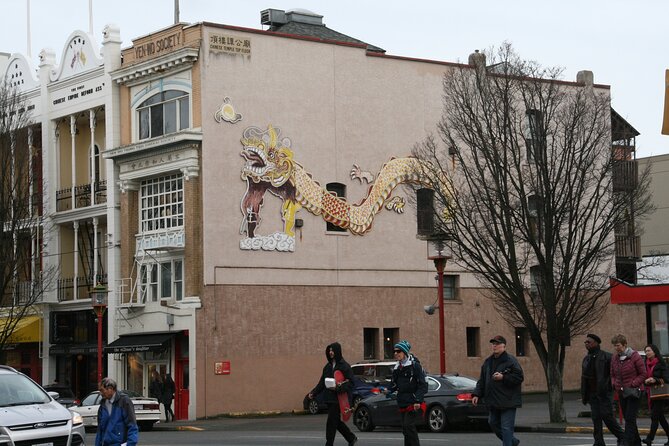
Victoria’s Chinatown is small on a map, but it carries a heavy, clear timeline. Victoria grew fast as a gold-rush supply center, and before Vancouver became the big draw in the 1880s, Victoria was the province’s largest city. That growth pulled in thousands of Chinese residents, many of whom built daily life through stores, restaurants, laundries, and even farms.
What I like about this tour is that it doesn’t treat Chinatown as a theme park. You’re shown how different people fit into different parts of the economy—some worked inside Victoria in roles such as servants, cooks, and gardeners, while others worked outside the city in gold fields, coal mines, logging camps, and fish canneries. It also puts one important fact up front: Victoria is home to Canada’s oldest Chinatown, even if the Chinese population is smaller today compared to other Canadian cities.
This matters for you because it changes how you look at the street. Instead of seeing only storefronts and alleys, you start noticing why certain places were where they were, and what that means about survival, work, community, and change.
You can also read our reviews of more walking tours in Victoria


Finding the Starting Point: Where the Walk Begins and How It Feels
Your tour begins at 1681 Government St and ends at 3 Fan Tan Alley. The scheduled start time is 10:30 am, and the walk runs about 1 hour 30 minutes. The good news for planning: this is a compact route, so you’re not spending your energy on long transfers.
You’ll also notice the group size right away. With a maximum of 10 travelers, you’re less likely to get lost in the back row. It’s the kind of set-up where a guide can slow down, answer questions properly, and still keep things moving at a walking pace.
The tour operates in all weather conditions. That’s not a problem if you dress smart: bring layers, a light rain shell if rain is possible, and shoes you can walk in. The route is outdoors for the full experience, so comfort affects how much you enjoy the storytelling.
Stop 1: Victoria’s Chinatown National Historic Site and the Gold-Rush Context
The first stop is Victoria’s Chinatown National Historic Site, and it’s where you get your foundation. You learn how Victoria’s role as a supply center helped bring Chinese workers and families into the region, and how the city became the home base for thousands. The guide frames the era with practical details: where people worked, how families sustained themselves, and how discrimination shaped everyday life and housing.
I like this kind of start because it gives you a map in your head before you look at the buildings. You start understanding what you’re seeing later: the street-level commerce, the community structures, and the reasons a neighborhood might preserve certain features even after the city changes.
One reason this stop works so well is that it stays specific. Instead of general statements, you hear how some people ran businesses in Chinatown while others worked in employment tied to the wider city or extractive industries outside it. That contrast helps you see how Chinatown functioned as both home and workplace.
The Chinese Public School: Why Ornate Architecture Has a Purpose
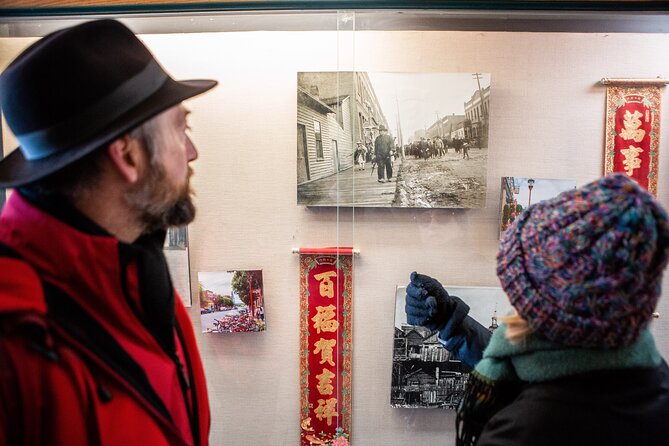
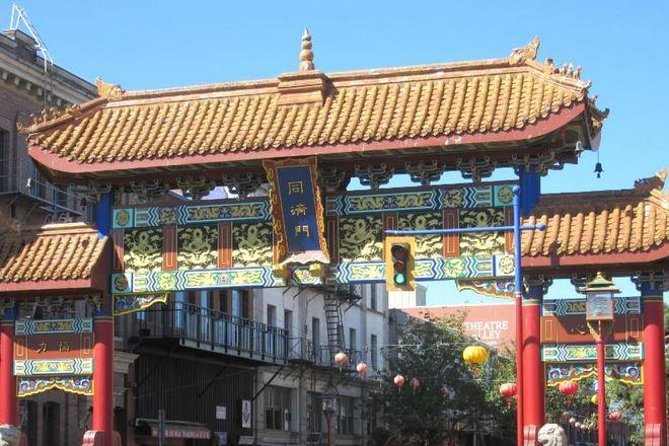
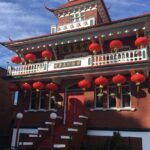
From the National Historic Site, you shift into one of the tour’s most intriguing moments: the Chinese Public School. This is a building that grabs your attention fast, but the tour is honest about something you can easily miss at street level: the ornate architecture is more than decoration.
You learn why the school was built and why there’s more to its design than first meets the eye. Even if you’re not an architecture person, the way it’s explained connects the building to community needs. You’re seeing how education, identity, and visibility showed up in stone and detail—especially in a time when life could be hard and acceptance wasn’t guaranteed.
If you’re a visitor who likes your history grounded in real places, this is a strong reason to book. You leave thinking, I can’t believe I walked past that without knowing what it meant.
How Mobile Listening Aids Change the Tour Experience
One of the most praised parts of this tour is simple: you don’t have to work hard to hear. The tour uses mobile listening aids, and that makes a real difference on busy streets. In practice, this means you can focus on the guide and the buildings instead of scanning for quiet moments.
This matters because Chinatown streets can have constant street noise. With listening aids, you’re less likely to lose key points when a bus rolls by or foot traffic gets louder. If you’re the type who tends to miss details outdoors, this feature is a major value add.
Also, the guide tends to leave room for questions. In a small group, hearing clearly helps you get better answers instead of just nodding politely.
You can also read our reviews of more historical tours in Victoria



Stop 2: Fan Tan Alley and the Surviving Feel of Gambling Dens

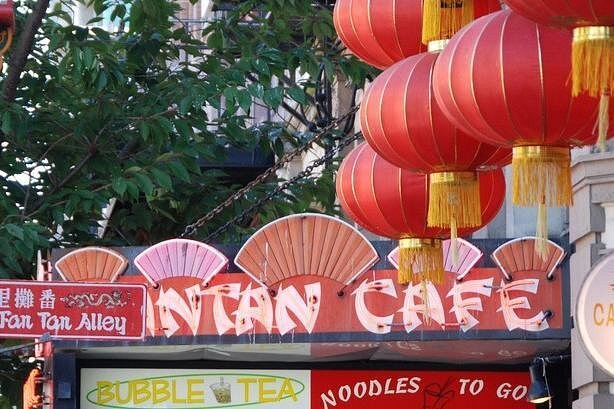
Next you head to Fan Tan Alley, the most famous stop in Chinatown. It’s the kind of place you can recognize even before you’re told anything, because it’s visually distinct—an alleyway that feels like a corridor straight out of stories.
The tour explains why it became so well known and what life looked like around it. You also learn an important detail: many former gambling dens still exist there. That doesn’t mean you’re walking through a history exhibit; it means the area still carries that sense of past activity, even though the neighborhood is living and current.
This stop is valuable because it shows how entertainment and risk shaped some Chinatown spaces. It also helps you understand how alleyways could concentrate social life in ways you might not expect from a casual street walk.
A Fan Tan Demo Might Happen
The tour may include a demonstration of how to play fan tan. If it happens, it’s more than a fun moment. It turns a name you might recognize into something you can picture—how gambling worked, why it mattered, and how people passed time.
Even if the demo doesn’t happen on your date, Fan Tan Alley remains one of the clearest “you are here because history happened here” places on the walk.
Guides Who Connect Past and Present (John and Chris)
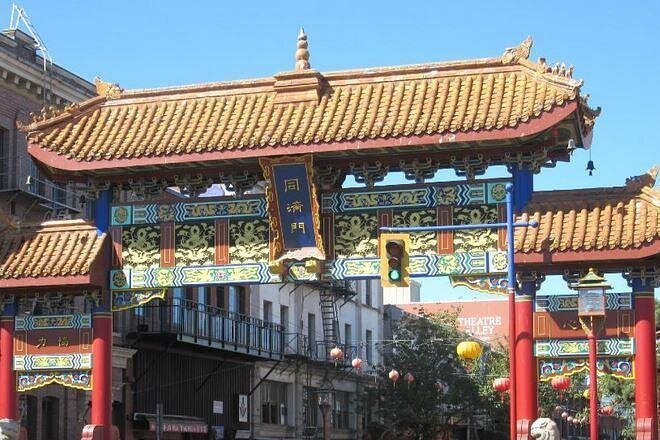
The biggest reason this tour earns such strong marks is the guides. You might hear from John or Chris, and both are praised for bringing the subject to life with historical accuracy and a clear connection to the neighborhood.
In particular, the guides are repeatedly described as engaging and patient with questions. One highlight I’d point out for you is that the tour isn’t only about old photos and dates. It’s about how the Chinatown community has continued, and what it takes to treat the past with respect while still talking about how people live today.
A couple of reviews mention extra personal touches, like guides building relationships with current shopkeepers and sharing behind-the-scenes details. There’s also at least one mention of a small pastry treat—so if your guide offers something to sample, it’s worth saying yes, as long as you’re comfortable with the idea of a brief tasting.
Price and Value: What $18.01 Gets You in Victoria
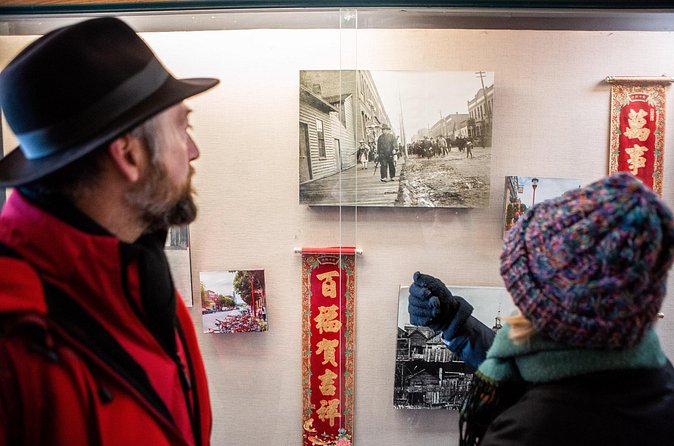
At $18.01 per person, this tour is priced like an inexpensive guided walk, not a full-day tour with transport costs. And here’s the key value point: you’re paying for a local guide, a structured route, and the listening system that keeps the experience readable outdoors.
Because the stops you visit involve key historical sites like the Chinatown National Historic Site, you’re not likely to feel nickel-and-dimed by separate entry fees during the walk. The tour highlights admissions as free at the main stop, and the overall flow is built around what you see on foot.
The only optional extra mentioned is a recommended $1/person donation if the walk includes the Tam Kung Temple. You’re not required to do it, but if you end up there, it’s a small, respectful gesture.
If you’re comparing this to the cost of doing Chinatown on your own, the difference is time and structure. Chinatown is easy to wander, but it’s hard to interpret deeply unless you have context. This tour gives you context fast, for a price that won’t wreck your budget.
Weather, Timing, and How to Prepare Like a Pro
This is an outdoor tour with a total duration of about 1 hour 30 minutes. It runs in all weather, so plan for rain, wind, or cold even if the forecast looks fine.
My practical advice:
- Wear comfortable walking shoes you can handle on city sidewalks
- Bring a layer that you can take on and off quickly
- If it’s wet, consider a small umbrella or rain jacket with a hood
Also, start time is 10:30 am, so if you like a pre-walk snack, do it before you meet your guide. You’ll be better able to stay focused for the full hour and a half.
Who Should Book This Tour (and Who Might Skip It)
This tour is a great fit if you want history that’s grounded in streets, buildings, and real community life. It’s especially good for you if:
- You like walking tours but hate long, unfocused routes
- You appreciate respectful storytelling with context
- You want to understand Chinatown beyond stereotypes
It may be less ideal if you’re looking for a long indoor museum-style experience, or if your mobility needs make walking for 90 minutes uncomfortable. The tour says most people can participate, but it’s still a walking format.
Should You Book This Historical Chinatown Walking Tour?
Yes, I think you should consider booking it if you want a short, high-impact way to understand Victoria’s Chinatown—especially if you care about hearing the story clearly through mobile listening aids. The route is compact, the timing is realistic, and the guides (including John and Chris) are repeatedly praised for making the material engaging and respectful.
If you’re on a tight schedule, this is one of those tours where the time adds up. In about 90 minutes, you’ll cover the gold-rush roots, a key community institution in the Chinese Public School, and the famous alley connection of Fan Tan Alley.
FAQ
How long is the Historical Chinatown Walking Tour in Victoria?
It’s about 1 hour 30 minutes (approximately).
Where do I meet the guide?
The meeting point is 1681 Government St, Victoria, BC V8W 0A1, Canada.
Where does the tour end?
The tour ends at 3 Fan Tan Alley, Victoria, BC V8W 3G9, Canada.
Is the tour in English?
Yes, it’s offered in English.
Does the tour run in bad weather?
Yes. It operates in all weather conditions, so dress appropriately.
Is there an extra cost for any temple stop?
If the tour includes Tam Kung Temple, an optional donation of $1 per person is recommended.
What’s included in the price?
The tour includes a local guide. The experience also uses mobile listening aids to help you hear clearly.
What is the cancellation policy?
You can cancel for a full refund up to 24 hours before the experience start time.
If you want, tell me when you’re visiting Victoria and what else is on your itinerary. I can suggest a smart order for pairing this walk with other Chinatown stops nearby.